Dead Wrong - [3]
Rebecca gave me the name and number. I got through straightaway. ‘Debbie Gosforth? Hello, this is Sal Kilkenny here. I’m a private investigator. Rebecca Henderson asked me to get in touch with you.’ I explained what Rebecca had told me, then asked when we could meet.
‘Not now,’ she said quickly, ‘I’ve one of the children off ill. But I’m at work tomorrow – eleven till three. I could meet you after that? Or Monday – I’m at home Mondays, but I’d rather it was tomorrow if you can.’
I hesitated, reluctant to use up the middle of a Saturday if I could avoid it. ‘Could we do it before you start work?’
‘Yeah, that should be all right.’ She described a cafe near the Corn Exchange where we could meet. She sounded subdued over the phone; maybe she was tired from looking after the child she’d mentioned, or worn down by the experience of being followed by a stranger.
‘How will I know who you are?’ she asked.
‘I’ll wear a red jacket.’
‘Not a pink carnation?’
I appreciated her attempt at humour (even if it wasn’t exactly original) but her tone was too wistful to really pull it off.
There’s no point in driving into town on a Saturday. Parking’s difficult to find and outrageously expensive into the bargain. I got the bus into Piccadilly Gardens. It was a few minutes’ walk down Market Street to the Corn Exchange.
Traffic was snarling up around the terminus and there seemed to be a lot of police vans around. As I reached the top of Market Street I ran into a crowd of people. I thought there’d been an accident, or maybe a robbery. The police helicopter flew overhead very low down. I turned to ask the man next to me if he knew what was going on.
Before he could answer, there was a great bang. Then nothing. A gust of air. I felt the surge in my stomach. A blast of wind and dust, strong enough to affect my balance. A cloud of smoke plumed into the sky. I thought I could hear screaming, lots of screaming. It was a chorus of alarms, shrilling and screeching.
They’d bombed the Arndale Centre.
Chapter Two
Now if you’d asked me which building in Manchester I’d blow up, given the chance, the Arndale Centre would have come out tops (followed closely by the ghastly Piccadilly Plaza complex). Not just because of its ugly facade, like a giant toilet all beige tiles and no windows, but also because of how the place made me feel when I was in there. It was horrible on the outside and terrifying on the inside. I always got lost and could never get out as quickly as I intended. It’d suck you in, just one more bargain, oh, just pop in there, in here, over there. When I finally made it to an exit I’d stagger out into the fresh air, reeling with exhaustion, blinking at natural light, appalled at how far I still was from the bus home. And how little of my list I’d actually bought. Best policy was to steer well clear of the place. Oh, I’d pop into the shops on the outside edge, off Market Street, but I’d be careful to come back out the same way and not get drawn into the back- the never-ending land of artificial lights, fancy tiled floors and piped music.
So it wasn’t my favourite place. But this, this was terrible. My mouth was dry, I kept trying to swallow but I couldn’t. My heart was racing and the rush of adrenalin had made my wrists prickle and the back of my neck burn.
This was real, this was savage. Standing there in the almost silent crowd, realisation dawning. Murmurs, whispers. ‘A bomb.’
Turning to each other, looking into each other’s eyes and finding our own disbelief and horror mirrored there. There was clamour from the sirens and the alarms, the helicopter above, but we were quiet. Quiet and calm.
I stood for ages, bewildered. I was waiting for someone to tell me what to do. The police asked us to leave, to clear the area. It finally sank in that there was no way I’d be meeting up with Debbie Gosforth today. A clutch of German football supporters in Lederhosen and multi-coloured knitted top hats asked me the way to their Princess Street hotel in subdued voices.
At long last I turned and began to walk home. It would be pointless waiting for a bus. As I made my way down Wilmslow Road people were stopping to exchange stories. Strangers in the city talking to each other with ease, united in crisis.
I’d no idea how many people might be dead, dying, hurt. Shocked rigid that this had happened here on a bright Saturday morning in a place always thronging with people.
The news hadn’t reached my household. Ray Costello and his son Tom were in the garden, along with Maddie and Digger. I stood there, waiting for some reaction. Nothing. Ray finally clocked that I was behaving peculiarly.
‘Sal?’ he enquired, throwing the ball to Tom and walking my way.
‘There’s been a bomb,’ I said, ‘in town.’
He paled. ‘Oh, God.’
I was so glad that there was someone at home to tell. It wasn’t always easy living as we did, two single parents, each with a child, but I realised how much of a family the four of us were and how important that was to me. Ray and I don’t have a relationship, not a sexual relationship, though people often assume we do. We started out as co-tenants, sharing the rent and the chores and taking turns to baby-sit, but over time we’ve become good friends and the arrangement has grown into something solid. We’ve built a home together, somewhere we belong, safe and welcoming. A good place to raise our children.
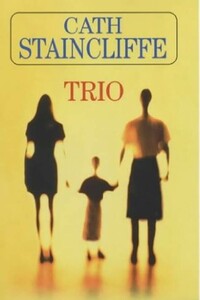
1960, Manchester. Three young Catholic women find themselves pregnant and unmarried. In these pre-Pill days, there is only one acceptable course of action: adoption. So Megan, Caroline and Joan meet up in St Ann's Home for Unmarried Mothers to await the births of their babies. Three little girls are born, and placed with their adoptive families. Trio follows the lives of these mothers and daughters over the ensuing years.
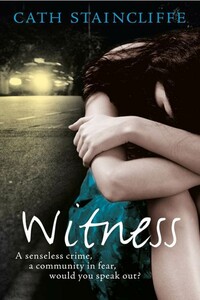
"A painfully honest exploration of an ordinary family under stress… A stunning piece of work." – Ann CleevesFour bystanders in the wrong place at the wrong time. Witnesses to the shocking shooting of a teenage boy. A moment that changes their lives forever. Fiona, a midwife, is plagued by panic attacks and unable to work. Has she the strength to testify? Mike, a delivery driver and family man, faces an impossible decision when his frightened wife forces him to choose – us or the court case. Cheryl, a single-mother, doesn't want her child to grow up in the same climate of fear.
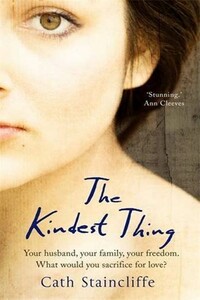
Your husband, your family, your freedom. What would you sacrifice for love? A love story, a modern nightmare and an honest and incisive portrayal of a woman who honours her husband's wish to die and finds herself in the dock for murder.When Deborah reluctantly helps her beloved husband Neil end his life and conceals the truth, she is charged with murder. As the trial unfolds and her daughter Sophie testifies against her, Deborah, still reeling with grief, fights to defend her actions. Twelve jurors hold her fate in their hands, if found guilty she will serve a life sentence.
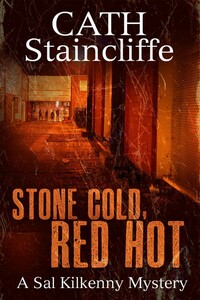
When private eye Sal Kilkenny is asked to discover the whereabouts of Jennifer Pickering, disinherited by her family twenty years ago, it seems that Jennifer does not want to be found. Despite her initial reservations, as the events of the past gradually unfold, single-mum Sal finds that she is becoming engrossed in the case. There are dark secrets waiting to be uncovered but can Sal break the conspiracy of silence that surrounds this mystery? As she spends her days tracing Jennifer, Sal's nights become shattered by an emotional and often dangerous assignment with the Neighbour Nuisance Unit on one of Manchester's toughest housing estates.
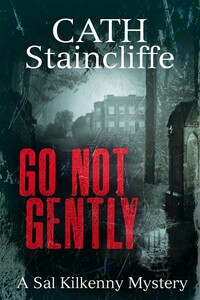
From the author of LOOKING FOR TROUBLE, a further crime novel featuring private investigator Sal Kilkenny. When a man is distraught at his wife's apparent infidelity, he enlists the help of Sal to confirm his suspicions, only to find himself a widower soon afterwards. From there Sal's other case also begins to take a disturbing and violent turn.
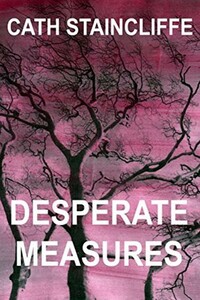
The fourth Blue Murder novel written by the creator of the hit ITV police drama starring Caroline Quentin as DCI Janine Lewis.A well-respected family GP is found shot dead outside his surgery; who could possibly want to kill him? As DCI Janine Lewis and her team investigate they uncover stories of loyalty, love, deception, betrayal and revenge.Praise for the Blue Murder books'Complex and satisfying in its handling of Lewis's agonised attempts to be both a good cop and a good mother.' The Sunday Times'Uncluttered and finely detailed prose.' Birmingham Post'Beautifully realised little snapshots of the different characters' lives… Compelling stuff.' Sherlock Magazine'A swift, satisfying read.' City Life'Precise and detailed delineation of contemporary family relationships.' Tangled Web'Lewis seems set to become another very popular string to Staincliffe's bow as one of the leading English murder writers.' Manchester Metro'Pace and plenty of human interest.' Publishing News'Blending the warmth of family life with the demands of a police investigation.'Manchester Evening News'Juggling work and family is a challenge of modern life and encountering realistically portrayed women with family responsibilities is a pleasure.
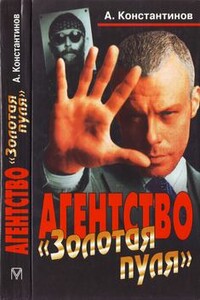
«Золотая пуля» — так коллеги-журналисты называют Агентство журналистских расследований, работающее в Петербурге. Выполняя задания Агентства, его сотрудники встречаются с политиками и бизнесменами, милиционерами и представителями криминального мира. То и дело они попадают в опасные и комичные ситуации.Первая книга цикла состоит из тринадцати новелл, рассказываемых от лица журналистов, работающих в Агентстве. У каждого из них свой взгляд на мир, и они по-разному оценивают происходящие как внутри, так и вне Агентства события.Все совпадения героев книги с реальными лицами лежат на совести авторов.

В книге рассказывается история главного героя, который сталкивается с различными проблемами и препятствиями на протяжении всего своего путешествия. По пути он встречает множество второстепенных персонажей, которые играют важные роли в истории. Благодаря опыту главного героя книга исследует такие темы, как любовь, потеря, надежда и стойкость. По мере того, как главный герой преодолевает свои трудности, он усваивает ценные уроки жизни и растет как личность.
В книге рассказывается история главного героя, который сталкивается с различными проблемами и препятствиями на протяжении всего своего путешествия. По пути он встречает множество второстепенных персонажей, которые играют важные роли в истории. Благодаря опыту главного героя книга исследует такие темы, как любовь, потеря, надежда и стойкость. По мере того, как главный герой преодолевает свои трудности, он усваивает ценные уроки жизни и растет как личность.
О них, о братьях наших меньших. Собачий детектив. Рассказ опубликован в киевском журнале "Детектив+" (№ 1-2006)
В книге рассказывается история главного героя, который сталкивается с различными проблемами и препятствиями на протяжении всего своего путешествия. По пути он встречает множество второстепенных персонажей, которые играют важные роли в истории. Благодаря опыту главного героя книга исследует такие темы, как любовь, потеря, надежда и стойкость. По мере того, как главный герой преодолевает свои трудности, он усваивает ценные уроки жизни и растет как личность.
В книге рассказывается история главного героя, который сталкивается с различными проблемами и препятствиями на протяжении всего своего путешествия. По пути он встречает множество второстепенных персонажей, которые играют важные роли в истории. Благодаря опыту главного героя книга исследует такие темы, как любовь, потеря, надежда и стойкость. По мере того, как главный герой преодолевает свои трудности, он усваивает ценные уроки жизни и растет как личность.