Children of the Street - [17]
“Do you like him?”
“I don’t like him.” Akosua squirmed. “He was always looking at me like he wanted to be with me.”
“Do you think he was jealous of Musa?”
“I don’t know.”
“If we take you to Nima, can you show us his house?”
“I think so. But I don’t want him to see me.”
“Okay, no problem.”
Dawson stood up. So did Chikata.
“You stay here,” Dawson said to him abruptly.
Chikata was puzzled. “Why shouldn’t I go with you?”
“It doesn’t need two of us to go to question this man. You’ve got a lot of paperwork to finish. Come along, Akosua.”
As they left the room, Dawson could feel Chikata’s stunned look burning a hole in his back.
Nima was bustling with furious midweek commerce, men and women weaving through the crowds with loads of merchandise while they dodged horn-blaring cars. Truck pushers forged paths through the jammed traffic, their unwieldy carts piled with scrap metal, engine blocks, old TVs, and computers. The sidewalks were packed with traders bursting beyond the boundaries of Nima Market. With no space for pedestrians on the pavement, vehicles and people shared the street in a constant battle for dominance.
Akosua was in the backseat. Dawson, in the front next to Baidoo, wasn’t much bothered by the chaos of Nima. What was taking his attention was the turmoil in his own head. You panicked. Afraid that Akosua’s Daramani was the same as the one he knew, terrified that his “other life” might be exposed, he had ordered Chikata to stay behind. Dawson suddenly felt corrupt and ashamed.
“I think we can get down here,” Akosua said. She pointed to their left. “His house is somewhere over there.”
Baidoo inched over and somehow created a parking space next to a paint and hardware store. Dawson and Akosua got out, weaving to the other side of Nima Highway. He let her lead him through the narrow walkways of the market, where the vendor stalls were packed on either side and space between one person and the next was a matter of a few inches. Whenever there was a cry of Agoo! behind them, they moved instinctively to one side to give way to someone pushing or carrying a load of grain or produce so heavy that, if he broke stride for even a second, it would be a disastrous loss of momentum.
Under the pitiless sun, the smell of raw sweat merged with the pungency of heaps of cinnamon, cumin, and thyme, sharp and fresh enough to make Dawson sneeze. As they moved from the sweetness of the spice market to the olfactory assault of the stink-fish section, Dawson was watching which way Akosua was going. In Nima, there was always more than one route anywhere, so it was too early to say if she was moving in the direction of Daramani’s place. She took a sharp right, which Dawson knew would move them out of the main body of the market. Gradually, it became quieter as they reached purely residential areas of both brick and wooden structures. Some alleys were paved; others were of red dirt only. The gutters were a flashback to those of Agbogbloshie-looking like them and smelling like them.
Akosua stopped and looked around.
“Lost?” Dawson asked her, aware of a silly spark of hope that she might not find the place.
She mopped her perspiring brow. “This way, I think,” she said, starting off again.
It happened she was taking a route straight through the prostitutes’ row called 4-4-1. It was inactive now but would spring to life in the evening. Akosua made another turn, but Dawson gently restrained her.
“You don’t want to go that way.”
They had come face-to-face with one of Nima’s addicts’ lanes, where four guys were using wee and cocaine. They looked like they hadn’t eaten in weeks, lifeless eye sockets in gaunt faces. Somewhere at the other end of the alley, where there was a squalid public toilet, a drug dealer could be selling to some well-heeled guy who had just driven up in an SUV, or maybe even to a policeman.
Akosua reversed her direction, getting her bearings back. Down an alley shaded on one side and sunlit on the other, as they passed a dreadlocked guy in a flaming skull T-shirt, Dawson’s heart sank. This was the way to the wee-smoking ex-thief, ex-convict Daramani Gushegu he knew. Make her turn, make her turn. Please. He was praying she would change direction, but she didn’t. Instead, Akosua stopped again.
“I don’t want him to see me,” she said to Dawson.
“Okay, no problem. Just tell me which house it is, then you can go back around the corner and wait for me.”
“Number three on the left. The yellow one.”
She disappeared. Dawson approached the house. Daramani’s place was incompletely painted-the yellow had apparently run out. There was a small window with fraying mosquito netting. An antenna was attached to the edge of the corrugated tin roof. It seemed Daramani now had a TV. He must be moving up in the world, despite his complaint that “life make too hard for Ghana nowadays.”
Dawson looked up and down the alley before knocking on the fragmenting wooden door. No one responded. Dawson tried it. Locked, although, quite frankly, he could have got in if he wanted to.
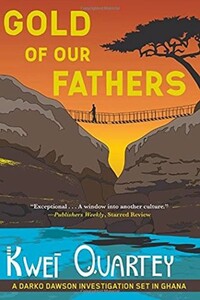
Darko Dawson, Chief Inspector in the Ghana police service, returns in this atmospheric crime series often compared to Alexander McCall Smith's The No. 1 Ladies' Detective Agency novels.Darko Dawson has just been promoted to Chief Inspector in the Ghana Police Service – the promotion even comes with a (rather modest) salary bump. But he doesn't have long to celebrate because his new boss is transferring him from Accra, Ghana's capital, out to remote Obuasi in the Ashanti region, an area now notorious for the illegal exploitation of its gold mines.When Dawson arrives at the Obuasi headquarters, he finds it in complete disarray.
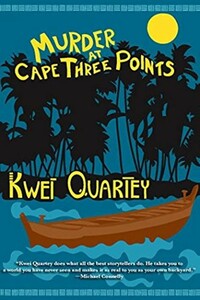
At Cape Three Points on the beautiful Ghanaian coast, a canoe washes up at an oil rig site. The two bodies in the canoe – who turn out to be a prominent, wealthy, middle-aged married couple – have obviously been murdered; the way Mr. Smith-Aidoo has been gruesomely decapitated suggests the killer was trying to send a specific message – but what, and to whom, is a mystery.The Smith-Aidoos, pillars in their community, are mourned by everyone, but especially by their niece Sapphire, a successful pediatric surgeon in Ghana's capital, Accra.

Во время летнего фестиваля искусств на территории бывшей графской усадьбы происходит убийство. Чеховская чайка, призванная олицетворять свободный творческий полёт, может стать символом тёмного мира, где жизнь не имеет цены. Поймёт ли следователь Кречетов, к какому миру принадлежит каждый из персонажей? Сумеет ли он распутать цепочку странных взаимосвязей? А может быть, в этой цепочке замешан призрак графини, блуждающий по аллеям парка и охраняющий тайну старинного клада?

В книге рассказывается история главного героя, который сталкивается с различными проблемами и препятствиями на протяжении всего своего путешествия. По пути он встречает множество второстепенных персонажей, которые играют важные роли в истории. Благодаря опыту главного героя книга исследует такие темы, как любовь, потеря, надежда и стойкость. По мере того, как главный герой преодолевает свои трудности, он усваивает ценные уроки жизни и растет как личность.
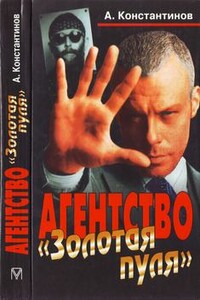
«Золотая пуля» — так коллеги-журналисты называют Агентство журналистских расследований, работающее в Петербурге. Выполняя задания Агентства, его сотрудники встречаются с политиками и бизнесменами, милиционерами и представителями криминального мира. То и дело они попадают в опасные и комичные ситуации.Первая книга цикла состоит из тринадцати новелл, рассказываемых от лица журналистов, работающих в Агентстве. У каждого из них свой взгляд на мир, и они по-разному оценивают происходящие как внутри, так и вне Агентства события.Все совпадения героев книги с реальными лицами лежат на совести авторов.
В книге рассказывается история главного героя, который сталкивается с различными проблемами и препятствиями на протяжении всего своего путешествия. По пути он встречает множество второстепенных персонажей, которые играют важные роли в истории. Благодаря опыту главного героя книга исследует такие темы, как любовь, потеря, надежда и стойкость. По мере того, как главный герой преодолевает свои трудности, он усваивает ценные уроки жизни и растет как личность.
В книге рассказывается история главного героя, который сталкивается с различными проблемами и препятствиями на протяжении всего своего путешествия. По пути он встречает множество второстепенных персонажей, которые играют важные роли в истории. Благодаря опыту главного героя книга исследует такие темы, как любовь, потеря, надежда и стойкость. По мере того, как главный герой преодолевает свои трудности, он усваивает ценные уроки жизни и растет как личность.
В книге рассказывается история главного героя, который сталкивается с различными проблемами и препятствиями на протяжении всего своего путешествия. По пути он встречает множество второстепенных персонажей, которые играют важные роли в истории. Благодаря опыту главного героя книга исследует такие темы, как любовь, потеря, надежда и стойкость. По мере того, как главный герой преодолевает свои трудности, он усваивает ценные уроки жизни и растет как личность.