Children of the Street - [16]
“I’m sorry I was so hard to find, Akosua,” Dawson said, addressing her rather than Regina, trying to coax her out. “You say the drawing of the boy resembles your boyfriend?”
“Yes, please,” she said softly, her hands wringing in her lap.
“What is his name?”
“Please, his name is Musa Zakari. I haven’t seen him for ten days. As soon as I saw the picture in the newspaper, I knew it was him.”
Regina pulled out a mobile from her jeans pocket. “Mr. Darko, I took some pictures of Akosua and Musa some weeks ago, if you want to have a look. Then you can see how he looks like.”
Dawson and Chikata came around so they could see her phone screen. Akosua looked on as Regina went through each of four photographs, all containing Musa. One of them really got Dawson’s attention. Musa was standing behind Akosua with his arms around her, his smiling face nuzzling against her neck as she leaned against him. Comparing a drawing to a photo was often difficult, and the facial features were not a dead-on likeness to Kirezi’s sketch. But the smile. It was the smile with the same missing cuspid that did it. Somehow, Kirezi had captured it perfectly.
“That’s a fine picture of you and Musa,” Dawson said to Akosua.
She smiled tentatively, a smile marred by sadness.
“How did he lose his tooth?” Dawson asked.
Akosua cleared her throat. “Please, about three months ago, some thieves at Agbogbloshie Market beat him and stole his money. His mouth was bleeding and his tooth was loose, and it was paining him so he pulled it out and he was going to throw it away, but I said no, don’t throw it away-give it to me, and he said, Ah, but what will you do with it? And I said I would make a necklace with it, so when I wear it I know I have you with me even if you are not there.”
Without warning, tears erupted, running down her cheeks, and a whimper escaped her.
Regina gave her friend a handkerchief and then rubbed Akosua’s back soothingly. “You’re doing well,” she said.
Dawson squeezed the girl’s hand encouragingly. “I know this is tough. Try for me, eh? I’m very glad you came to see me.”
She pressed the handkerchief against her eyes. Dawson gave her a chance to recover. He asked her gently, “Did you make the necklace with the tooth?”
Akosua nodded, taking a grimy piece of paper carefully out of her pocket. She unfolded it gingerly, revealing a thin strand of leather with a single strung item-a tooth. Dawson picked up the necklace and examined it. The tooth, one of the cuspids, was dazzling white and smooth as pearl. In a minute hole drilled through its base was a small metal loop, to which the leather string was attached. Dawson felt that surge of excitement that came with a significant break.
“You made this, Akosua?”
She shook her head. “Regina’s husband-he makes jewelry at the Arts Center.”
“Oh, very good.” Dawson acknowledged Regina. She smiled, looking proud.
Dawson looked up at Chikata. “Can you get me one more chair?”
“Sure.” Chikata left the room.
“When was the last time you saw Musa?” Dawson asked Akosua.
“The Saturday before last.”
“That’s the fifth of June, the day before the body was found.”
“Yes, please.”
“Where did you see Musa that day?”
“We went to Nima Market.”
“At what time?”
“In the evening about six o’clock.”
“Did Musa live in Nima?”
“No, please. He stayed at different places. He was a truck pusher, so he stayed anywhere he had work.”
“He lived on the street?” Dawson asked.
“Yes, please.”
“Did he have any family?”
“Please, no. He came from the north. He didn’t have anyone here.”
Chikata came back with a borrowed chair. Dawson sat down at a comfortable angle from Akosua. His previous position, sitting on the edge of the desk, which forced her to look up at him, had seemed dominating. He wanted her to feel at ease.
“What you’ve done,” he said, “bringing us Musa’s tooth, is a very good thing, Akosua, because we can test it to see if it belongs to the person in the lagoon. If it does, then it means that the person in the lagoon was Musa.”
“Yes, please.”
“But we have to keep the tooth for some time,” Dawson went on. “We won’t break it. We just have to remove a small piece from it, so small that you wouldn’t notice. You get me?”
“Yes, please.”
“About the fight you say Musa had with the thieves-did you see it happen?”
“No, I wasn’t with him.”
“How old was Musa?”
“Sixteen. He was going to be seventeen.”
“And how old are you?”
“Seventeen too.”
“Do you know anyone who didn’t like Musa?”
She shook her head. “Everyone liked him.”
“That evening when you and Musa went to the market, what time did you leave each other?”
“About seven o’clock. One friend came to help Musa take something to Maamobi.”
“Did you know that friend? His name?”
“I know his name is Daramani, but I don’t know him well.”
Daramani. Dawson stiffened, but then he reassured himself. There were undoubtedly countless Daramanis in Accra, not just the one he knew.
“Do you know where this Daramani lives?”
“He lives in Nima. I went to his house with Musa one time.”
Nima. Where Dawson’s Daramani lived.
“About how old is this Daramani?”
“I don’t know,” she said, adding, “older than me.”
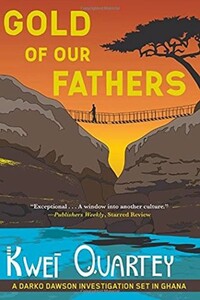
Darko Dawson, Chief Inspector in the Ghana police service, returns in this atmospheric crime series often compared to Alexander McCall Smith's The No. 1 Ladies' Detective Agency novels.Darko Dawson has just been promoted to Chief Inspector in the Ghana Police Service – the promotion even comes with a (rather modest) salary bump. But he doesn't have long to celebrate because his new boss is transferring him from Accra, Ghana's capital, out to remote Obuasi in the Ashanti region, an area now notorious for the illegal exploitation of its gold mines.When Dawson arrives at the Obuasi headquarters, he finds it in complete disarray.
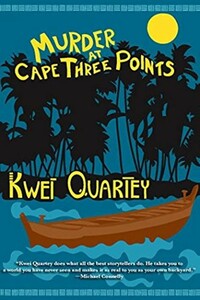
At Cape Three Points on the beautiful Ghanaian coast, a canoe washes up at an oil rig site. The two bodies in the canoe – who turn out to be a prominent, wealthy, middle-aged married couple – have obviously been murdered; the way Mr. Smith-Aidoo has been gruesomely decapitated suggests the killer was trying to send a specific message – but what, and to whom, is a mystery.The Smith-Aidoos, pillars in their community, are mourned by everyone, but especially by their niece Sapphire, a successful pediatric surgeon in Ghana's capital, Accra.

Во время летнего фестиваля искусств на территории бывшей графской усадьбы происходит убийство. Чеховская чайка, призванная олицетворять свободный творческий полёт, может стать символом тёмного мира, где жизнь не имеет цены. Поймёт ли следователь Кречетов, к какому миру принадлежит каждый из персонажей? Сумеет ли он распутать цепочку странных взаимосвязей? А может быть, в этой цепочке замешан призрак графини, блуждающий по аллеям парка и охраняющий тайну старинного клада?
В книге рассказывается история главного героя, который сталкивается с различными проблемами и препятствиями на протяжении всего своего путешествия. По пути он встречает множество второстепенных персонажей, которые играют важные роли в истории. Благодаря опыту главного героя книга исследует такие темы, как любовь, потеря, надежда и стойкость. По мере того, как главный герой преодолевает свои трудности, он усваивает ценные уроки жизни и растет как личность.
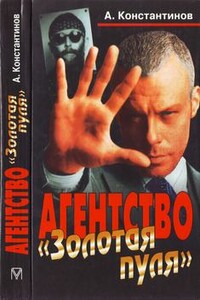
«Золотая пуля» — так коллеги-журналисты называют Агентство журналистских расследований, работающее в Петербурге. Выполняя задания Агентства, его сотрудники встречаются с политиками и бизнесменами, милиционерами и представителями криминального мира. То и дело они попадают в опасные и комичные ситуации.Первая книга цикла состоит из тринадцати новелл, рассказываемых от лица журналистов, работающих в Агентстве. У каждого из них свой взгляд на мир, и они по-разному оценивают происходящие как внутри, так и вне Агентства события.Все совпадения героев книги с реальными лицами лежат на совести авторов.
В книге рассказывается история главного героя, который сталкивается с различными проблемами и препятствиями на протяжении всего своего путешествия. По пути он встречает множество второстепенных персонажей, которые играют важные роли в истории. Благодаря опыту главного героя книга исследует такие темы, как любовь, потеря, надежда и стойкость. По мере того, как главный герой преодолевает свои трудности, он усваивает ценные уроки жизни и растет как личность.
В книге рассказывается история главного героя, который сталкивается с различными проблемами и препятствиями на протяжении всего своего путешествия. По пути он встречает множество второстепенных персонажей, которые играют важные роли в истории. Благодаря опыту главного героя книга исследует такие темы, как любовь, потеря, надежда и стойкость. По мере того, как главный герой преодолевает свои трудности, он усваивает ценные уроки жизни и растет как личность.
В книге рассказывается история главного героя, который сталкивается с различными проблемами и препятствиями на протяжении всего своего путешествия. По пути он встречает множество второстепенных персонажей, которые играют важные роли в истории. Благодаря опыту главного героя книга исследует такие темы, как любовь, потеря, надежда и стойкость. По мере того, как главный герой преодолевает свои трудности, он усваивает ценные уроки жизни и растет как личность.