36 Arguments for the Existence of God - [73]
“But my concern here is not with Proust per se, and it is only the striking parallelism that has brought me to Proust, raised a Roman Catholic, though born of a Jewess”-ah!-“and though Marcel was as devoted a son as any Jewish mother could have desired, who, in renouncing the hell’s fire of sexual passion, implied that the only authentic love is for the woman who gave one the gift of one’s life, the gift of one’s genius”- Klapper paused here several long moments, his trembling eye focused on the silver-framed picture on his desk-“yet, though he was a model Jewish son, he was not a self-identifying Jew and was unfamiliar with any of the canonical Jewish texts, though of course one cannot be certain, the presence of knowledge being easier to ascertain than its absence. And yet who would deny that Proust’s pronouncement is a temporal transposition of the Maimonidean position that the only Messiah is an uncome Messiah?”
Klapper settled an inquisitorial stare upon Cass, and this time he really seemed to be wanting an answer, and what could be offered in answer to his last question other than “Nobody?”
“Reb Chaim!” Professor Klapper cried out, and Cass’s heart heaved so hard his shirt collar might have perceptibly moved.
“It all reminds me of a Hasidic tale, in the tradition of wisdom storytelling which you, Reb Chaim, with your exalted lineage, will be able to appreciate on multitudinous strata. An innkeeper and his wife are awakened in the middle of the night by the heartrending sobs of one of the guests. He goes to investigate, entering the room of sobbing and finding there a simple Jew, barefoot and dressed like a peasant, sitting on the cold wooden floor and weeping. There is nothing about him to betray the fact that he is a renowned Hasidic master, traveling incognito in order to see the state of the world. Each night at midnight, he climbs out of bed and mourns the destruction of the Holy Temple and the scattered nation of Israel. ‘Why the tumult, my good man?’ inquires the distressed innkeeper. ‘What calamity has befallen you?’ ‘I cry over our Diaspora and the suffering it has wrought, and I beseech the Almighty to send the Messiah, who will restore the kingdom and return us to the Holy Land.’”
Klapper rocked his upper body back and forth as he spoke the master’s words, impersonating the motions of Orthodox Jews in prayer, and the thick layer of posh that usually overlaid his pronunciation was temporarily removed, leaving bare the cadence of the Tillie E. Orlofsky projects on East Broadway, itself an echo of the singsong cadence of Eastern Europe.
“The innkeeper is relieved. ‘Is that it? You’d had me worried! I thought maybe my wife’s beet borscht had, God forbid, been off. Just try to keep your holy wailing down so that you don’t disturb the other guests.’ The good man goes back to his bedroom and explains the situation to his wife. Five minutes later, he’s back at the master’s door. ‘My wife sent me to ask you whether, when the Messiah comes and restores us to the kingdom of Israel, we will be allowed to take our chickens with us.’ The master is taken aback by the question. ‘Chickens? As far as I’m aware, it doesn’t say anything about chickens. You might have to leave your chickens here when the Messiah comes.’ ‘I’ll tell my wife.’ Five minutes later, there’s another knock on the door. ‘My wife requests that you please not pray anymore for the Messiah to come. We are doing fine here and would prefer to stay with our chickens.’ The master is confounded by this reaction. ‘What do you mean, you are doing fine? Don’t you know how precarious our exile is? At any moment the Cossacks could arrive and take your chickens, your wife, all your money, and even your life! Are we not better off in our Promised Land?’ The Rebbe’s words make sense to the innkeeper, but he still has to inform his wife. Five minutes later, another knock. ‘My wife requests that you pray for the Messiah to come and take the Cossacks to the Land of Israel-so we can stay here with our chickens.’”
Klapper’s face was completely deadpan as he finished the tale, and Cass, who was certain the story was supposed to be as funny as he found it, was uncertain whether Jonas Elijah Klapper agreed. The uncertainty choked the laughter somewhere around his epiglottis, but not before a smile briefly fanned out.
“You smile, Reb Chaim. And, indeed, there is a comical element, brought to bear by the risibility of the word ‘chickens.’ Retell the tale with the substitution of ‘cattle’ for ‘chickens’ and the humor will substantially diminish. The wife’s poultry-centric worldview signifies the untenability of the Maimonidean position. The presence of ‘chickens’ is a shrewd evocation of the absurd, similar in ploy to the koans of Zen Buddhism, which, I presume, make you smile as well.”
Cass nodded.
“The absurd is here employed as a means to incite the Messianic exigency, kept alive in Judaism only by the subversive counter-modality of Hasidism, against the establishment effort to contain the destabilizing energies of Messianism. I here but follow the explication of the preeminent secular authority on Qabalah, Yehuda Ickel, who maintains that the Qabalist embrace of the insurrectionist ideal of the non-tarrying Messiah was the deepest point of conflict with the mainstream rabbis, who would have us believe wholeheartedly in a Messiah so long as he is not here! The true Hasid believes that if his own Rebbe is not the Messiah- or Moshiach, as he is called in Hebrew, and which literally means ‘the anointed one’-then maybe his brother-in-law’s Rebbe is Moshiach.”

Книга Тимура Бикбулатова «Opus marginum» содержит тексты, дефинируемые как «метафорический нарратив». «Все, что натекстовано в этой сумбурной брошюрке, писалось кусками, рывками, без помарок и обдумывания. На пресс-конференциях в правительстве и научных библиотеках, в алкогольных притонах и наркоклиниках, на художественных вернисажах и в ночных вагонах электричек. Это не сборник и не альбом, это стенограмма стенаний без шумоподавления и корректуры. Чтобы было, чтобы не забыть, не потерять…».

В жизни шестнадцатилетнего Лео Борлока не было ничего интересного, пока он не встретил в школьной столовой новенькую. Девчонка оказалась со странностями. Она называет себя Старгерл, носит причудливые наряды, играет на гавайской гитаре, смеется, когда никто не шутит, танцует без музыки и повсюду таскает в сумке ручную крысу. Лео оказался в безвыходной ситуации – эта необычная девчонка перевернет с ног на голову его ничем не примечательную жизнь и создаст кучу проблем. Конечно же, он не собирался с ней дружить.

Жизнь – это чудесное ожерелье, а каждая встреча – жемчужина на ней. Мы встречаемся и влюбляемся, мы расстаемся и воссоединяемся, мы разделяем друг с другом радости и горести, наши сердца разбиваются… Красная записная книжка – верная спутница 96-летней Дорис с 1928 года, с тех пор, как отец подарил ей ее на десятилетие. Эта книжка – ее сокровищница, она хранит память обо всех удивительных встречах в ее жизни. Здесь – ее единственное богатство, ее воспоминания. Но нет ли в ней чего-то такого, что может обогатить и других?..
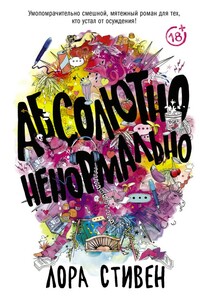
У Иззи О`Нилл нет родителей, дорогой одежды, денег на колледж… Зато есть любимая бабушка, двое лучших друзей и непревзойденное чувство юмора. Что еще нужно для счастья? Стать сценаристом! Отправляя свою работу на конкурс молодых писателей, Иззи даже не догадывается, что в скором времени одноклассники превратят ее жизнь в плохое шоу из-за откровенных фотографий, которые сначала разлетятся по школе, а потом и по всей стране. Иззи не сдается: юмор выручает и здесь. Но с каждым днем ситуация усугубляется.
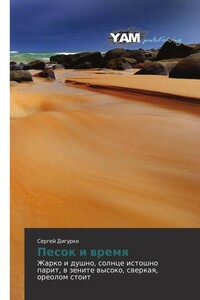
В пустыне ветер своим дыханием создает барханы и дюны из песка, которые за год продвигаются на несколько метров. Остановить их может только дождь. Там, где его влага орошает поверхность, начинает пробиваться на свет растительность, замедляя губительное продвижение песка. Человека по жизни ведет судьба, вера и Любовь, толкая его, то сильно, то бережно, в спину, в плечи, в лицо… Остановить этот извилистый путь под силу только времени… Все события в истории повторяются, и у каждой цивилизации есть свой круг жизни, у которого есть свое начало и свой конец.
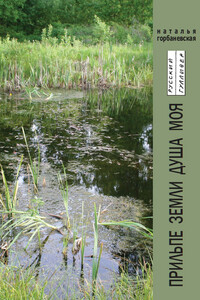
С тех пор, как автор стихов вышел на демонстрацию против вторжения советских войск в Чехословакию, противопоставив свою совесть титанической громаде тоталитарной системы, утверждая ценности, большие, чем собственная жизнь, ее поэзия приобрела особый статус. Каждая строка поэта обеспечена «золотым запасом» неповторимой судьбы. В своей новой книге, объединившей лучшее из написанного в период с 1956 по 2010-й гг., Наталья Горбаневская, лауреат «Русской Премии» по итогам 2010 года, демонстрирует блестящие образцы русской духовной лирики, ориентированной на два течения времени – земное, повседневное, и большое – небесное, движущееся по вечным законам правды и любви и переходящее в Вечность.