36 Arguments for the Existence of God - [66]
Azarya knew how to read Hebrew and Yiddish and Aramaic, but he hadn’t been taught the English alphabet yet. Nevertheless, Roz labeled all the states, saying the names aloud as she wrote, and labeled “New Walden” and “Cambridge.”
“This is where you live, and this is where Cass and I live. Maybe someday you’ll come and visit us. Would you like that?”
“With my sisters, too?”
“Sure, why not.” As long as they were dreaming the impossible anyway, they might as well make it to the child’s specifications.
“Are you married?”
Azarya had settled down cross-legged on the floor next to Roz. He was as comfortable with strangers as the Onuma brats, which was remarkable, given the insularity of the Valdeners. Being the Rebbe’s son, and a prodigy to boot, he’d probably been bathed in affection and powdered in praise his whole life.
“To each other? No.” She smiled down at him.
“To someone else you’re married?”
“No. We’re not married at all.”
“Will you invite me to the hasana?”
“The wedding,” Cass explained to her.
“Of course we’ll invite you! Do you think we’d have our hasana without you?”
The child broke into his wonderful smile.
“Now I’ll draw you a picture!” He took another of the sheets and lay down on his stomach on the floor beside Roz with his box of crayons and got to work.
“It’s a surprise for you,” he told them. “I’m going to make one for each of you. For your hasana. Don’t look yet.”
He didn’t get the chance, though, since the rail-thin woman who had taken Azarya and Roz into the Rebbe’s study soon came to fetch Azarya. She, too, had some words of gentle chastisement for him, apparently having to do with his being on the floor. She glared at Roz, who was sitting there beside him. Azarya got up quickly and then handed the sheet of paper to Roz, telling her sadly that he hadn’t had time to finish.
“The last one isn’t finished. When you look at my drawing, you’ll see many different maloychim,” he said to her, for the first time looking a little bit shy. “I’m sorry,” he said to Cass, “that I didn’t make a drawing for you. Ble nadir, I’ll make one for you next time.” As he was being led away, he looked back over his shoulder and smiled the smile of a cherub, lifting his little hand and opening and closing his fingers to wave in the manner of the very young. Bye-bye.
“That’s not only the most extraordinary child I’ve ever met,” Roz said to Cass and Klapper as they walked back to the car in the quickly falling dusk, “I think that might be the most extraordinary person I’ve ever met.”
Klapper stopped walking and looked at Roz.
“I think he must be some sort of idiot savant. The Rebbe spoke feelingly of the problem with genetic disorders that they have. It’s the price of their marriage purity.”
“Idiot savant! Are you kidding me, Jonas?” Cass winced at the many liberties Roz was taking. At least she didn’t call him “the Klap” to his face-not yet. “If that kid’s not a genius, then I’ll eat his father’s fur hat. Turn on the light, Cass.” They were in the Lincoln Continental now. “I want to see that drawing he made for me.”
Azarya had folded the sheet once in half. When she unfolded it, she saw a bunch of numbers written down, arranged in clumps that were somewhat triangular in shape, and that he’d written with different-colored crayons.
“Let’s see,” said Cass, and Roz held Azarya’s picture up so that both Cass and Klapper could inspect it.
“Perhaps it’s gematria,” Klapper said, showing a momentary interest.
“What’s gematria?” asked Roz.
“I’ll explain it to you as soon as Reb Chaim turns off the interior lights and turns on the heat. When I say my teeth are chattering I am not speaking figuratively. Gematria, from the same Greek roots that give us ‘geometry,’ is an ancient anagogic means of extracting the hidden meanings out of sacred texts, by assigning numerical values to letters and then computing the values of a word or phrase. The Greek isopsephy, the Muslim khisab al jumal are examples of similar techniques, but the most intricately and cannily developed is the gematria of the Kabbalists. Take my name, for instance, which is a rather fascinating one.”
“ ‘Klapper’?” Roz asked, and Cass felt a buzz of alarm. It would be catastrophic were the conversation to yield revelations of Klepfish.
“No, I refer to my given name, Jonas Elijah. In Hebrew, my name is Yonah Eliyahu, and if you take the gematria of my first name it adds up to thirty-five: yod is ten, vav is six, nun is fourteen, and heh is five. If you then add the first letter of my second name, aleph, you get thirty-six-or in Hebrew, lamed vav, which is a number with profound mystical significance. The Lamedvavniks are the thirty-six people of impregnable purity who live in every generation and for the sake of whom the world is not destroyed. Their identity is kept so secret that even they don’t know who they are. The name Yonah means, literally, ‘dove,’ but also can mean, paradoxically, ‘the Destroyer,’ as it also means ‘a Gift from God.’ And in Hebrew the name of Yonah, yod vav nun heh, is almost identical to the one and only true name of God,
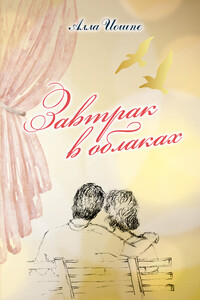
Честно говоря, я всегда удивляюсь и радуюсь, узнав, что мои нехитрые истории, изданные смелыми издателями, вызывают интерес. А кто-то даже перечитывает их. Четыре книги – «Песня длиной в жизнь», «Хлеб-с-солью-и-пылью», «В городе Белой Вороны» и «Бочка счастья» были награждены вашим вниманием. И мне говорят: «Пиши. Пиши еще».

В книге рассказывается история главного героя, который сталкивается с различными проблемами и препятствиями на протяжении всего своего путешествия. По пути он встречает множество второстепенных персонажей, которые играют важные роли в истории. Благодаря опыту главного героя книга исследует такие темы, как любовь, потеря, надежда и стойкость. По мере того, как главный герой преодолевает свои трудности, он усваивает ценные уроки жизни и растет как личность.
В книге рассказывается история главного героя, который сталкивается с различными проблемами и препятствиями на протяжении всего своего путешествия. По пути он встречает множество второстепенных персонажей, которые играют важные роли в истории. Благодаря опыту главного героя книга исследует такие темы, как любовь, потеря, надежда и стойкость. По мере того, как главный герой преодолевает свои трудности, он усваивает ценные уроки жизни и растет как личность.
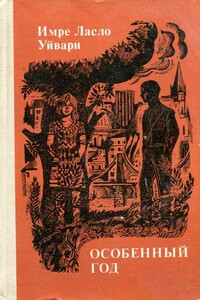
Настоящая книга целиком посвящена будням современной венгерской Народной армии. В романе «Особенный год» автор рассказывает о событиях одного года из жизни стрелковой роты, повествует о том, как формируются характеры солдат, как складывается коллектив. Повседневный ратный труд небольшого, но сплоченного воинского коллектива предстает перед читателем нелегким, но важным и полезным. И. Уйвари, сам опытный офицер-воспитатель, со знанием дела пишет о жизни и службе венгерских воинов, показывает суровую романтику армейских будней. Книга рассчитана на широкий круг читателей.
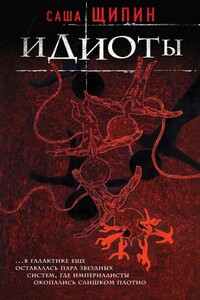
Боги катаются на лыжах, пришельцы работают в бизнес-центрах, а люди ищут потерянный рай — в офисах, похожих на пещеры с сокровищами, в космосе или просто в своих снах. В мире рассказов Саши Щипина правду сложно отделить от вымысла, но сказочные декорации часто скрывают за собой печальную реальность. Герои Щипина продолжают верить в чудо — пусть даже в собственных глазах они выглядят полными идиотами.

Роман «Деревянные волки» — произведение, которое сработано на стыке реализма и мистики. Но все же, оно настолько заземлено тонкостями реальных событий, что без особого труда можно поверить в существование невидимого волка, от имени которого происходит повествование, который «охраняет» главного героя, передвигаясь за ним во времени и пространстве. Этот особый взгляд с неопределенной точки придает обыденным события (рождение, любовь, смерть) необъяснимый колорит — и уже не удивляют рассказы о том, что после смерти мы некоторое время можем видеть себя со стороны и очень многое понимать совсем по-другому.