36 Arguments for the Existence of God - [67]
Boy, you never knew what Krap the Klap was going to throw at you. Roz almost had to admire him.
“Azarya’s drawing had a bunch of zeros in it. Does the zero mean anything in gematria?” she asked him.
“Nothing at all. I’m afraid that the child’s drawing has no Kabbalistic significance whatsoever. An indulged and, I’ve no doubt, much-tutored child has learned to write his numbers without having much grasp of what they mean and drew you a picture out of them.”
“I bet there’s more to it than that. That child is something wonderful.”
“There was indeed something wonderful back there, young lady, and it is unfortunate for you that it passed you by. You are the sort who, should she witness the Messiah walking on water, would be impressed that his socks had not shrunk.”
Cass marveled at how well Jonas Elijah Klapper kept his temper with Roz. He just hoped she wouldn’t push it. His hope was in vain.
“I’m just wondering. Did you follow what he was talking about?”
Cass winced, waiting for the onslaught. But Jonas Elijah Klapper’s response was astoundingly mild.
“Are you questioning whether I have the resources to keep pace with the Valdener Rebbe? Granted, he is a daringly speculative charismatic, but I hardly think we are mismatched.”
“I meant did you follow Azarya.”
“Azarya?”
“The Rebbe’s little son.”
“What I am failing to follow is you, young lady.”
“I’m wondering whether you were impressed when he started talking about numbers.”
“You think it had some Kabbalistic meaning?”
“I don’t know about Kabbalistic. But the child had figured out-and, according to his father, all by himself-the concept of prime numbers. He’d figured out squares and cubes. He’s six years old. That doesn’t impress you?”
“No doubt he’s an unusual child,” Jonas Elijah Klapper conceded. His forbearance toward Roz verged on the miraculous. “He is, after all, of the royal line going back to the Ba’al Shem Tov himself. But, no, I’m not impressed by the slide-rule mentality. I remain unimpressed with the mathematical arts in general. What are the so-called exact sciences but the failure of metaphor and metonymy? I’ve always experienced mathematics as a personal affront. It is a form of torture for the imaginatively gifted, the very totalitarianism of thought, one line being made to march strictly in step behind the other, all leading inexorably to a single undeviating conclusion. A proof out of Euclid recalls to my mind nothing so much as the troops goose-stepping before the Supreme Dictator. I have always delighted in my mind’s refusal to follow a single line of any mathematical explanation offered to me. Why should these exacting sciences exact anything from me? Or, as Dostoevsky’s Underground Man shrewdly argues, ‘Good God, what do I care about the laws of nature and arithmetic if, for one reason or another, I don’t like these laws, including the “two times two is four?”’ Dostoevsky spurned the hegemaniacal logic, and I can do no less.”
They drove back to Boston in near silence, though Klapper had perked up a bit when they stopped at a McDonald’s on the Massachusetts Turnpike, where he had expatiated on the parallels between the junk food on American highways and the junk ideas on American campuses, launching into the ludicrosity of English professors who study the evacuations from the posterior of popular culture-for example, a colleague he had had at Columbia who analyzed the lyrics of a musical ensemble called the Sex Pistols. Professor Klapper managed to expound even while he put away two Quarter Pounders with Cheese, a large order of fries, and a cup of cola the size of a cocktail shaker. “The fried potatoes are superlative,” he said, his lips glistening.
They dropped Jonas Elijah Klapper off at his house in Cambridge, which was on an exclusive cul-de-sac pocketed behind the Episcopal Divinity School. The house was fronted by an iron gate and struck Cass as vaguely English. There was an old-fashioned lawn lamp shedding soft light on the ivy climbing the walls. He watched Jonas Elijah Klapper heavily mount the front stairs of his porch, unlock his front door, and disappear without a backward glance. He had sunk back into silence as soon as they had left McDonald’s, and Cass wondered whether it was because of distaste for Roz, or because his visit with the Rebbe had yielded a feast of insights upon which he was meditatively chewing. Or perhaps he had been lulled into the tranquillity of an infant by the large car’s effortless gliding through the darkness of night.
XIII The Argument from Taking Differences
As tired as Roz had thought she was, she couldn’t sleep. The first thing she had to think about, and dispose of, was just how infuriating that gasbag of a Klapper was. Did he actually say, without irony, “I’ve always experienced mathematics as a personal affront”? How could Cass not see him as one of the most prominent, if not the pre-eminent, propounders of poppycock of our day?
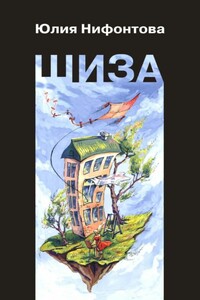
«Шиза. История одной клички» — дебют в качестве прозаика поэта Юлии Нифонтовой. Героиня повести — студентка художественного училища Янка обнаруживает в себе грозный мистический дар. Это знание, отягощённое неразделённой любовью, выбрасывает её за грань реальности. Янка переживает разнообразные жизненные перипетии и оказывается перед проблемой нравственного выбора.
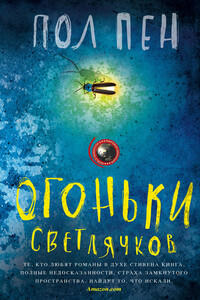
Удивительная завораживающая и драматическая история одной семьи: бабушки, матери, отца, взрослой дочери, старшего сына и маленького мальчика. Все эти люди живут в подвале, лица взрослых изуродованы огнем при пожаре. А дочь и вовсе носит маску, чтобы скрыть черты, способные вызывать ужас даже у родных. Запертая в подвале семья вроде бы по-своему счастлива, но жизнь их отравляет тайна, которую взрослые хранят уже много лет. Постепенно у мальчика пробуждается желание выбраться из подвала, увидеть жизнь снаружи, тот огромный мир, где живут светлячки, о которых он знает из книг.

Рассказ. Случай из моей жизни. Всё происходило в городе Казани, тогда ТАССР, в середине 80-х. Сейчас Республика Татарстан. Некоторые имена и клички изменены. Место действия и год, тоже. Остальное написанное, к моему глубокому сожалению, истинная правда.

В книге рассказывается история главного героя, который сталкивается с различными проблемами и препятствиями на протяжении всего своего путешествия. По пути он встречает множество второстепенных персонажей, которые играют важные роли в истории. Благодаря опыту главного героя книга исследует такие темы, как любовь, потеря, надежда и стойкость. По мере того, как главный герой преодолевает свои трудности, он усваивает ценные уроки жизни и растет как личность.
В книге рассказывается история главного героя, который сталкивается с различными проблемами и препятствиями на протяжении всего своего путешествия. По пути он встречает множество второстепенных персонажей, которые играют важные роли в истории. Благодаря опыту главного героя книга исследует такие темы, как любовь, потеря, надежда и стойкость. По мере того, как главный герой преодолевает свои трудности, он усваивает ценные уроки жизни и растет как личность.

Настоящая книга целиком посвящена будням современной венгерской Народной армии. В романе «Особенный год» автор рассказывает о событиях одного года из жизни стрелковой роты, повествует о том, как формируются характеры солдат, как складывается коллектив. Повседневный ратный труд небольшого, но сплоченного воинского коллектива предстает перед читателем нелегким, но важным и полезным. И. Уйвари, сам опытный офицер-воспитатель, со знанием дела пишет о жизни и службе венгерских воинов, показывает суровую романтику армейских будней. Книга рассчитана на широкий круг читателей.