36 Arguments for the Existence of God - [65]
“Can you tell us about more?” Roz asked the child. “Some more special angels?”
“Yes. You take two two times, like before, and then another two times. That’s eight. Eight is special. Or three three times, like before, and then another three times. That’s twenty-seven. Twenty-seven is special. Or four four times and then another four times. That’s sixty-four.” His gestures, with his little palms turned upward, must have been in imitation of the rabbis he had watched, his father and teachers. “Those are special numbers, too. Also angels,” he said turning to Cass, anticipating his question. “My sisters and me together have a number like that.”
“Wow. You sure do have a lot of sisters, sweetie,” Roz said.
The child looked stricken, as if he’d just been slapped across the face. His cheeks immediately blazed red, as if they bore the bruise. Cass and Roz understood right away what was going on. If the number of his sisters was prime, and he together with his sisters made the number a perfect cube, then the number of his sisters had to be seven. He had given out too many clues, and so, in essence, had announced the number straight out, which was forbidden.
“It’s okay, tateleh,” said the Rebbe gently. “You made a mistake, but it’s okay. Only take a little more care. So, with the numbers, his maloychim, he sometimes forgets himself. Only then. Come here, tateleh, kumma hier.” He indicated his lap.
Klapper could no longer control himself. As far as he was concerned the situation had long passed the point of the abidable.
“Why don’t you and the child continue your conversation outside, young lady?”
The little boy was still holding her hand, having ignored his father’s summons.
“I can, Tata?”
“Tell me, please, what is your name?” the Rebbe said to Roz.
“I’m Roz. Roslyn Margolis.”
The Rebbe cocked his head a bit to the side and regarded her for a long moment.
“We will have other chances to speak together, Miss Margolis.”
“I hope so.”
“Yes, Azarya. You can go with Miss Margolis. This is a very nice lady, Miss Margolis. A pearl.”
Cass was tempted to ask if he could go along with them. Half an hour ago, he would never have dreamed that anything could upstage the meeting between Jonas Elijah Klapper and the Valdener Rebbe.
“How old was he when he began to think about numbers?” he asked the Rebbe.
“Mr. Seltzer,” said Klapper sternly, “perhaps you would like to go and join the young lady.”
Cass looked over at the Valdener Rebbe, who smiled and said, “I am glad to see you again, Chaim Yisroel, after all these years. God willing, we’ll meet again, next time before so many years have elapsed. Next time, too, I hope you can bring your brother, Yeshiya Yakov, and your mother, too, who will always be loved by the Valdener Hasidim. Please tell her how much I would like to see her, either when she comes with you or with Yeshiya Yakov or by herself. Tell her that her Rebbe will always be her Rebbe.”
Jonas Elijah Klapper spent another three-quarters of an hour holed up alone with the Rebbe, and the conversation that ensued between them must have compensated for the exasperating distractions created earlier in the hour. Professor Klapper emerged extolling Reb Chaim’s relation as an estimable descendant of the sanctified Ba’al Shem Tov.
“The Valdener Rebbe has the slyness of Socrates, and is to be compared perhaps more to the metaphysical fabulist Borges than to the heresiarchs of the Dead Sea Scrolls. ”
For their part, Cass and Roz had spent an enchanting time with the Rebbe’s son. They’d gone back to the windowless room where Roz had first been shelved. Cass probably wasn’t allowed to be there, but nobody came and bothered them.
Azarya, away from his watchful older sister, was now able to indulge in his curiosity about these visitors, especially the lady whom he thought as beautiful as Queen Esther.
His first question to them was where they came from, fascinated to hear that they came neither from New Walden nor from Brooklyn nor from Eretz Yisroel, the Land of Israel. He could recount for them, and did, the seven generations of Valdener Rebbes and their wives and children, going all the way back to Reb Azarya ben Yisroel, who had been a direct descendant of the Besht. He knew exactly where he was situated on the family tree. But he didn’t know that the name of the country he lived in was the United States of America. Roz wanted to draw him a map of America. He’d never seen a map of anything, and once she explained the idea of a map to him, he grew so excited that he went running out of the room, his silky blond side curls flying, to go find something to draw with. He came back a few minutes later with a box of crayons and a few sheets of coarse white paper.
Roz got down on the floor, since there was no writing surface in the room, with the little boy stooping down near her so that he could watch closely, his hands clasped between his knees. She drew a reasonably well-proportioned and accurate map of the United States, using red and blue crayons. She also drew an American flag for Azarya and explained about its stars and stripes. She colored the Atlantic and Pacific oceans for him. He knew about the ocean because of the splitting of the Red Sea. He had no idea that he lived within fifty miles of an ocean. One of his older sisters had been to Brooklyn, but he had never left New Walden. He hadn’t realized that when his father had gone to Eretz Yisroel he had had to cross the blue water that Roz drew for him.

Честно говоря, я всегда удивляюсь и радуюсь, узнав, что мои нехитрые истории, изданные смелыми издателями, вызывают интерес. А кто-то даже перечитывает их. Четыре книги – «Песня длиной в жизнь», «Хлеб-с-солью-и-пылью», «В городе Белой Вороны» и «Бочка счастья» были награждены вашим вниманием. И мне говорят: «Пиши. Пиши еще».

В книге рассказывается история главного героя, который сталкивается с различными проблемами и препятствиями на протяжении всего своего путешествия. По пути он встречает множество второстепенных персонажей, которые играют важные роли в истории. Благодаря опыту главного героя книга исследует такие темы, как любовь, потеря, надежда и стойкость. По мере того, как главный герой преодолевает свои трудности, он усваивает ценные уроки жизни и растет как личность.

В книге рассказывается история главного героя, который сталкивается с различными проблемами и препятствиями на протяжении всего своего путешествия. По пути он встречает множество второстепенных персонажей, которые играют важные роли в истории. Благодаря опыту главного героя книга исследует такие темы, как любовь, потеря, надежда и стойкость. По мере того, как главный герой преодолевает свои трудности, он усваивает ценные уроки жизни и растет как личность.

Настоящая книга целиком посвящена будням современной венгерской Народной армии. В романе «Особенный год» автор рассказывает о событиях одного года из жизни стрелковой роты, повествует о том, как формируются характеры солдат, как складывается коллектив. Повседневный ратный труд небольшого, но сплоченного воинского коллектива предстает перед читателем нелегким, но важным и полезным. И. Уйвари, сам опытный офицер-воспитатель, со знанием дела пишет о жизни и службе венгерских воинов, показывает суровую романтику армейских будней. Книга рассчитана на широкий круг читателей.
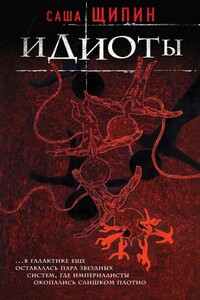
Боги катаются на лыжах, пришельцы работают в бизнес-центрах, а люди ищут потерянный рай — в офисах, похожих на пещеры с сокровищами, в космосе или просто в своих снах. В мире рассказов Саши Щипина правду сложно отделить от вымысла, но сказочные декорации часто скрывают за собой печальную реальность. Герои Щипина продолжают верить в чудо — пусть даже в собственных глазах они выглядят полными идиотами.

Роман «Деревянные волки» — произведение, которое сработано на стыке реализма и мистики. Но все же, оно настолько заземлено тонкостями реальных событий, что без особого труда можно поверить в существование невидимого волка, от имени которого происходит повествование, который «охраняет» главного героя, передвигаясь за ним во времени и пространстве. Этот особый взгляд с неопределенной точки придает обыденным события (рождение, любовь, смерть) необъяснимый колорит — и уже не удивляют рассказы о том, что после смерти мы некоторое время можем видеть себя со стороны и очень многое понимать совсем по-другому.