36 Arguments for the Existence of God - [64]
“Exactly how long does this go on?” Klapper broke in testily.
Lord knew, he had the patience of a Job, but it was beginning to wear thin. He hadn’t risked his life by driving down from Boston with that wild Rastafarian so that he could listen to an infant perform like a circus seal.
Meanwhile, the Valdener Rebbe was chiming in with “I told you the boy knew to count!” and Cass and Roz were exchanging looks of incredulity.
“Who taught him this?” Cass asked.
“Who taught him? The angels! Min ha-shamoyim-from the heavens. This is nothing. He likes to play with numbers. For him they’re toys, and we let him play. He can learn a page of Torah or Talmud like lamdin-like scholars-three, four, five times his age. The way he learns now, at six years old, most men will never catch up.”
Meanwhile, the child had settled on Klapper, staring at him wide-eyed. The visiting rav had asked an important question, and he was waiting to hear the answer. He thought that he knew the answer, a wonderful answer, but he would have liked to hear it spoken by this rav. He whispered his own rendition of the question softly, so softly that no one caught it.
“Have you ever had him tested?” Roz asked. “His IQ must be off the charts.”
“We don’t need to test. For the other special children, those who need the government’s help, for them we have testers coming. We take care. But for a child like this? Why do we need to test? All our children are special, one way or the other.”
“Tata?”
“Yes, tateleh.”
“Tata, I know someone who isn’t special.”
“Is it possible?”
“Yes and no.”
“Why yes and no?”
“If he’s the only one who isn’t special, so then he’s special for not being special.”
“So he’s special. Everybody is special, one way or another, and this one, too.”
“But no, Tata.” The Rebbe’s son squirmed off of his father’s lap and turned around to face him, gesturing with his two hands in the motions of explanation. “He can’t be special anymore if he’s special for not being special. If he’s not special, then he’s special, and if he’s special, then he’s not special. Du siest, Tata?”
“You see,” the Rebbe said, in either translation or demonstration, “this is the way the child is. There are children who are born as if knowing. He can go on like this all day long.”
“No doubt,” Klapper remarked dryly.
But Roz was relishing the spectacle and was determined to keep it going. The Rebbe’s son was astounding, as everyone in the room was aware, with the exception of the child and Jonas Elijah Klapper.
“So the number of your sisters is a prime number. What if you add one to the number? Is it still a prime number?”
The boy walked around the desk and came over to where Roz was standing against the wall. He looked at her tenderly, a little sorrowfully, as if he worried that she might be one of those special people who needed his tata’s government funds.
“One, two, three. Three maloychim, holding hands. But after three, they can’t hold hands. Because, if one number can’t make two groups, then the number after it, that one can make two groups. Back and forth they go. Do you see?” he asked her gently, and he took her hand as if to help lead her.
“Now I do. You explained it very well to me.”
He smiled at her. She felt strangely grateful to the tot for singling her out in this room of males who were all conspiring to pretend she wasn’t there. Even Cass was keeping his eyes resolutely away from Roz.
“But the number of my sisters and me is still special. Sometimes you take a number a certain number of times. You repeat it the number of times of itself. So take two two times over and you get four. Or you take three three times and you get…”
“Nine!” Klapper shouted out the answer, actually raising his hand as if he were back in P.S. 2.
“Good!” the child commended the visitor, making Roz start to laugh, though she hastily tried to make it sound like a cough. “So those numbers, like four and nine and sixteen and twenty-five and thirty-six, they’re also special.”
“Are they angels, too?” Cass asked, smiling.
“Yes, also,” he answered, so seriously that Cass felt a pang for the patronizing tone he’d taken. “There are different kinds of angels.”
“Indeed,” said Klapper. “The malach, translated as the ‘messenger’ or the ‘angel,’ is only one variety of numina. Psalms 82 and Job 1 refer to an entire adat el, or divine assembly. There are Irinim, who are Watchers or High Angels; Sarim, or Princes; Seraphim, or Fiery Ones; Chayyot, or Holy Creatures; and Ofanim, or Wheels. The collective terms for the full array of heavenly beings, those who straddle the sphere between the human and the ultimate divine principle, include Tzeva, translated as ‘Host’; B’nei Ha-Elohim, or B’nei Elim, or Sons of God; and Kedoshim, or Holy Ones. And of course there is some, albeit limited, migration between the sphere of Adam and the Kedoshim.”
The person who seemed most intrigued by Klapper’s words, in addition to Klapper himself, was the little boy. He was staring at his father’s guest with a smile.
“What is numina?” he asked softly.
Klapper ignored him, staring around the room in an unfocused sort of way, his nose slightly wrinkling.

Сначала мы живем. Затем мы умираем. А что потом, неужели все по новой? А что, если у нас не одна попытка прожить жизнь, а десять тысяч? Десять тысяч попыток, чтобы понять, как же на самом деле жить правильно, постичь мудрость и стать совершенством. У Майло уже было 9995 шансов, и осталось всего пять, чтобы заслужить свое место в бесконечности вселенной. Но все, чего хочет Майло, – навсегда упасть в объятия Смерти (соблазнительной и длинноволосой). Или Сюзи, как он ее называет. Представляете, Смерть является причиной для жизни? И у Майло получится добиться своего, если он разгадает великую космическую головоломку.

В книге рассказывается история главного героя, который сталкивается с различными проблемами и препятствиями на протяжении всего своего путешествия. По пути он встречает множество второстепенных персонажей, которые играют важные роли в истории. Благодаря опыту главного героя книга исследует такие темы, как любовь, потеря, надежда и стойкость. По мере того, как главный герой преодолевает свои трудности, он усваивает ценные уроки жизни и растет как личность.

Настоящая книга целиком посвящена будням современной венгерской Народной армии. В романе «Особенный год» автор рассказывает о событиях одного года из жизни стрелковой роты, повествует о том, как формируются характеры солдат, как складывается коллектив. Повседневный ратный труд небольшого, но сплоченного воинского коллектива предстает перед читателем нелегким, но важным и полезным. И. Уйвари, сам опытный офицер-воспитатель, со знанием дела пишет о жизни и службе венгерских воинов, показывает суровую романтику армейских будней. Книга рассчитана на широкий круг читателей.
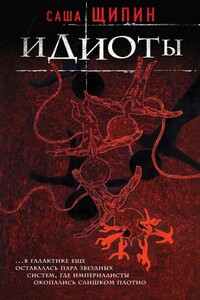
Боги катаются на лыжах, пришельцы работают в бизнес-центрах, а люди ищут потерянный рай — в офисах, похожих на пещеры с сокровищами, в космосе или просто в своих снах. В мире рассказов Саши Щипина правду сложно отделить от вымысла, но сказочные декорации часто скрывают за собой печальную реальность. Герои Щипина продолжают верить в чудо — пусть даже в собственных глазах они выглядят полными идиотами.

Роман «Деревянные волки» — произведение, которое сработано на стыке реализма и мистики. Но все же, оно настолько заземлено тонкостями реальных событий, что без особого труда можно поверить в существование невидимого волка, от имени которого происходит повествование, который «охраняет» главного героя, передвигаясь за ним во времени и пространстве. Этот особый взгляд с неопределенной точки придает обыденным события (рождение, любовь, смерть) необъяснимый колорит — и уже не удивляют рассказы о том, что после смерти мы некоторое время можем видеть себя со стороны и очень многое понимать совсем по-другому.

«Голубь с зеленым горошком» — это роман, сочетающий в себе разнообразие жанров. Любовь и приключения, история и искусство, Париж и великолепная Мадейра. Одна случайно забытая в женевском аэропорту книга, которая объединит две совершенно разные жизни……Май 2010 года. Раннее утро. Музей современного искусства, Париж. Заспанная охрана в недоумении смотрит на стену, на которой покоятся пять пустых рам. В этот момент по бульвару Сен-Жермен спокойно идет человек с картиной Пабло Пикассо под курткой. У него свой четкий план, но судьба внесет свои коррективы.