The Boy Scouts In Russia - [31]
"Do not fire! It is I-Ivan! Ivan Ivanovitch!"
For a moment Fred thought he was going to collapse, so great was the relief and the slackening of tension. He did laugh out, but caught himself at once.
"Ivan!" he said. "I thought it was a German officer! It is I, Ivan-Fred Waring!"
"I knew it," said Ivan, coming up close. "I saw you for just a second as your horse reared. It was just a flash of your face, but if I have ever seen a face once, I never forget it. And you have the look of a Suvaroff about you, even though you are different. I would have known you for one of the breed had I met you anywhere in the world, had no one told me who you were. And so I turned to find you and follow you."
"But what are you doing here? I thought you were to rejoin our own army?"
"I was pressed into service as a chauffeur. This car was needed near the front, and there was no one to drive it. I deceived them wholly, with my uniform, and my motorcycle. And so they forced this car upon me! My plan was to use it, instead of my cycle, to get past their lines."
"But you are riding straight to Gumbinnen-and they are near there in force!"
"No, they have retreated from there. They know that we are too strong for them, and they do not care to fight."
"Yes, and do you know why? Because they have been bringing troops up secretly to Insterberg, and are planning to fight a great battle there on their own grounds! You were wrong, Ivan, in the information you sent."
Wasting no words, he quickly told of what he had learned that evening. And Ivan smote his hands together for he was deeply troubled.
"And I thought I knew all their plans!" he said, savagely. "If the staff had acted upon my information, we should have marched into a trap!"
"Now I must get to the wireless," said Fred. "That was what I meant to do when you frightened my horse there in the road."
"Come, I will drive you back. It will not take long, and your work is more important than mine now. It is safe, too. You can be hidden in the car in case we encounter any Germans. But that is not likely. They are not as thick in this district as they were forty-eight hours ago."
They made their way together to the car, and Fred laughed.
"I don't think I was ever so scared as when you turned and came back. It was worse, in a way, than when they were going to shoot me in the parsonage garden. I'd been so sure I was safe-and then to hear that bugle call on your car!"
"It is not right for you to run such risks," said Ivan. "I wish you were behind our lines! You are not even a Russian, and yet you have been near to death for us."
"Don't you worry about me!" said Fred. "I don't suppose that I would have started this, but when I was pushed into it as I was, I feel like doing all I can. If the Germans had caught me when Boris hid me in the tunnel, they would have treated me like an enemy, so I thought I might as well give them a good excuse, since they were going to do it anyhow."
"Here we are," said Ivan. "Even if you were frightened, this may turn out well. You will save some time, and I can take you to the very opening of the tunnel."
"Well, it's only fair for this car to do me a good turn after the fright it gave me," said Fred.
Ivan drove swiftly when they started again. On that deserted road, through a country that had been blasted by the approach of war, though as yet there had been no actual fighting, there was no reason for cautious driving. And five minutes brought them to the parsonage, and so to a point as close to the opening of the tunnel as the car could go. As the motor stopped Ivan swore in surprise.
"Look!" he said.
To the west there were a dozen darting searchlights winking back and forth across the sombre sky. And below the searchlights were hundreds of tiny points of fire.
"They're advancing!" he cried. "And listen!"
From the east there came a dull sound that rose presently to a steady, loud roar.
"Everything has changed!" cried Ivan, his face white. "We are pushing the attack-we must have occupied Gumbinnen! The Germans are being driven back-and they are bringing up their supports! They must mean to fight here to protect the railway! This place will be the centre of a battle before morning! I shall give up my plan. The only thing that counts now is to get word to the staff of what is going on back here! Come!"
"What about the car?"
"If it is still here after we have sent word, good! If it is not, we must do without it."
Ivan began running toward the mouth of the tunnel. But Fred, before he followed, switched off the lights and ran the car off the side of the road, so that it was under the wall of the parsonage garden and sheltered, to a certain extent, by the heavy foliage of a large tree, whose branches overhung the wall.
"I'd like to think that that car was where we could get at it," he said to himself. "I have an idea that this place is going to be mighty unpleasant before long."
Then he followed Ivan. The Russian had already entered the tunnel. Fred, when he followed him, heard him running up the long passage that led up to the house. Before he could reach the opening, however, he heard other steps coming toward him, and a moment later Boris was heaping reproaches on him.

«Ваше величество, позвольте матери припасть к стопам вашего величества и просить, как милости, разрешения разделить ссылку ее гражданского супруга. Религия, ваша воля, государь, и закон научат нас, как исправить нашу ошибку. Я всецело жертвую собой человеку, без которого я не могу долее жить. Это самое пламенное мое желание. Я была бы его законной супругой в глазах церкви и перед законом, если бы я захотела преступить правила совестливости. Я не знала о его виновности; мы соединились неразрывными узами. Для меня было достаточно его любви…».

В книге рассказывается история главного героя, который сталкивается с различными проблемами и препятствиями на протяжении всего своего путешествия. По пути он встречает множество второстепенных персонажей, которые играют важные роли в истории. Благодаря опыту главного героя книга исследует такие темы, как любовь, потеря, надежда и стойкость. По мере того, как главный герой преодолевает свои трудности, он усваивает ценные уроки жизни и растет как личность.
Текст воспроизведен по изданию: Письма Бичурина из Валаамской монастырской тюрьмы // Народы Азии и Африки, № 1. 1962.
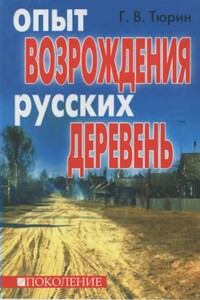
Плачевная ситуация в российских деревнях известна всем. После развала масштабной системы государственного планирования исчезли десятки и сотни тысяч хозяйств, произошел массовый отток населения из сельских районов, были разворованы последние ценности. Исправление ситуации невозможно без эффективного самоуправления в провинции.Организованный в 1997 году Институт общественных и гуманитарных инициатив (ИОГИ) поставил перед собой цель возрождения сельских районов Архангельской области и добился уникальных результатов.

В настоящее издание включены все основные художественные и публицистические циклы произведений Г. И. Успенского, а также большинство отдельных очерков и рассказов писателя.

В настоящей книге Конан Дойл - автор несколько необычных для читателя сюжетов. В первой части он глубоко анализирует произведения наиболее талантливых, с его точки зрения, писателей, как бы открывая "волшебную дверь" и увлекая в их творческую лабораторию. Во второй части книги читатель попадает в мистический мир, представленный, тем не менее, так живо и реально, что создается ощущение, будто описанные удивительные события происходят наяву.