Свобода учиться. Игра против школы - [93]
Burghardt, G. M. (2005). The genesis of animal play: Testing the limits. Cambridge, MA: MIT Press.
Burns, S. M., & Brainerd, C. J. (1979). Effects of constructive and dramatic play on perspective taking in very young children. Developmental Psychology, 15, 512–521.
Byers, J. A. (1977). Terrain preferences in the play behavior of Siberian ibex kids (Capra ibex sibirica). Zeitschrift fur Tierpsychologie, 45, 199–209.
Chagnon, N. (1977). Yanomamo: The fierce people, 2nd ed. New York: Holt, Rinehart & Winston.
Chazan, S., & Cohen, E. (2010). Adaptive and defensive strategies in post-traumatic play of young children exposed to violent attacks. Journal of Child Psychotherapy, 36, 133–151.
Christie, J. F., & Stone, S. J. (1999). Collaborative literacy activity in print-enriched play centers: Exploring the “zone” in same-age and multi-age groupings. Journal of Literary Research, 31, 109–131.
Christie, J. F., Stone, S. J., & Deitscher, R. (2002). Play in same-age and multiage grouping arrangements. In J. L. Roopnarine (Ed.), Conceptual, social-cognitive, and contextual issues in the fields of play, 63–75. Westport, CT: Ablex.
Chudacoff, H. P. (2007). Children at play: An American history. New York: New York University Press.
Clark, R. W. (1977). Edison: The man who made the future. New York: Putnam’s Sons.
Clements, R. (2004). An investigation of the status of outdoor play. Contemporary Issues in Early Childhood, 5, 68–80.
Clinton, H. R. (2001). An idyllic childhood. In S. A. Cohen (Ed.), The games we played: A celebration of childhood and imagination. New York: Simon & Schuster.
Cohen, P. A., Kulik, J. A., & Kulik, C. (1982). Educational outcomes of tutoring: A meta-analysis of findings. American Educational Research Journal, 19, 237–248.
Connolly, J. A., & Doyle, A. (1984). Relation of social fantasy play to social competence in preschoolers. Developmental Psychology, 20, 797–806.
Corballis, M. C. (1999). Phylogeny from apes to humans. In M. C. Corballis & S. E. G. Lea (Eds.), The descent of mind: Psychological perspectives on hominid evolution. Oxford: Oxford University Press.
Correa-Chávez, M., & Rogoff, B. (2009). Children’s attentions to interactions directed to others: Guatemalan Mayan and European American patterns. Developmental Psychology, 45, 630–641.
Csíkszentmihályi, M. (1990). Flow: The psychology of optimal experience. New York: Harper & Row.
Csíkszentmihályi, M., & Hunter, J. (2003). Happiness in everyday life: The uses of experience sampling. Journal of Happiness Studies, 4, 185–199.
Dearden, J. (1998). Cross-age peer mentoring in action. Educational Psychology in Practice, 13, 250–257.
Dennett, D. C. (1994). Language and intelligence. In J. Khalfa (Ed.), What is intelligence? Cambridge: Cambridge University Press.
DeVore, I., Murdock, G. P., and Whiting, J. W. M. (1968). Discussions, part VII: Are the hunter-gatherers a cultural type? In R. Lee & I. DeVore (Eds.), Man the hunter. Chicago: Aldine.
Diamond, J. (1997). Guns, germs, and steel: The fates of human societies. New York: Norton.
Dias, M. G., & Harris, P. L. (1988). The effect of make-believe play on deductive reasoning. British Journal of Developmental Psychology, 6, 207–221.
Draper, P. (1976). Social and economic constraints on child life among the Kung. In R. B. Lee & I. DeVore (Eds.), Kalahari hunter-gatherers: Studies of the!Kung San and their neighbors, 199–217. Cambridge, MA: Harvard University Press.
Draper, P. (1988). Technological change and child behavior among the Kung Ethnology, 27, 339–365.
Durkin, K., & Barber, B. (2002). Not so doomed: Computer game play and positive adolescent development. Applied Developmental Psychology, 23,373–392.
Eccles, J. S., Wigfield, A., Midgley, C., Reuman, D., MacIver, D., & Feldlaufer, H. (1993). Negative effects of traditional middle schools on students’ motivation. Elementary School Journal, 93, 553–574.
Education Portal (2007). Published online at http://education-portal.com/articles/75_to_98_Percent_of_College_Students_Have_Cheated.html.
Eibl-Eibesfeldt, I. (1982). The flexibility and affective autonomy of play. Behavioral and Brain Sciences, 5, 160–162.
–. (1989). Human ethology. New York: Aldine de Gruyter.
Einon, D. F., Morgan, M. J., & Kibbler, C. C. (1978). Brief periods of socialization and later behavior in the rat. Developmental Psychobiology, 11, 231–225.
Einstein, A. (1949). Autobiography. In P. Schilpp, Albert Einstein: Philosopherscientist.
Evanston, IL: Library of Living Philosophers.
Eisen, G. (1988). Children and play in the Holocaust: Games among the shadows. Amherst: University of Massachusetts Press.
Elias, C. L., & Berk, L. E. (2002). Self-regulation in young children: Is there a role for sociodramatic play? Early Childhood Research Quarterly, 17, 216–238.
Ember, C. R. (1973). Feminine task assignment and the social behavior of boys. Ethos, 1, 424–439.
Ember, C. R., & Ember, M. (2005). Explaining corporal punishment of children: A cross-cultural study. American Anthropologist, 107, 609–619.
Emfinger, K. (2009). Numerical conceptions reflected during multiage childinitiated pretend play. Journal of Instructional Psychology, 36, 326–334.
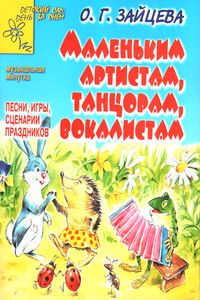
В сборник вошли песни, игры, танцы, сценарии праздников для детей дошкольного и школьного возраста. Увлекательные сюжеты не оставят равнодушными ни детей, ни взрослых. Сценарий «День Ивана Купалы» станет настоящей тематической находкой для музыкальных руководителей детских садов и организаторов детских школьных лагерей. Новогодняя дискотека, «День смеха», праздник для выпускников детского сада порадуют изобилием игр, конкурсов, веселых розыгрышей.

Сборник представляет собой игровой сценарий "Здравствуй, лето!". Он включает загадки, игры, песни, танцы и подробное описание хореографических построений. Автор-составитель — Елена Евгеньевна Соколова, музыкальный руководитель яслей-сада № 65 Калининского района Санкт-Петербурга.
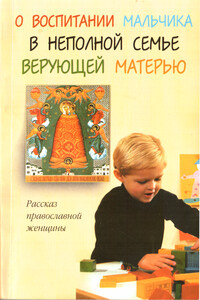
Рассказ православной женщины.

Книга известного московского учителя словесника, кавалера медали Пушкина, много лет проработавшего заведующим кафедрой русского языка и литературы Центра образования № 1811, состоит из литературно-критических эссе, посвященных произведениям «школьных» писателей и поэтов – Пушкина, Гоголя, Некрасова, Тургенева, Горького, Блока, Маяковского, Фадеева. Отличительная черта этих эссе – новые, оригинальные ответы на «давно отвеченные» вопросы. Убедительная аргументация автора ломает привычные догмы и представления, десятилетиями внедрявшиеся в сознание школьников.

Почему даже жизнерадостные в детстве девочки в подростковом возрасте впадают в депрессию? Почему среди них так распространен отказ от еды и склонность к анорексии? Почему они так склонны к суициду в этом возрасте? Эта книга стала одной из лучших книг о подростках за последние 20 лет, в ней известный психолог Мэри Пайфер открывает секреты жизни девочек и девушек, услышанные от них самих. Впервые подробно исследуются многие аспекты подросткового возраста без осуждения, без выдумок, без приписывания кому-либо статуса жертвы.

"Подростки" - это дополненное издание бестселлера, которое уже 5 лет помогает родителям строить нормальные отношения со своим взрослыми детьми. Здесь - лучшие статьи журнала Psychologiesза 10 лет его существования в России. Здесь полезные и очень четкие советы. Здесь все темы, все проблемы, с которыми сталкиваются мамы и папы подростков. Здесь есть все для того, чтобы вам нравилось общаться со своими детьми, чтобы воспитание перестало быть стрессом. Чему научит эта книга: - Слушать своих детей - слышать своих детей - понимать, почему подростки так странно и порой агрессивно себя ведут - разговаривать с подростками, как со взрослыми, - отпустить и доверять - быть уверенным родителей и знать, как реагировать на изменения в поведении детей.