Свобода учиться. Игра против школы - [92]
Библиография
Aarts, M., Wendel-Vos, W., van Oers, H. A. M., van de Goor, I. A. M., & Schuit, A. J. (2010). Environmental determinants of outdoor play in children: A largescale cross-sectional study. American Journal of Preventive Medicine, 39, 212–219.
Abramson, L. Y., Metalsky, G. I., & Alloy, L. B. (1989). Hopelessness depression: A theory-based subtype of depression. Psychological Review, 96, 358–372.
Aiello, J. R., & Douthitt, E. A. (2001). Social facilitation from Triplet to electronic performance monitoring. Group Dynamics: Theory, Research, and Practice, 5, 163–180.
Akilli, G. K. (2007) Games and simulations: A new approach in education? In D. Gibson, C. Aldrich, & M. Prensky (Eds.), Games and simulations in online learning: Research and development frameworks (pp. 1–20). Hershey, PA: Information Science.
Aldis, O. (1975). Play-fighting. New York: Academic Press.
Alloy, L. B., Abramson, L. Y., Whitehouse, W. G., Hogan, M. E., Panzarella, C., & Rose, D. T. (2006). Prospective incidence of first onsets and recurrence of depression in individuals at high and low cognitive risk for depression. Journal of Abnormal Psychology, 115, 145–156.
Allport, E. H. (1920). The influence of the group upon association and thought. Journal of Experimental Psychology, 3, 159–182.
Amabile, T. (1996). Creativity in context: Update to the social psychology of creativity. Boulder, CO: Westview Press.
–. (2001). Beyond talent: John Irving and the passionate craft of creativity. American Psychologist, 56, 333–336.
Aristotle. (1963 translation). D. E. Gershenson & D. A. Greenberg (translators). Metaphysica, liber A. The Natural Philosopher, 2, 3–55.
Baillargeon, R. (2004). Infants’ physical world. Current Directions in Psychological Science, 13, 89–94.
–. (2008). Innate ideas revisited. Perspectives in Psychological Science, 3, 2–13.
Bakeman, R., Adamson, L. B., Konner, M., and Barr, R. (1990). Kung infancy: The social context of object exploration. Child Development, 61, 794–809.
Barnett, J., & Coulson, M. (2010). Virtually real: A psychological perspective on massively multiplayer online games. Review of General Psychology, 14, 167–179.
Barry, H., Child, I., Bacon, M. K. (1959). The relation of child training to subsistence economy. American Anthropologist, 61, 51–63.
Beilock, S. L., Kulp, C. A., Holt, L. E., & Carr, T. H. (2004). More on the fragility of performance: Choking under pressure in mathematical problem-solving. Journal of Experimental Psychology: General, 133, 584–600.
Bell, H. C., Pellis, S. M., & Kolb, B. (2010). Juvenile peer play experience and the development of the orbitofrontal and medial prefrontal cortex. Behavioral and Brain Research, 207, 7–13.
Bernard, J. (1836/2007). “Though I was often beaten for my play”: Excerpt from Autobiography of the Rev. John Bernard, Collections of the Massachusetts Historical Society, v. 25. Reprinted in Martin, J. (Ed.) (2007), Children in colonial America. New York: New York University Press.
Black, R. W., & Steinkuehler, C. (2009). Literacy in virtual worlds. In L. Christenbury, R. Bomer, & P. Smargorinsky (Eds.), Handbook of adolescent literacy research, 271–286. New York: Guilford.
Blickle, G., Schlegel, A., Fassbender, P., & Klein, U. (2006). Some personality correlates of white-collar crime. Applied Psychology 55, 220–233.
Blurton Jones, N. (1993). The lives of hunter-gatherer children. In M. E. Pereira & L. A. Fairbanks (Eds.), Juvenile primates: Life history, development, and behavior, 308–326. New York: Oxford University Press.
Blurton Jones, N., Hawkes, K., and Draper, P. (1994). Differences between Hazda and Kung children’s work: Affluence or practical reason? In E. S. Burch Jr. & L. J. Ellana (Eds.), Key issues in hunter-gatherer research, 189–215. Oxford: Berg.
Bock, J. (2005). What makes a competent adult forager? In B. S. Hewlett & M. E. Lamb (Eds.), Hunter-gatherer childhoods: Evolutionary, developmental, and cultural perspectives, 109–128. New Brunswick, NJ: Transaction.
Bock, J., & Johnson, S. E. (2004). Subsistence ecology and play among the Okavango Delta peoples of Botswana. Human Nature, 15, 63–81.
Boehm, C. (1999). Hierarchy in the forest: The evolution of egalitarian behavior. Cambridge, MA: Harvard University Press.
Bonawitz, E., Shafto, P., Gweon, H., Goodman, N. D., Spelke, E., & Schulz, L. (2011). The double-edged sword of pedagogy: Teaching limits children’s spontaneous exploration and discovery. Cognition, 120, 322–330.
Bowles, S., & Gintis, E. (2000). The origins of mass public education. Ch. 33 in Roy Lowe (Ed.), History of education: Major themes. Volume II: Education in its social context. London: RoutledgeFlamer.
Brooks, R., & Meltzoff, A. N. (2002). The importance of eyes. How infants interpret adult looking behavior. Developmental Psychology, 38, 958–966.
–. (2008). Infant gaze following and pointing predict accelerated vocabulary growth through two years of age: A longitudinal growth curve modeling study. Journal of Child Language, 5, 207–220.
Brown, N. S., Curry, N. E., & Tittnich, E. (1971). How groups of children deal with common stress through play. In N. E. Curry & S. Arnaud (Eds.), Play: The child strives toward self-realization. Washington, DC: National Association for the Education of Young Children.
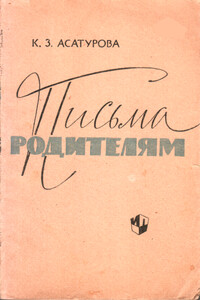
В этой книге собраны письма и беседы с родителями. Некоторые материалы были опубликованы в газетах, журналах и сборниках. Большая часть писем публикуется впервые. Давая те или иные советы родителям, автор опирается не только на свой личный опыт. В первую очередь он использует то педагогическое наследство, которое накоплено семейным воспитанием и живет в лучших семейных традициях. Мы надеемся, что нашему читателю, особенно молодым отцам и матерям, советы, данные в этой книге, помогут избежать многих ошибок, а главное — найти правильный путь к своему ребенку в тех случаях, когда он более всего нуждается в помощи и руководстве.
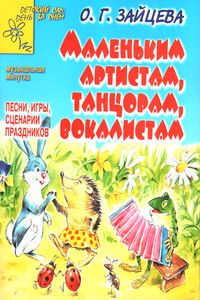
В сборник вошли песни, игры, танцы, сценарии праздников для детей дошкольного и школьного возраста. Увлекательные сюжеты не оставят равнодушными ни детей, ни взрослых. Сценарий «День Ивана Купалы» станет настоящей тематической находкой для музыкальных руководителей детских садов и организаторов детских школьных лагерей. Новогодняя дискотека, «День смеха», праздник для выпускников детского сада порадуют изобилием игр, конкурсов, веселых розыгрышей.

Сборник представляет собой игровой сценарий "Здравствуй, лето!". Он включает загадки, игры, песни, танцы и подробное описание хореографических построений. Автор-составитель — Елена Евгеньевна Соколова, музыкальный руководитель яслей-сада № 65 Калининского района Санкт-Петербурга.
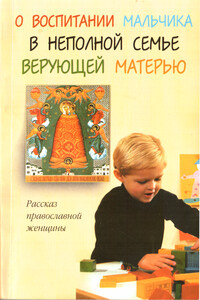
Рассказ православной женщины.

Книга известного московского учителя словесника, кавалера медали Пушкина, много лет проработавшего заведующим кафедрой русского языка и литературы Центра образования № 1811, состоит из литературно-критических эссе, посвященных произведениям «школьных» писателей и поэтов – Пушкина, Гоголя, Некрасова, Тургенева, Горького, Блока, Маяковского, Фадеева. Отличительная черта этих эссе – новые, оригинальные ответы на «давно отвеченные» вопросы. Убедительная аргументация автора ломает привычные догмы и представления, десятилетиями внедрявшиеся в сознание школьников.
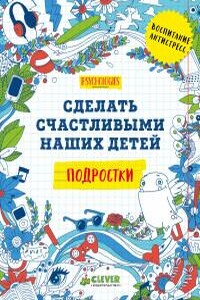
"Подростки" - это дополненное издание бестселлера, которое уже 5 лет помогает родителям строить нормальные отношения со своим взрослыми детьми. Здесь - лучшие статьи журнала Psychologiesза 10 лет его существования в России. Здесь полезные и очень четкие советы. Здесь все темы, все проблемы, с которыми сталкиваются мамы и папы подростков. Здесь есть все для того, чтобы вам нравилось общаться со своими детьми, чтобы воспитание перестало быть стрессом. Чему научит эта книга: - Слушать своих детей - слышать своих детей - понимать, почему подростки так странно и порой агрессивно себя ведут - разговаривать с подростками, как со взрослыми, - отпустить и доверять - быть уверенным родителей и знать, как реагировать на изменения в поведении детей.