Стихи - [33]
When we followed a deer with our baying hounds.
With Bran, Sceolan, and Lomair,
And passing the Firbolgs' burial-motmds,
Came to the cairn-heaped grassy hill
Where passionate Maeve is stony-still;
And found On the dove-grey edge of the sea
A pearl-pale, high-born lady, who rode
On a horse with bridle of findrinny;
And like a sunset were her lips,
A stormy sunset on doomed ships;
A citron colour gloomed in her hair,
But down to her feet white vesture flowed,
And with the glimmering crimson glowed
Of many a figured embroidery;
And it was bound with a pearl-pale shell
That wavered like the summer streams,
As her soft bosom rose and fell.
S. Patrick. You are still wrecked among heathen dreams.
Oisin. 'Why do you wind no horn? she said
'And every hero droop his head?
The hornless deer is not more sad
That many a peaceful moment had,
More sleek than any granary mouse,
In his own leafy forest house
Among the waving fields of fern:
The hunting of heroes should be glad.
'O pleasant woman, answered Finn,
'We think on Oscar's pencilled urn,
And on the heroes lying slain
On Gabhra's raven-covered plain;
But where are your noble kith and kin,
And from what country do you ride?
'My father and my mother are
Aengus and Edain, my own name
Niamh, and my country far
Beyond the tumbling of this tide.
'What dream came with you that you came
Through bitter tide on foam-wet feet?
Did your companion wander away
From where the birds of Aengus wing?
Thereon did she look haughty and sweet:
'I have not yet, war-weary king,
Been spoken of with any man;
Yet now I choose, for these four feet
Ran through the foam and ran to this
That I might have your son to kiss.
'Were there no better than my son
That you through all that foam should run?
'I loved no man, though kings besought,
Until the Danaan poets brought
Rhyme that rhymed upon Oisin's name,
And now I am dizzy with the thought
Of all that wisdom and the fame
Of battles broken by his hands,
Of stories builded by his words
That are like coloured Asian birds
At evening in their rainless lands.
O Patrick, by your brazen bell,
There was no limb of mine but fell
Into a desperate gulph of love!
'You only will I wed, I cried,
'And I will make a thousand songs,
And set your name all names above,
And captives bound with leathern thongs
Shall kneel and praise you, one by one,
At evening in my western dun.
'O Oisin, mount by me and ride
To shores by the wash of the tremulous tide,
Where men have heaped no burial-mounds,
And the days pass by like a wayward tune,
Where broken faith has never been known
And the blushes of first love never have flown;
And there I will give you a hundred hounds;
No mightier creatures bay at the moon;
And a hundred robes of murmuring silk,
And a hundred calves and a hundred sheep
Whose long wool whiter than sea-froth flows,
And a hundred spears and a hundred bows,
And oil and wine and honey and milk,
And always never-anxious sleep;
While a hundred youths, mighty of limb,
But knowing nor tumult nor hate nor strife,
And a hundred ladies, merry as birds,
Who when they dance to a fitful measure
Have a speed like the speed of the salmon herds,
Shall follow your horn and obey your whim,
And you shall know the Danaan leisure;
And Niamh be with you for a wife.
Then she sighed gently, 'It grows late.
Music and love and sleep await,
Where I would be when the white moon climbs,
The red sun falls and the world grows dim.
And then I mounted and she bound me
With her triumphing arms around me,
And whispering to herself enwound me;
He shook himself and neighed three times:
Caoilte, Conan, and Finn came near,
And wept, and raised their lamenting hands,
And bid me stay, with many a tear;
But we rode out from the human lands.
In what far kingdom do you go'
Ah Fenians, with the shield and bow?
Or are you phantoms white as snow,
Whose lips had life's most prosperous glow?
O you, with whom in sloping vallcys,
Or down the dewy forest alleys,
I chased at morn the flying deer,
With whom I hurled the hurrying spear,
And heard the foemen's bucklers rattle,
And broke the heaving ranks of battle!
And Bran, Sceolan, and Lomair,
Where are you with your long rough hair?
You go not where the red deer feeds,
Nor tear the foemen from their steeds.
S. Patrick. Boast not, nor mourn with drooping head
Companions long accurst and dead,
And hounds for centuries dust and air.
Oisin. We galloped over the glossy sea:
I know not if days passed or hours,
And Niamh sang continually
Danaan songs, and their dewy showers
Of pensive laughter, unhuman sound,
Lulled weariness, and softly round
My human sorrow her white arms wound.
We galloped; now a hornless deer
Passed by us, chased by a phantom hound
All pearly white, save one red ear;
And now a lady rode like the wind
With an apple of gold in her tossing hand;
And a beautiful young man followed behind
With quenchless gaze and fluttering hair.
'Were these two born in the Danaan land,
Or have they breathed the mortal air?
'Vex them no longer, Niamh said,
And sighing bowed her gentle head,
And sighing laid the pearly tip
Of one long finger on my lip.
But now the moon like a white rose shone
In the pale west, and the sun'S rim sank,
В книге рассказывается история главного героя, который сталкивается с различными проблемами и препятствиями на протяжении всего своего путешествия. По пути он встречает множество второстепенных персонажей, которые играют важные роли в истории. Благодаря опыту главного героя книга исследует такие темы, как любовь, потеря, надежда и стойкость. По мере того, как главный герой преодолевает свои трудности, он усваивает ценные уроки жизни и растет как личность.
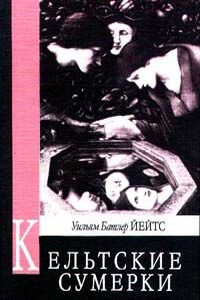
Уильям Батлер Йейтс (1865–1939) — классик ирландской и английской литературы ХХ века. Впервые выходящий на русском языке том прозы "Кельтские сумерки" включает в себя самое значительное, написанное выдающимся писателем. Издание снабжено подробным культурологическим комментарием и фундаментальной статьей Вадима Михайлина, исследователя современной английской литературы, переводчика и комментатора четырехтомного "Александрийского квартета" Лоренса Даррелла (ИНАПРЕСС 1996 — 97). "Кельтские сумерки" не только собрание увлекательной прозы, но и путеводитель по ирландской истории и мифологии, которые вдохновляли У.
Пьеса повествует о смерти одного из главных героев ирландского эпоса. Сюжет подан, как представление внутри представления. Действие, разворачивающееся в эпоху героев, оказывается обрамлено двумя сценами из современности: стариком, выходящим на сцену в самом начале и дающим наставления по работе со зрительным залом, и уличной труппой из двух музыкантов и певицы, которая воспевает героев ирландского прошлого и сравнивает их с людьми этого, дряхлого века. Пьеса, завершающая цикл посвящённый Кухулину, пронизана тоской по мифологическому прошлому, жившему по другим законам, но бывшему прекрасным не в пример настоящему.

Уильям Батлер Йейтс (1865–1939) – великий поэт, прозаик и драматург, лауреат Нобелевской премии, отец английского модернизма и его оппонент – называл свое творчество «трагическим», видя его основой «конфликт» и «войну противоположностей», «водоворот горечи» или «жизнь». Пьесы Йейтса зачастую напоминают драмы Блока и Гумилева. Но для русских символистов миф и история были, скорее, материалом для переосмысления и художественной игры, а для Йейтса – вечно живым источником изначального жизненного трагизма.
Эта пьеса погружает нас в атмосферу ирландской мистики. Капитан пиратского корабля Форгэл обладает волшебной арфой, способной погружать людей в грезы и заставлять видеть мир по-другому. Матросы довольны своим капитаном до тех пор, пока всё происходит в соответствии с обычными пиратскими чаяниями – грабёж, женщины и тому подобное. Но Форгэл преследует другие цели. Он хочет найти вечную, высшую, мистическую любовь, которой он не видел на земле. Этот центральный образ, не то одержимого, не то гения, возвышающегося над людьми, пугающего их, но ведущего за собой – оставляет широкое пространство для толкования и заставляет переосмыслить некоторые вещи.
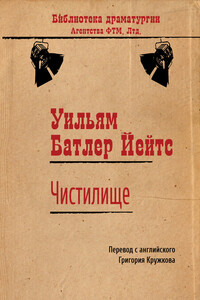
Старик и юноша останавливаются у разрушенного дома. Выясняется, что это отец и сын, а дом когда-то принадлежал матери старика, которая происходила из добропорядочной семьи. Она умерла при родах, а муж её, негодяй и пьяница, был убит, причём убит своим сыном, предстающим перед нами уже стариком. Его мучают воспоминания, образ матери возникает в доме. Всем этим он делится с юношей и поначалу не замечает, как тот пытается убежать с их деньгами. Но между ними начинается драка и Старик убивает своего сына тем же ножом, которым некогда убил и своего отца, завершая некий круг мучающих его воспоминаний и пресекая в сыне то, что было страшного в его отце.