Стихи - [29]
I shall be carried in the gust, command,
Forbid, beseech and waste my breath. Then I,
'Although the thing that you have hid were evil,
The speaking of it could be no great wrong,
And evil must it be, if done ’twere worse
Than mound and stone that keep all virtue in,
And loosen on us dreams that waste our life,
Shadows and shows that can but turn the brain.
But finding him still silent I stooped down
And whispering that none but he should hear,
Said: 'If a woman has put this on you,
My men, whether it please her or displease,
And though they have to cross the Loughlan waters
And take her in the middle of armed men,
Shall make her look upon her handiwork,
That she may quench the rick she has fired; and though
She may have worn silk clothes, or worn a crown,
She'll not be proud, knowing within her heart
That our sufficient portion of the world
Is that we give, although it be brief giving,
Happiness to children and to men.
Then he, driven by his thought beyond his thought,
And speaking what he would not though he would,
Sighed: 'You, even you yourself, could work the cure!
And at those words I rose and I went out
And for nine days he had food from other hands,
And for nine days my mind went whirling round
The one disastrous zodiac, muttering
That the immedicable mound's beyond
Our questioning, beyond our pity even.
But when nine days had gone I stood again
Before his chair and bending down my head
Told him, that when Orion rose, and all
The women of his household were asleep,
To go-for hope would give his limbs the power-
To an old empty woodman's house that's hidden
Close to a clump of beech trees in the wood
Westward of Tara, there to await a friend
That could, as he had told her, work his cure
And would be no harsh friend.
When night had deepened,
I groped my way through boughs, and over roots,
Till oak and hazel ceased and beech began,
And found the house, a sputtering torch within,
And stretched out sleeping on a pile of skins
Ardan, and though I called to him and tried
To shake him out of sleep, I could not rouse him.
I waited till the night was on the turn,
Then fearing that some labourer, on his way
To plough or pasture-land, might see me there,
Went out.
Among the ivy-covered rocks,
As on the blue light of a sword, a man
Who had unnatural majesty, and eyes
Like the eyes of some great kite scouring the woods,
Stood on my path. Trembling from head to foot
I gazed at him like grouse upon a kite;
But with a voice that had unnatural music,
'A weary wooing and a long, he said,
'Speaking of love through other lips and looking
Under the eyelids of another, for it was my craft
That put a passion in the sleeper there,
And when I had got my will and drawn you here,
Where I may speak to you alone, my craft
Sucked up the passion out of him again
And left mere sleep. He'll wake when the sun wakes,
Push out his vigorous limbs and rub his eyes,
And wonder what has ailed him these twelve months.
I cowered back upon the wall in terror,
But that sweet-sounding voice ran on: 'Woman,
I was your husband when you rode the air,
Danced in the whirling foam and in the dust,
In days you have not kept in memory,
Being betrayed into a cradle, and I come
That I may claim you as my wife again.
I was no longer terrified, his voice
Had half awakened some old memory,
Yet answered him: 'I am King Eochaid's wife
And with him have found every happiness
Women can find. With a most masterful voice,
That made the body seem as it were a string
Under a bow, he cried: 'What happiness
Can lovers have that know their happiness
Must end at the dumb stone? But where we build
Our sudden palaces in the still air
Pleasure itself can bring no weariness,
Nor can time waste the cheek, nor is there foot
That has grown weary of the whirling dance,
Nor an unlaughing mouth, but mine that mourns,
Among those mouths that sing their sweethearts' praise,
Your empty bed. 'How should I love, I answered,
'Were it not that when the dawn has lit my bed
And shown my husband sleeping there, I have sighed,
"Your strength and nobleness will pass away."
Or how should love be worth its pains were it not
That when he has fallen asleep within my arms,
Being wearied out, I love in man the child?
What can they know of love that do not know
She builds her nest upon a narrow ledge
Above a windy precipice? Then he:
'Seeing that when you come to the deathbed
You must return, whether you would or no,
This human life blotted from memory,
Why must I live some thirty, forty years,
Alone with all this useless happiness?
Thereon he seized me in his arms, but I
Thrust him away with both my hands and cried,
'Never will I believe there is any change
Can blot out of my memory this life
Sweetened by death, but if I could believe
That were a double hunger in my lips
For what is doubly brief.
And now the shape,
My hands were pressed to, vanished suddenly.
I staggered, but a beech tree stayed my fall,
And clinging to it I could hear the cocks
Crow upon Tara."
King Eochaid bowed his head
And thanked her for her kindness to his brother,
For that she promised, and for that refused.
Thereon the bellowing of the empounded herds
В книге рассказывается история главного героя, который сталкивается с различными проблемами и препятствиями на протяжении всего своего путешествия. По пути он встречает множество второстепенных персонажей, которые играют важные роли в истории. Благодаря опыту главного героя книга исследует такие темы, как любовь, потеря, надежда и стойкость. По мере того, как главный герой преодолевает свои трудности, он усваивает ценные уроки жизни и растет как личность.
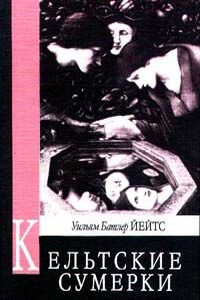
Уильям Батлер Йейтс (1865–1939) — классик ирландской и английской литературы ХХ века. Впервые выходящий на русском языке том прозы "Кельтские сумерки" включает в себя самое значительное, написанное выдающимся писателем. Издание снабжено подробным культурологическим комментарием и фундаментальной статьей Вадима Михайлина, исследователя современной английской литературы, переводчика и комментатора четырехтомного "Александрийского квартета" Лоренса Даррелла (ИНАПРЕСС 1996 — 97). "Кельтские сумерки" не только собрание увлекательной прозы, но и путеводитель по ирландской истории и мифологии, которые вдохновляли У.

Пьеса повествует о смерти одного из главных героев ирландского эпоса. Сюжет подан, как представление внутри представления. Действие, разворачивающееся в эпоху героев, оказывается обрамлено двумя сценами из современности: стариком, выходящим на сцену в самом начале и дающим наставления по работе со зрительным залом, и уличной труппой из двух музыкантов и певицы, которая воспевает героев ирландского прошлого и сравнивает их с людьми этого, дряхлого века. Пьеса, завершающая цикл посвящённый Кухулину, пронизана тоской по мифологическому прошлому, жившему по другим законам, но бывшему прекрасным не в пример настоящему.

Уильям Батлер Йейтс (1865–1939) – великий поэт, прозаик и драматург, лауреат Нобелевской премии, отец английского модернизма и его оппонент – называл свое творчество «трагическим», видя его основой «конфликт» и «войну противоположностей», «водоворот горечи» или «жизнь». Пьесы Йейтса зачастую напоминают драмы Блока и Гумилева. Но для русских символистов миф и история были, скорее, материалом для переосмысления и художественной игры, а для Йейтса – вечно живым источником изначального жизненного трагизма.

Эта пьеса погружает нас в атмосферу ирландской мистики. Капитан пиратского корабля Форгэл обладает волшебной арфой, способной погружать людей в грезы и заставлять видеть мир по-другому. Матросы довольны своим капитаном до тех пор, пока всё происходит в соответствии с обычными пиратскими чаяниями – грабёж, женщины и тому подобное. Но Форгэл преследует другие цели. Он хочет найти вечную, высшую, мистическую любовь, которой он не видел на земле. Этот центральный образ, не то одержимого, не то гения, возвышающегося над людьми, пугающего их, но ведущего за собой – оставляет широкое пространство для толкования и заставляет переосмыслить некоторые вещи.

Старик и юноша останавливаются у разрушенного дома. Выясняется, что это отец и сын, а дом когда-то принадлежал матери старика, которая происходила из добропорядочной семьи. Она умерла при родах, а муж её, негодяй и пьяница, был убит, причём убит своим сыном, предстающим перед нами уже стариком. Его мучают воспоминания, образ матери возникает в доме. Всем этим он делится с юношей и поначалу не замечает, как тот пытается убежать с их деньгами. Но между ними начинается драка и Старик убивает своего сына тем же ножом, которым некогда убил и своего отца, завершая некий круг мучающих его воспоминаний и пресекая в сыне то, что было страшного в его отце.