Satellite People - [40]
With as much sensitivity as I could, I asked Ingrid Schelderup the one question that I needed an answer to here and now: had she found both the body and the gun exactly where they were lying now? She dried a tear before answering, but then gave a decisive nod. She had not touched the revolver and she had only gingerly touched her son on the neck and wrist to feel for any sign of life. The front door was unlocked when she arrived, she told me. When she discovered that, she was almost paralysed by fear. Then she had opened the door and seen the gun without hearing any sounds of life from the flat and had immediately realized that he had been murdered during the night.
It was easy to draw some conclusions, having looked around the flat. Leonard Schelderup had obviously been shot, presumably with a revolver that someone had stolen from his father’s house and brazenly left on the floor after the murder. Given Leonard Schelderup’s intense fear the night before, it was unthinkable that he might have forgotten to lock the door before going to bed. He must therefore have been murdered by a guest who either had a key or whom he had let in. But there was little more to deduce from the scene of the crime. Even if the list of potential murderers was limited to the nine remaining guests who had been at supper in Schelderup Hall when his father had been murdered two days earlier, it was impossible to exclude any of them.
I looked at Ingrid Schelderup without saying anything. She looked back at me, equally silent. Her eyes were not only sad, but frightened. I got the feeling that we were thinking the same thing. Namely, that it would seem Leonard Schelderup had been shot in much the same way that members of his late father’s Resistance group had been, but twenty-eight years later.
II
One detail in Leonard Schelderup’s flat quickly caught my attention. The two chairs on opposite sides of the kitchen table did not give away much in themselves, even if he did live on his own. But the kitchen table was set for two. The coffee cups served to reinforce the impression that young Schelderup had sat here the night before with a guest. When he called me at around ten o’clock, the guest had not yet arrived, or he had chosen not to tell me. There was not much more to be drawn from it. One of the cups had been used, but the cup and plate on the other side of the table were untouched. I was fairly convinced that Leonard Schelderup’s guest had been sitting on that side.
However, the most remarkable discovery was in the bedroom. It seemed unlikely that Leonard Schelderup had gone to bed, only to get up again and get dressed before being shot in his living room in the middle of the night. And yet it would appear that there had been considerable activity in his bed the day before. The pillows and duvet were in a tangle and the sheet was half pulled off the mattress. It might of course be the case that Leonard Schelderup had simply not made his bed when he got up yesterday morning, but his mother insisted that he was a very tidy and good boy who always made his bed as soon as he got up. There were no visible physical traces of sexual intercourse on the covers. The crucial proof that someone else had not only been in the flat in the past twenty-four hours, but also in the bed, lay on the pillow. The forensic team found two curly blond hairs that clearly came from Leonard Schelderup’s head, but also three longer, darker hairs that were quite obviously not his.
As I stood there looking at the three dark hairs, it seemed to me that the case had now leapt forwards towards a possible solution. I felt a stab of sympathy for the dark-haired Synnøve Jensen, but the evidence was certainly stacking up against her.
Ingrid Schelderup held her poise and control throughout our conversation and the examination of the flat. But then the tragedy apparently struck her. Sitting alone on the sofa, she suddenly broke down and collapsed in a sobbing heap. I managed to coax her back up intoa sitting position. It was of course no easy thing to comfort a woman who has just found her only son shot and murdered. In the end, the constable offered to drive her home and to stay with her until she was given some tranquillizers.
At half past eight, I was sitting on my own in Leonard Schelderup’s flat, with my dead host lying eternally silent and cold on the floor in the living room. My eyes rested on him while I used his telephone to call the main police station, who promised to send down some more forensic scientists to examine both him and the flat. His body was now finally released from the tension of the past few days. But his face was tense and frightened, even in death.
I sat there looking at the dead man. There seemed to be no way around it; all circumstances now seemed to point to Synnøve Jensen. Though why she should kill her other lover and fellow conspirator, if that was what Leonard Schelderup had been, was very unclear. But the hairs on the pillow were a strong indication that that was the case.
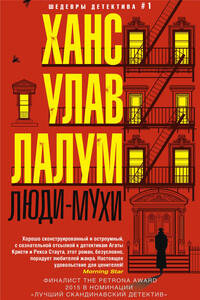
Убит бывший лидер норвежского Сопротивления и бывший член кабинета министров Харальд Олесен. Его тело обнаружено в запертой квартире, следов взлома нет, орудие убийства отсутствует. На звук выстрела к двери Олесена сбежались все соседи, но никого не увидели. Инспектор уголовного розыска Колбьёрн Кристиансен считает, что убийство, скорее всего, совершил кто-то из них. Более того, он полагает, что их показания лживы.
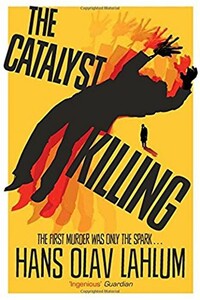
The third mystery in the hugely compelling, bestselling international crime series from Norway's answer to Agatha Christie, Hans Olav Lahlum, The Catalyst Killing will have you guessing to the final clue. The first murder was only the spark… 1970: Inspector Kolbjorn Kristiansen, known as K2, witnesses a young woman desperately trying to board a train only to have the doors close before her face. The next time he sees her, she is dead… As K2 investigates, with the help of his precocious young assistant Patricia, he discovers that the story behind Marie Morgenstierne's murder really began two years ago, when a group of politically active young people set out on a walking tour in the mountains.
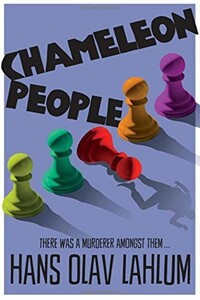
From the international bestselling author, Hans Olav Lahlum, comes Chameleon People, the fourth murder mystery in the K2 and Patricia series.1972. On a cold March morning the weekend peace is broken when a frantic young cyclist rings on Inspector Kolbjorn 'K2' Kristiansen's doorbell, desperate to speak to the detective.Compelled to help, K2 lets the boy inside, only to discover that he is being pursued by K2's colleagues in the Oslo police. A bloody knife is quickly found in the young man's pocket: a knife that matches the stab wounds of a politician murdered just a few streets away.The evidence seems clear-cut, and the arrest couldn't be easier.
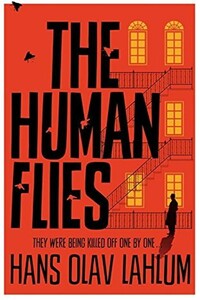
Oslo, 1968: ambitious young detective Inspector Kolbjorn Kristiansen is called to an apartment block, where a man has been found murdered. The victim, Harald Olesen, was a legendary hero of the Resistance during the Nazi occupation, and at first it is difficult to imagine who could have wanted him dead. But as Detective Inspector Kolbjorn Kristiansen (known as K2) begins to investigate, it seems clear that the murderer could only be one of Olesen's fellow tenants in the building. Soon, with the help of Patricia – a brilliant young woman confined to a wheelchair following a terrible accident – K2 will begin to untangle the web of lies surrounding Olesen's neighbors; each of whom, it seems, had their own reasons for wanting Olesen dead.
Будущее Джимми Кьюсака, талантливого молодого финансиста и основателя преуспевающего хедж-фонда «Кьюсак Кэпитал», рисовалось безоблачным. Однако грянул финансовый кризис 2008 года, и его дело потерпело крах. Дошло до того, что Джимми нечем стало выплачивать ипотеку за свою нью-йоркскую квартиру. Чтобы вылезти из долговой ямы и обеспечить более-менее приличную жизнь своей семье, Кьюсак пошел на работу в хедж-фонд «ЛиУэлл Кэпитал». Поговаривали, что благодаря финансовому гению его управляющего клиенты фонда «никогда не теряют свои деньги».

Очнувшись на полу в луже крови, Роузи Руссо из Бронкса никак не могла вспомнить — как она оказалась на полу номера мотеля в Нью-Джерси в обнимку с мертвецом?

Действие романа происходит в нулевых или конце девяностых годов. В книге рассказывается о расследовании убийства известного московского ювелира и его жены. В связи с вступлением наследника в права наследства активизируются люди, считающие себя обделенными. Совершено еще два убийства. В центре всех событий каким-то образом оказывается соседка покойных – молодой врач Наталья Голицына. Расследование всех убийств – дело чести майора Пронина, который считает Наталью не причастной к преступлению. Параллельно в романе прослеживается несколько линий – быт отделения реанимации, ювелирное дело, воспоминания о прошедших годах и, конечно, любовь.
Егор Кремнев — специальный агент российской разведки. Во время секретного боевого задания в Аргентине, которое обещало быть простым и безопасным, он потерял всех своих товарищей.Но в его руках оказался секретарь беглого олигарха Соркина — Михаил Шеринг. У Шеринга есть секретные бумаги, за которыми охотится не только российская разведка, но и могущественный преступный синдикат Запада. Теперь Кремневу предстоит сложная задача — доставить Шеринга в Россию. Он намерен сделать это в одиночку, не прибегая к помощи коллег.

Опорск вырос на берегу полноводной реки, по синему руслу которой во время оно ходили купеческие ладьи с восточным товаром к западным и северным торжищам и возвращались опять на Восток. Историки утверждали, что название городу дала древняя порубежная застава, небольшая крепость, именованная Опорой. В злую годину она первой встречала вражьи рати со стороны степи. Во дни же затишья принимала застава за дубовые стены торговых гостей с их товарами, дабы могли спокойно передохнуть они на своих долгих и опасных путях.

Из экспозиции крымского художественного музея выкрадены шесть полотен немецкого художника Кингсховера-Гютлайна. Но самый продвинутый сыщик не догадается, кто заказчик и с какой целью совершено похищение. Грабители прошли мимо золотого фонда музея — бесценной иконы «Рождество Христово» работы учеников Рублёва и других, не менее ценных картин и взяли полотна малоизвестного автора, попавшие в музей после войны. Читателя ждёт захватывающий сюжет с тщательно выписанными нюансами людских отношений и судеб героев трёх поколений.