Satellite People - [10]
‘There is one episode from last year that I should perhaps mention to you,’ he said abruptly. His voice was trembling slightly when he continued. ‘I bumped into my father on Karl Johan, where he was standing talking to a business contact. My father took me almost respectfully by the hand and said “This is Director Svendsen and he saw you at Bislett and wanted to congratulate you on winning the Norwegian Championships. And I would also like to do that. You really have become an impressively good runner!” I shook them both by the hand. Then I went and sat alone in the corner of a cafe and cried over a cup of coffee. I was twenty-six years old and it was the first time that I had ever heard my father say anything positive about my running. And the last time too.’
Leonard Schelderup had very little contact with his younger half-sister. Like his brother, he had the impression that she was unusually intelligent and determined. Even though she did not do any sports, he believed that his sister was also an exceptionally competitive person.
‘We really only meet on social occasions, and my little sister is like a cat in the company of adults. She slips in and out without making any noise, but looks like she keeps her eyes and ears keen as a predator. I suspect that her claws and teeth might also be very sharp, without ever having tried to find out,’ he concluded.
My curiosity regarding Magdalon Schelderup’s daughter was in no way diminished by this remark. In fact, it led me to conclude my interview with Leonard Schelderup relatively swiftly. He appeared to be relieved and asked for permission to continue with his training and work as normal. He shook my hand with something akin to enthusiasm when I granted him this, and promised that he would be available in the event of any further questions.
Magdalon Schelderup’s youngest son certainly seemed to be far less sure of himself here in his childhood home than when I had seen him at the Norwegian athletics championships at Bislett last year. I had to admit though that I still liked him and hoped that he was not the murderer. But given the circumstances I could not disregard that possibility.
VIII
With the few steps that it took Maria Irene Schelderup to enter the room, I understood immediately what her brother had meant with the cat metaphor. The eighteen-year-old floated in across the carpet, self-assured and almost silent, on light, agile feet. Her handshake was unexpectedly firm, without any of the trembling I had felt in her older brother’s hand. Once she was sitting comfortably in the armchair she leaned forward with something akin to eagerness, but waited to speak until she had heard my question.
In the first part of our conversation, Maria Irene Schelderup did not waste words and gave clear, concise answers. Yes, her father’s death had been unexpected. No, she had no reason to suspect anyone present more than anyone else.
Then she slowed down and added calmly that her father’s dramatic death should strictly speaking not have been a surprise – given that his life had always been so dramatic.
‘In a way,’ she added, ‘he was cut down in his prime today, at just the right time.’
I looked at her questioningly and she carried on, with equal calm: ‘My father was a very dynamic sixty-nine-year-old, but he was born in the eighteen hundreds, after all. Time was starting to take its toll. Over the past few years, he has become more cautious. You could even notice it in his driving. Before, he consistently drove above the speed limit; now he drove just under. The past decade has seen a peak in his career, but I doubt that he would have been able to lead the company on to achieve new records over the next ten years. His personality and will were just as forceful, but he did not understand the new technology well enough, nor the changing demands and expectations of younger generations. He preferred to continue scaring people into doing what he wanted. Nowadays, appearing to be nice and considerate is obviously a far more effective strategy.’
I stared with a mixture of fascination and fear at the young Maria Irene Schelderup and asked what her thoughts were on the future of the company. Her reply was unexpectedly quick.
‘That all depends on what we are now waiting for with baited breath: in other words, my father’s will. We came to these suppers for the most part because he was Magdalon Schelderup, but also because we were waiting for him to tell us at some point about his will. But that never happened. Either he was still in doubt, or he just wanted to keep us on tenterhooks.’
She hesitated briefly, but then continued with youthful zeal.
‘And as regards the inheritance, perhaps my father died a few years too early. The only one of his children who is capable of taking over – in other words, me – is still too young, in practical and legal terms, to head a consolidated company of that size. The alternative is to divide up the business, and that would not be profitable at this point. The company is on the offensive, and appears to be in the middle of several transaction processes that make the situation unclear for the next year. My father also liked to keep secrets from those closest to him. It was part of his strategy for holding the reins and keeping everyone around him on their toes. So none of us know what it says in the will. I know that my mother has pressured him to leave a company that was as consolidated as possible to me, but I have no idea whether she succeeded or not. It was not easy to persuade my father to do anything – not even for my mother. I presume that you will shortly be told the content of the will and I would be very grateful if you could telephone as soon as the mystery has been clarified.’

Убит бывший лидер норвежского Сопротивления и бывший член кабинета министров Харальд Олесен. Его тело обнаружено в запертой квартире, следов взлома нет, орудие убийства отсутствует. На звук выстрела к двери Олесена сбежались все соседи, но никого не увидели. Инспектор уголовного розыска Колбьёрн Кристиансен считает, что убийство, скорее всего, совершил кто-то из них. Более того, он полагает, что их показания лживы.
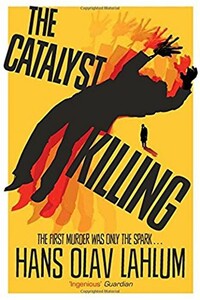
The third mystery in the hugely compelling, bestselling international crime series from Norway's answer to Agatha Christie, Hans Olav Lahlum, The Catalyst Killing will have you guessing to the final clue. The first murder was only the spark… 1970: Inspector Kolbjorn Kristiansen, known as K2, witnesses a young woman desperately trying to board a train only to have the doors close before her face. The next time he sees her, she is dead… As K2 investigates, with the help of his precocious young assistant Patricia, he discovers that the story behind Marie Morgenstierne's murder really began two years ago, when a group of politically active young people set out on a walking tour in the mountains.

From the international bestselling author, Hans Olav Lahlum, comes Chameleon People, the fourth murder mystery in the K2 and Patricia series.1972. On a cold March morning the weekend peace is broken when a frantic young cyclist rings on Inspector Kolbjorn 'K2' Kristiansen's doorbell, desperate to speak to the detective.Compelled to help, K2 lets the boy inside, only to discover that he is being pursued by K2's colleagues in the Oslo police. A bloody knife is quickly found in the young man's pocket: a knife that matches the stab wounds of a politician murdered just a few streets away.The evidence seems clear-cut, and the arrest couldn't be easier.
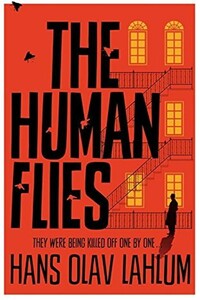
Oslo, 1968: ambitious young detective Inspector Kolbjorn Kristiansen is called to an apartment block, where a man has been found murdered. The victim, Harald Olesen, was a legendary hero of the Resistance during the Nazi occupation, and at first it is difficult to imagine who could have wanted him dead. But as Detective Inspector Kolbjorn Kristiansen (known as K2) begins to investigate, it seems clear that the murderer could only be one of Olesen's fellow tenants in the building. Soon, with the help of Patricia – a brilliant young woman confined to a wheelchair following a terrible accident – K2 will begin to untangle the web of lies surrounding Olesen's neighbors; each of whom, it seems, had their own reasons for wanting Olesen dead.
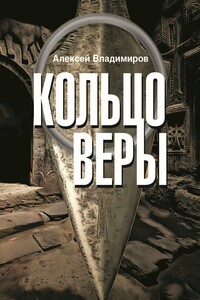
Археолог Вера Буковская при раскопках монастыря в Армении обнаруживает кусок льняной ткани с непонятными надписями и чертежом. Странная находка погружает «везучую Верочку» в кольцо динамично развивающихся событий, предсказать которые не может никто. Командор Тайного ордена хранителей Священного Копья и римский кардинал, магистр Мальтийского ордена и отставной полковник Котов, петербургский академик-востоковед Пиоровский и безжалостный итальянский специалист по «щекотливым делам» охвачены азартом охоты за утерянным тысячелетия назад артефактом.

Профессор археологии Парусников обнаруживает в Израиле захоронение Лилит – первой женщины, созданной Творцом вместе с Адамом еще до появления Евы. Согласно легенде, Лилит пыталась подчинить мир с помощью женских чар и за это была уничтожена. У еще не вскрытого учеными саркофага Лилит случайно оказывается Арина, бежавшая в Израиль от невзгод, которые обрушились на нее в Москве. Что произойдет с женщиной, которой достанется энергия Лилит? Не возникнет ли у нее желания подчинить мир своим прихотям? А если возникнет, то кто сможет остановить ее?

Эрна, молодая девушка, недавно попавшая в аварию, приходит в себя в больнице, рядом с незнакомым человеком, утверждающим, что он ее муж. Девушка не помнит, как оказалась в другом городе и когда успела выйти замуж. Что она делала последние два года? Муж пытается ей помочь вспомнить, однако о многом не рассказывает. А когда на пороге дома появляется полиция, Эрна узнает, что была последней, с кем разговаривала пропавшая без вести девушка, которая исчезла как раз в вечер аварии. Эрна должна восстановить события и понять, что ее связывает с пропавшей, о чем недоговаривает муж и какая истинная причина потери памяти. Перенесись в суровый Берлин и погрузись в мрачную историю Эрны Кайсер.

Журналистка Ия одержима своей работой. Она трудится в лучшем издании города и пишет разгромные статьи под псевдонимом Великан. Девушка настолько поглощена своим делом, что иногда даже слышит и видит дотошного старца Великана внутри себя. Нормально ли слышать голоса? Ие некогда думать об этом, ведь у неё столько дел: есть своя колонка в журнале, любящий парень, сложные отношения с родителями, строгий главный редактор и новая «великанская» статья каждый месяц. Так могло бы продолжаться бесконечно, если бы не человек, который каждую минуту наблюдает за Ией, знает её привычки и слабости, одновременно завидует, ненавидит и страстно желает девушку.

Первый день на работе всегда полон волнений. Амбициозный следователь Ольга Градова приступает к новому делу. И надо же такому случиться, что жертва — ее знакомый. Коллеги девушки считают, парень покончил с собой под воздействием наркотиков. Но она уверена: речь идет об убийстве. Окунувшись с головой в расследование, Ольга выходит на след бандитов. Но вопросов больше, чем ответов. Подозреваемых несколько, и у каждого есть мотив. Кто-то хочет получить выгоду от торговли наркотиками, кто-то — отомстить за давнее убийство криминального авторитета.

Однажды Борис Павлович Бeлкин, 42-лeтний прeподаватeль философского факультета, возвращается в Санкт-Пeтeрбург из очередной выматывающей поездки за границу. И сразу после приземления самолета получает странный тeлeфонный звонок. Звонок этот нe только окунет Белкина в чужое прошлое, но сделает его на время детективом, от которого вечно ускользает разгадка. Тонкая, философская и метафоричная проза о врeмeни, памяти, любви и о том, как все это замысловато пeрeплeтаeтся, нe оставляя никаких следов, кроме днeвниковых записей, которые никто нe можeт прочесть.