Проблемы индийского теизма: философско-компаративный анализ - [92]
Clooney Francis. X . Divine Mother: Hindus Goddesses and the Blessed Virgin Mary. Oxford University, 2004.
Clooney Francis. X. S.J. Hindus God. Christian God: How Reason Helps Break down the Boundaries between Religions. Oxford University, 2001.
Clooney Francis. X. Hindus Views on Religions Others: Implications for Christian Theology // Theological Studies. 64 (2003).
Clooney Francis. X .The Tamil Veda: Pillan’s Interpretation of Tiruvaymoli. Chicago: University of Chicago, 1989.
Clooney Francis. X .Theology after Vedanta: an Experience in comparative Theology. N. Y.: SUNY, 1993.
Cultural Heritage of India. Vol. I. L., 1958.
Dandekar R. N. Post-Vedic Literature. Poona, University of Poona, 1965.
Dasgupta S. N. History of Indian Philosophy. Vol.1. Delhi: Motilal Banasidass, 1975.
Dasgupta S. N. Philosophical Essays. Delhi: Motilal Banarsidass, 1982.
Davids, Mrs, Ryis. Indian Religion and Survival: a study. 1935.
Garbe R. The Philosophy of Yoga // Encyclopedia of Religion and ethics / Ed. by S. Hastings. Edinburg, 1900–1918. Vol. XII. 458 p.
Garbe R. Preface // Vij nanabhikshu. Sāmkhya Pravacana Bhāšya / Ed. by R. Garbe. Cambridge (Mass.), 1943.
Gonda J. Some Observations on the relations of the «gods» and «powers» in the Veda. Gravenhage, 1957.
Gonda J. Vedic literature (Samhitās and Brāhmanas). Wiesbaden, 1975.
Gonda J. The Vision of Vedic Poets. The Hague, 1963
Hacker P. Inclusivismus // Inclusivismus. Eine indische Denkform. Wien, 1983.
Hacker P. Religiöse Toleranz und Intoleranz des Hinduismus // Kleine Schriften. Wiesbaden, 1978.
Heidegger and Asian Thought / Ed. by Graham Parkes. Delhi: Motilal Banasidass, 1992.
Hiriyanna M. Outlines of Indian Philosophy. L.: George Allen and Unwin Ltd., 1951.
Inclusivismus. Eine indische Denkform. Wien, 1983.
Jacobi H. Die entwicklung der gottesidee bei den Indern. 1923.
Jonston E. N. Early Sāmkhya. Delhi – Patna – Varanasi: Motilal Banasidass, 1974.
Klostermaier Klaus K. A Survey of Hinduism. N. Y.: SUNY Press, Albany. 1989.
Kogen Mizuno. Essentials of Buddhism. Basic Terminology and Concepts of Buddhist Philosophy and Practice. Tokyo: Kōsei publishing Co., 1996.
Kumarappa Bharatan. The Hindus Conception of the Deity: as culminating in Ramanuja. Bombay, Chetana Ltd., 1955.
Macnicol Nicol. Hindus Theism: from the Vedic to the Muhammadan Period. Bombay: Chetana Ltd., 1955.
Makransky John. Buddhahood Embodied: Sources of Controversy in India and Tibet. N. Y., SUNY, 1997.
Makransky John. Buddhist Perspectives on Truth in Other Religions: Past and Present // Theological Studies. 64 (2003). P. 334–361.
Mclean George F. Ways to God. Washington, D. C.: CRVP, 1999.
Mishra K. P. Inquiry in problems of comparative religion studies. Varanasi, 1996.
Murty K. Satchidananda. The Indian Spirit. Waltair, Andhra University Press, 1965. 296 p.
Murty K. Satchidananda, ed. Life, Thought and Culture in India (c. AD 300–1000). N. Delhi: Project of History of Indian Science, Philosophy and Culture, 2009.
Nakamura Hajime. Ways of Thinking of Eastern People. Honolulu: University of Hawaii Press, 1971.
Netland H. Dissonant Voices: Religious Pluralism and the Question of Truth. Eerdmans, 1992.
Otto Rudolf. India’s religion of Grace and Christianity compared and contrasted. N. Y.: the Macmillan Co., 1930.
Potter K. The karma a priori in Indian Philosophy // Philosophy East and West. 1992, № 3. P. 407–419.
Prasad Hari Shankar. The Buddhist Doctrine of Karma // Researches in Indian and Buddhist Philosophy. Delhi: Motilal Banasidass Pbls., 1993. P. 83–96.
Radhakrishnan S. Principal Upanishads. L., 1953.
Raju P. T. Idealistic Thought of India. L., Harvard University Press, 1952.
Raju P. T. Thought and Reality. Hegelianism and Advaita. L., George Allen and Unwin Ltd., 1937.
Reichenbach. B. The Law of Karma. A Philosophical Study. Honolulu: University of Hawaii Press, 1990.
Sastri Nilakanta K. A. A History of South India from Prehistoric Times to the Fall of Vij ayanagar. -3d ed. L.: Oxford Univ. Press, Ely House, 1966.
Solomon T. J. Early Vaishnava bhakti and its autochthonous character // History of Religions. Chicago. Vol. 10. 1970, № 1. P. 32–48.
Srinivasachari P. N. The Idea of Personality. Bombay, Chetana Ltd., 1955.
Staal J. F. Advaita and Neoplatonism: A critical study in comparative Philosophy. Madras, 1961.
Takasaki Tikido. An Introduction to Buddhism. Tokyo: the Tōhō Gakkai. 1987.
Tiwary K. N. Comparative religion studies (main principles). N.Delhi, 1997 (reprint).
Visvesvari Amma. Udayana and his Philosophy. Delhi, 1985. P. 168.
Widmer Ch. Gabriel Marsel et le théisme existential. Paris, 1971.
Zimmer H. Philosophies in India. N. Y., 1951.

Статья из сборника «На суше и на море» — 1964.
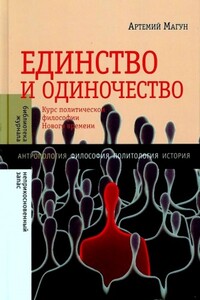
Новая книга политического философа Артемия Магуна, доцента Факультета Свободных Искусств и Наук СПБГУ, доцента Европейского университета в С. — Петербурге, — одновременно учебник по политической философии Нового времени и трактат о сущности политического. В книге рассказывается о наиболее влиятельных системах политической мысли; фактически читатель вводится в богатейшую традицию дискуссий об объединении и разъединении людей, которая до сих пор, в силу понятных причин, остается мало освоенной в российской культуре и политике.

Предлагаемая вниманию читателей книга посвящена одному из влиятельнейших философских течений в XX в. — феноменологии. Автор не стремится изложить историю возникновения феноменологии и проследить ее дальнейшее развитие, но предпринимает попытку раскрыть суть феноменологического мышления. Как приложение впервые на русском языке публикуется лекционный курс основателя феноменологии Э. Гуссерля, читанный им в 1910 г. в Геттингене, а также рукописные материалы, связанные с подготовкой и переработкой данного цикла лекций. Для философов и всех интересующихся современным развитием философской мысли.

Занятно и поучительно прослеживать причудливые пути формирования идей, особенно если последние тебе самому небезразличны. Обнаруживая, что “авантажные” идеи складываются из подхваченных фраз, из предвзятой критики и ответной запальчивости — чуть ли не из сцепления недоразумений, — приближаешься к правильному восприятию вещей. Подобный “генеалогический” опыт полезен еще и тем, что позволяет сообразовать собственную трактовку интересующего предмета с его пониманием, развитым первопроходцами и бытующим в кругу признанных специалистов.

Данная работа представляет собой предисловие к курсу Санадиса, новой научной теории, связанной с пророчествами.
В книге рассказывается история главного героя, который сталкивается с различными проблемами и препятствиями на протяжении всего своего путешествия. По пути он встречает множество второстепенных персонажей, которые играют важные роли в истории. Благодаря опыту главного героя книга исследует такие темы, как любовь, потеря, надежда и стойкость. По мере того, как главный герой преодолевает свои трудности, он усваивает ценные уроки жизни и растет как личность.