Letter to a Hindoo - [6]
The recognition of this truth in its full significance is possible for men, only when they free themselves completely from all religious, as well as scientific superstitions by means of which it has been for centuries hidden from mankind.
In order to save a sinking ship it is necessary to throw overboard the ballast, which though it might have been indispensable at one time, would now cause destruction. It is exactly the same with religious and scientific superstitions which hide this salutary truth from men. In order that people could embrace the truth, not in such a vague way as it presented itself to them during their childhood, nor in such a onesided, unstable way as it was interpreted to them by religious and scientific teachers, but in such a manner that it should become the highest law of human life; to effect this, the complete liberation of this truth from all, all those superstitions pseudo religious as well as pseudo scientific which now obscure it, is necessary, not a partial, timid liberation, such a one as in the religious sphere was effected by Guru-Nanaka, the founder of the religion of the Sakas, and in Christianity by Luther, or similar reformers in other religions, but a complete deliverance of the religious truth from all those ancient religious, as well as from the modern scientific superstitions.
If people only freed themselves from beliefs in all kinds of Ormuzds, Brahmas, Sabbaoths, their incarnation in Krishnas and Christs, from beliefs in a paradise and hell, in angels and demons, from reincarnations, resurrections, from the idea of the interference of God in the life of the universe; free themselves chiefly from the recognition of the infallibility of the various Vedas, Bibles, Gospels, Triptakas, Korans, etc.; if people only freed themselves also from blindly believing in all sorts of scientific doctrines about infinitesimally small atoms, molecules, about all kinds of infinitely great and infinitely remote worlds, about their movements and their origin, about forces; from the implicit faith in all manner of theoretical scientific laws to which man is supposed to be subjected – the historic and economic laws, the laws of straggle and survival etc., – if people only freed themselves from this terrible accumulation of the idle exercises of our lower capacities of mind and memory which are called the Sciences, from all the innumerable divisions of all sorts of histories, anthropologies, homiletics, bacteriologies, jurisprudences, cosmographies, strategies, their name is legion; if people only relieve themselves of this ruinous intoxicating ballast, – that simple, explicit law of love accessible to all, which is so natural to mankind, solving all questions and perplexities, will of its own accord become clear and obligatory.
VII
Children, look at the flowers at your feet; do not trample upon them. Look at the love in your midst and do not repudiate it.
Krishna P. 178.
There is a higher reason which transcends all human minds. It is far and near. It permeates all the worlds and at the same time is infinitely higher than they.
A man who sees that all things are contained in the higher spirit, cannot treat any being with contempt.
For him to whom all spiritual beings are equal to the highest, there can be no room for deception or grief.
Those who are ignorant and are devoted to the religious rites only, are in a deep gloom, but those who are given up to fruitless meditations are in a still greater darkness.
Upanishads, from Vedas.
Yes, in our time, men – to escape from self inflicted calamities which have reached the highest degree of intensity: whether it be a Hindoo seeking liberation from the subjugation of the English, or any other man in his struggle with those using violence – whether in the negro’s fights with the North American, or the Persian’s, Russian’s or the Turk’s fight with his Government, as well as any man who seeks the greatest amount of welfare for himself as well as for everybody – do not require new explanations and justifications of old religious superstitions, as Vivekanandas, Baba Bharatis and others have formulated in your country, and in the Christian world; an infinite number of such new interpreters and expounders of what no one stands in need; nor the innumerable sciences about matters which not only are unnecessary but mostly harmful (in the spiritual realm there is nothing indifferent, but what is not useful is always harmful). The Hindoo, as well as the Englishman, the Frenchman, the German, the Russian, do not require constitutions, revolutions, any conferences, congresses, any new ingenious devices for submarine navigation, aerial navigation, powerful explosives, or all kinds of conveniences for the enjoyment of the rich ruling classes; not new schools, universities with instruction in innumerable sciences, not the augmentation of papers and books, and gramophones and cinematographs, not those childish and mostly corrupt stupidities which are called arts; but one thing only is needful: the knowledge of that simple lucid truth – that the law of human life is the law of love, which gives the highest happiness to every individual, as well as to all mankind. If people only free themselves in their consciousness from those mountains of nonsense which hide the truth from them; and that indubitable eternal truth inherent to mankind which is one and the same in all the great religions of the world, will inevitably enter the soul of every man. And as soon as this is acknowledged by the great majority, stupidity which now conceals it will disappear and with it will by itself disappear all the evils from which humanity now suffers.
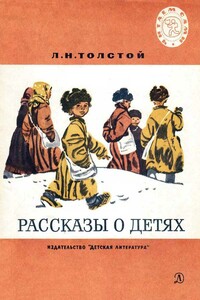
Рассказы, собранные в этой книге, были написаны великим русским писателем Львом Николаевичем Толстым (1828–1910) специально для детей. Вот как это было. В те времена народ был безграмотный, школ в городах было мало, а в деревнях их почти не было.Лев Николаевич Толстой устроил в своём имении Ясная Поляна школу для крестьянских детей. А так как учебников тоже не было, Толстой написал их сам.Так появились «Азбука» и «Четыре русские книги для чтения». По ним учились несколько поколений русских детей.Рассказы, которые вы прочтёте в этом издании, взяты из учебных книг Л.

Те, кто никогда не читал "Войну и мир", смогут насладиться первым вариантом этого великого романа; тех же, кто читал, ждет увлекательная возможность сравнить его с "каноническим" текстом. (Николай Толстой)
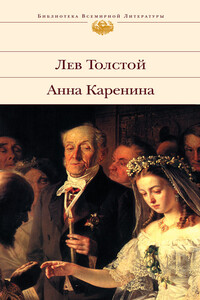
«Анна Каренина», один из самых знаменитых романов Льва Толстого, начинается ставшей афоризмом фразой: «Все счастливые семьи похожи друг на друга, каждая несчастливая семья несчастлива по-своему». Это книга о вечных ценностях: о любви, о вере, о семье, о человеческом достоинстве.
В томе печатается роман «Воскресение» (1889–1899) — последний роман Л. Н. Толстого.http://rulitera.narod.ru.
Детство — Что может быть интереснее и прекраснее открытия мира детскими глазами? Именно они всегда широко открыты, очень внимательны и на редкость проницательны. Поэтому Лев Толстой взглянул вокруг глазами маленького дворянина Николеньки Иртеньева и еще раз показал чистоту и низменность чувств, искренность и ложь, красоту и уродство...
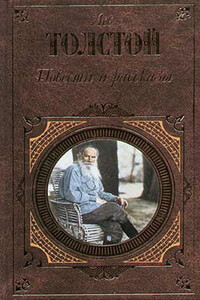
В книге рассказывается история главного героя, который сталкивается с различными проблемами и препятствиями на протяжении всего своего путешествия. По пути он встречает множество второстепенных персонажей, которые играют важные роли в истории. Благодаря опыту главного героя книга исследует такие темы, как любовь, потеря, надежда и стойкость. По мере того, как главный герой преодолевает свои трудности, он усваивает ценные уроки жизни и растет как личность.
Рассказ приоткрывает «окно» в напряженную психологическую жизнь писателя. Эмоциональная неуравновешенность, умственные потрясения, грань близкого безумия, душевная болезнь — постоянные его темы («Возвращение Будды», «Пробуждение», фрагменты в «Вечере у Клэр» и др.). Этот небольшой рассказ — своего рода портрет художника, переходящего границу между «просто человеком» и поэтом; загадочный женский образ, возникающий в воображении героя, — это Муза или символ притягательной силы искусства, творчества. Впервые — Современные записки.
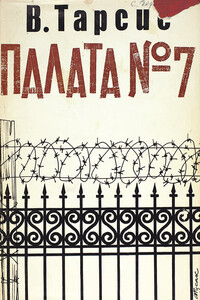
Валерий Тарсис — литературный критик, писатель и переводчик. В 1960-м году он переслал английскому издателю рукопись «Сказание о синей мухе», в которой едко критиковалась жизнь в хрущевской России. Этот текст вышел в октябре 1962 года. В августе 1962 года Тарсис был арестован и помещен в московскую психиатрическую больницу имени Кащенко. «Палата № 7» представляет собой отчет о том, что происходило в «лечебнице для душевнобольных».
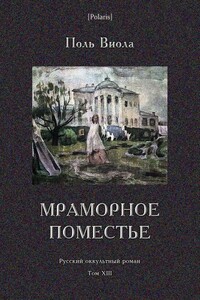
Оборотничество, ликантропия, явления призраков из потустороннего мира, круговорот душ и диктат рока — таковы темы мистическо-фантастических произведений Поля Виолы, разворачивающихся на фоне странных «помещичьих гнезд» Полесья. Под псевдонимом «Поль Виола» (Paul Viola) в печати выступал киевский поэт, прозаик и переводчик П. Д. Пихно (1880–1919). Его рассказ «Волчица» и повесть «Мраморное поместье», вошедшие в настоящую книгу, переиздаются впервые.
В книге рассказывается история главного героя, который сталкивается с различными проблемами и препятствиями на протяжении всего своего путешествия. По пути он встречает множество второстепенных персонажей, которые играют важные роли в истории. Благодаря опыту главного героя книга исследует такие темы, как любовь, потеря, надежда и стойкость. По мере того, как главный герой преодолевает свои трудности, он усваивает ценные уроки жизни и растет как личность.
В книге рассказывается история главного героя, который сталкивается с различными проблемами и препятствиями на протяжении всего своего путешествия. По пути он встречает множество второстепенных персонажей, которые играют важные роли в истории. Благодаря опыту главного героя книга исследует такие темы, как любовь, потеря, надежда и стойкость. По мере того, как главный герой преодолевает свои трудности, он усваивает ценные уроки жизни и растет как личность.
В книге рассказывается история главного героя, который сталкивается с различными проблемами и препятствиями на протяжении всего своего путешествия. По пути он встречает множество второстепенных персонажей, которые играют важные роли в истории. Благодаря опыту главного героя книга исследует такие темы, как любовь, потеря, надежда и стойкость. По мере того, как главный герой преодолевает свои трудности, он усваивает ценные уроки жизни и растет как личность.