Letter to a Hindoo - [5]
In your magazine you insert as the basis principle which should direct the activity of your people the following thought as an epigraph: «Resistance to aggression is not simply justifiable but imperative; non resistance hurts both Altruism and Egoism».
You say that the English have enslaved and keep the Hindoos in subjection because the latter have not resisted sufficiently, and do not resist the violence by force.
But it is just the contrary. If the English have enslaved the Hindoos, it is just because the Hindoos recognised and do recognise coercion as the main and fundamental principle of their social order: in the name of this principle they submitted to their little Radjas, in their name they struggled with each other, fought with Europeans, with the English, and at present are preparing to a struggle with them again.
A commercial company enslaved a nation comprising 200 millions. Tell this to a man free from superstition and he will fail to grasp what these words mean. What does it mean that thirty thousand people not athletes, but rather weak and illooking have enslaved 200 millions of vigorous, clever, strong, freedom-loving people? Do not the figures make it clear that not the English, but the Hindoos, have enslaved themselves?
For the Hindoos to complain that the English have enslaved them, is equal to people who are addicted to drikn, complaining that vendors of wine, who have settled in their midst, have enslaved them. You tell them that they can abstain from drinking, but they answer that they are so accustomed to it that they cannot abstain, that they find it necessary to keep up their energy by wine. Is not that the case with all the people, with millions of people who submit to thousands and hundreds of individuals, either of their own nation or of foreign nations?
If the Hindoos have been enslaved by violence it is because they themselves have lived by violence, live by violence, and do not recognise the eternal law of love, inherent in humanity.
«Pitiful and ignorant is the man who seeks what he has already got, but is unaware that he has it. Yes, pitiful and ignorant is the man who does not know the bliss of that love which surrounds him, which I gave him» (Krishna).
If man lives only in accord with the law of love which includes non resistance, which has been already revealed to him and is natural to his heart, and hence does not participate in any form of violence, not only hundreds will not enslave millions but even millions will be unable to enslave one individual. Do not resist evil, but also yourselves participate not in evil, in the violent deeds of the administration, of the law courts, the collection of taxes, and what is most important of the soldiers, and no one in the world will enslave you.
Love is the only means of saving people from all disasters which he may undergo. In your case the only means of liberating your people from slavery lies in love. Love as the religious foundation of human life was proclaimed with striking force and lucidity in the midst of your people in remote antiquity. Love, without non-resistance is a contradiction in itself. And there, in the 20th century you, a member of one of the most religious of peoples, with a light heart and with confidence in your scientific enlightenment and hence in your undoubted righteousness – you deny this law, repeating – pardon me – that colossal error which they, the defenders of violence, the enemies of the truth, at first the servants of theology, then of science, your European teachers, have instilled into you.
VI
O, ye who sit in bondage, and continually seek and pant for freedom, seek only love. Love is peace in itself and peace which gives complete satisfaction. I am the key that opens to the rarely discovered land where contentment alone is found.
Krishna P. 167.
To the humanity of our times, Eastern or Western, the same thing happens which takes place in regard to every individual when he is passing from one age to the other (a child becoming a youth, a youth a man) and loses that which has been hitherto his guide in life, and not having elucidated a new one appropriate to his age, lives without any guidance and invents various anxieties, cares, amusements, provocations, untoxications, to distract his attention from the misery and selfishness of his own life. Such a condition may last a long time.
But as during the transition of an individual from one age to another, the time must inevitably come when life can no longer continue in the old ruts as before, in senseless anxiety and irritation, and the man must understand that the previous guidance for life is no longer applicable to him, – it does not follow that he must necessarily live without any rational guidance whatever, but that he should formulate for himself a theory of life corresponding to his age, and having elucidated it, he should in his new age be guided by it.
Similar crises must of necessity occur in the ever changing life of humanity. And I am of opinion that the time has arrived for such a transition of humanity from one age to another, and not in the sense that it has arrived now, vis. 1908, but that the inherent contradiction of human life; the consciousness of the beneficence of the law of love, and the system of life built upon the law of violence opposed to love in our time has reached that degree of intensity under which it can no longer go on, and must be met by a solution, and evidently not with a solution which favours the outlived law of violence, but in favour of the truth that the law of human life is the law of love, cherished by all humanity from the most remote antiquity.
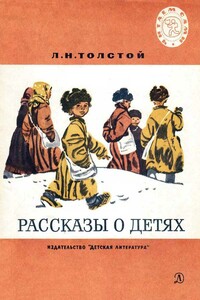
Рассказы, собранные в этой книге, были написаны великим русским писателем Львом Николаевичем Толстым (1828–1910) специально для детей. Вот как это было. В те времена народ был безграмотный, школ в городах было мало, а в деревнях их почти не было.Лев Николаевич Толстой устроил в своём имении Ясная Поляна школу для крестьянских детей. А так как учебников тоже не было, Толстой написал их сам.Так появились «Азбука» и «Четыре русские книги для чтения». По ним учились несколько поколений русских детей.Рассказы, которые вы прочтёте в этом издании, взяты из учебных книг Л.

Те, кто никогда не читал "Войну и мир", смогут насладиться первым вариантом этого великого романа; тех же, кто читал, ждет увлекательная возможность сравнить его с "каноническим" текстом. (Николай Толстой)
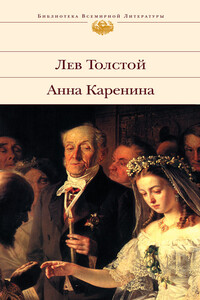
«Анна Каренина», один из самых знаменитых романов Льва Толстого, начинается ставшей афоризмом фразой: «Все счастливые семьи похожи друг на друга, каждая несчастливая семья несчастлива по-своему». Это книга о вечных ценностях: о любви, о вере, о семье, о человеческом достоинстве.
В томе печатается роман «Воскресение» (1889–1899) — последний роман Л. Н. Толстого.http://rulitera.narod.ru.
Детство — Что может быть интереснее и прекраснее открытия мира детскими глазами? Именно они всегда широко открыты, очень внимательны и на редкость проницательны. Поэтому Лев Толстой взглянул вокруг глазами маленького дворянина Николеньки Иртеньева и еще раз показал чистоту и низменность чувств, искренность и ложь, красоту и уродство...
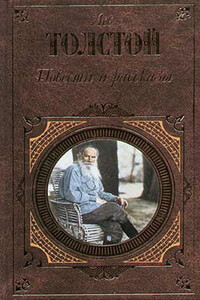
В книге рассказывается история главного героя, который сталкивается с различными проблемами и препятствиями на протяжении всего своего путешествия. По пути он встречает множество второстепенных персонажей, которые играют важные роли в истории. Благодаря опыту главного героя книга исследует такие темы, как любовь, потеря, надежда и стойкость. По мере того, как главный герой преодолевает свои трудности, он усваивает ценные уроки жизни и растет как личность.
В книге рассказывается история главного героя, который сталкивается с различными проблемами и препятствиями на протяжении всего своего путешествия. По пути он встречает множество второстепенных персонажей, которые играют важные роли в истории. Благодаря опыту главного героя книга исследует такие темы, как любовь, потеря, надежда и стойкость. По мере того, как главный герой преодолевает свои трудности, он усваивает ценные уроки жизни и растет как личность.
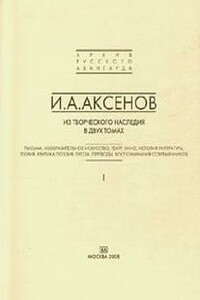
В первый том творческого наследия И. А. Аксенова вошли письма, изобразительное искусство, театр и кино; второй том включает историю литературы, теорию, критику, поэзию, прозу, переводы, воспоминания современников.https://ruslit.traumlibrary.net.
В книге рассказывается история главного героя, который сталкивается с различными проблемами и препятствиями на протяжении всего своего путешествия. По пути он встречает множество второстепенных персонажей, которые играют важные роли в истории. Благодаря опыту главного героя книга исследует такие темы, как любовь, потеря, надежда и стойкость. По мере того, как главный герой преодолевает свои трудности, он усваивает ценные уроки жизни и растет как личность.
В книге рассказывается история главного героя, который сталкивается с различными проблемами и препятствиями на протяжении всего своего путешествия. По пути он встречает множество второстепенных персонажей, которые играют важные роли в истории. Благодаря опыту главного героя книга исследует такие темы, как любовь, потеря, надежда и стойкость. По мере того, как главный герой преодолевает свои трудности, он усваивает ценные уроки жизни и растет как личность.
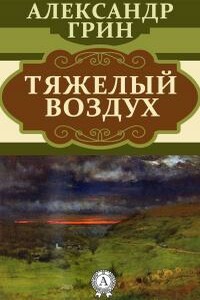
В книге рассказывается история главного героя, который сталкивается с различными проблемами и препятствиями на протяжении всего своего путешествия. По пути он встречает множество второстепенных персонажей, которые играют важные роли в истории. Благодаря опыту главного героя книга исследует такие темы, как любовь, потеря, надежда и стойкость. По мере того, как главный герой преодолевает свои трудности, он усваивает ценные уроки жизни и растет как личность.
В сборник произведений писателя-символиста Георгия Чулкова (1879–1939) вошли новеллы «Сестра», «Морская Царевна», «Подсолнухи», «Омут», «Судьба» и «Голос из могилы».