Delta Green - [30]
Druzhinin greeted them warmly, and with only a modicum of deference. As Commander of the New World Defense Force, he also served in the role of defense minister on the Politburo.
“Oleg Vladimirivich,” Shelepin said, “the days have slipped by so quickly.”
They had not met as a group for three weeks. “And still they seem to drag, Anatoly. I had hoped you would arrive earlier so that I could show you the most recent accomplishments we have made here.”
“Perhaps later,” Shelepin said.
Anatoly Shelepin was a man who cared little for the details. He dreamed in global proportions, and he expected others to take care of the minutia. He did not see MiG-25s and Su-24s; he saw air power.
He also did not acknowledge defeat. As a younger officer in command of ground troops in Afghanistan, he had never suffered a defeat. Rather, he had redirected his forces into new offensives. Perhaps that was why he had achieved his stars so early in his career.
While their Dassault was manhandled back into the cover of the jungle, Druzhinin led the two leaders back to the command center. Once inside, he observed the mild relief on their faces as they encountered the air-conditioning.
Deputy Chairman Pavel pointed to the cold air vent and said, “You have indeed made changes since my last visit. Welcome changes.”
“We try to bring a little civilization to our hideaway, Sergei.”
Two technicians manned the radar and the communications consoles in the center, and Druzhinin had arranged three chairs behind them. Additionally, a small table held tea glasses and pastries.
Sergeant Nikita Kasartskin stood in the corridor leading to the back. He said, “Comrade Chairman, it is good to see you again.”
Kasartskin had served on Shelepin’s support staff for twelve years.
Anatoly Shelepin smiled warmly at him, “And you, also, Sergeant.”
The computer specialist grinned happily and turned back to his cubicle.
Druzhinin knew that Shelepin did not recall Kasartskin’s name. The Chairman did not see soldiers; he saw manpower.
The three of them took seats, and Druzhinin poured the iced tea.
He asked the corporal at the communication console, “What is the latest report from Colonel Maslov, Corporal Fedorchuk?”
The corporal turned to face him, “Comrade General, he reports that he is seven hundred kilometers away and closing rapidly.”
When McKenna reached the Command Center, he deflected himself off a bulkhead to miss Val Arguento, who was suspended outside the radio shack. Arguento was an Army Master Sergeant who served as both a communications specialist and the security NCO, deputy to Pearson.
Overton, Pearson, and Sergeant Joe Macklin, the radar expert, were gathered around the main console. No one was paying attention to the serene view of South America scrolling upward in the porthole.
McKenna almost reached for Amy Pearson to stop his flight, decided quickly that that might be a mistake, and bypassed her for a grab bar on the side of the console.
The master screen, the largest in the console, displayed the radar mode. Themis’s powerful main radar antenna was housed in a fiberglass radome on the end of Spoke Fifteen. The ninety-foot-wide antenna radiated up to fifteen million watts of energy, enough to fry humans in its path. The range was four hundred miles, though it was normally set to 215 miles, about five miles above the Earth.
The radar was chiefly used for tracking incoming and outgoing HoneyBee rockets and Mako spacecraft, using I-Band for lateral tracking and G-Band for altitude determination. With its ability to scan and track up to 120 targets simultaneously, the Department of Defense utilized the system during combat war games or missile launches from Vandenberg and Kennedy. Additionally, the radar was incorporated into the Space Defense Initiative program.
Reading over Macklin’s shoulder and across the line of data at the top of the screen, McKenna noted the four hundred-mile range setting and the direction of the antenna — to the space station’s west, the normal inbound track for HoneyBees. The oscillating sweep left six blips behind as it flip-flopped back and forth. Each of the blips was identified in small white letters and numerals. He read them quickly.
“I see five satellites in lower orbit and one HoneyBee,” he said. “What’s the status, Joe?”
“She’s three hundred and sixty miles out, Colonel, altitude one-eighty, and closing on us at ten miles a minute. In sixteen minutes, she’s scheduled to reduce speed to a five-mile-a-minute closure rate.”
McKenna scanned the screen once again. “So where’s the bogie?”
“It’s not showing now, sir. I picked it up when it was radiating radar emissions.”
“So it’s got to be Delta Green.” The stealth aerospace fighters were only visible to other radars when they were utilizing their own radars.
“The pilot will be an ex-Soviet,” Pearson said.
McKenna glanced at her.
“Pyotr Volontov’s report said that six of the men he washed out of his Mako training program defected. It’ll be one of them,” she said.
“Good work, Amy.”
She blushed. She was beginning to take his compliments as compliments, rather than as cute ways to put her down.

Алина совсем ничего не знала про своего деда. Одинокий, жил в деревне, в крепком двухэтажном доме. На похоронах кто-то нехорошо высказался о нем, но люди даже не возмутились. После похорон Алина решила ненадолго остаться здесь, тем более что сын Максимка быстро подружился с соседским мальчишкой. Черт, лучше бы она сразу уехала из этой проклятой деревни! В ту ночь, в сырых сумерках, сын нашел дедов альбом с рисунками. Алина потом рассмотрела его, и сердце ее заледенело от ужаса. Зачем дед рисовал этот ужас?!! У нее еще было время, чтобы разглядеть нависшую угрозу и понять: обнаружив ночью альбом с рисунками, она перешагнула черту, за которой начинается территория, полная мерзких откровений.

В книге рассказывается история главного героя, который сталкивается с различными проблемами и препятствиями на протяжении всего своего путешествия. По пути он встречает множество второстепенных персонажей, которые играют важные роли в истории. Благодаря опыту главного героя книга исследует такие темы, как любовь, потеря, надежда и стойкость. По мере того, как главный герой преодолевает свои трудности, он усваивает ценные уроки жизни и растет как личность.

Пока маньяк-убийца держит в страхе весь город, а полиция не может его поймать, правосудие начинают вершить призраки жертв…

Любовь и ненависть, дружба и предательство, боль и ярость – сквозь призму взгляда Артура Давыдова, ученика 9-го «А» трудной 75-й школы. Все ли смогут пройти ужасы взросления? Сколько продержится новая училка?
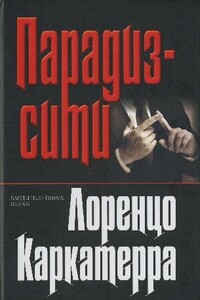
Вот уже почти двадцать лет Джанкарло Ло Манто — полицейский из Неаполя — личный враг мафиозной семьи Росси. Он нанес ей миллионный ущерб, не раз уходил от наемных убийц и, словно заговоренный, не боясь смерти, снова бросался в бой. Потому что его война с мафией — это не просто служебный долг, это возмездие за убийство отца, друзей, всех тех, кто не захотел покориться и жить по законам преступного мира. Теперь Ло Манто предстоит вернуться в Нью-Йорк, город его детства, город его памяти, для последнего решающего поединка.

Во время разгульного отдыха на знаменитом фестивале в пустыне «Горящий человек» у Гэри пропала девушка. Будто ее никогда и не существовало: исчезли все профили в социальных сетях и все офи-циальные записи, родительский дом абсолютно пуст. Единственной зацепкой становятся странные артефакты – свитки с молитвами о защите от неких Чужаков. Когда пораженного содержанием свитков парня похищают неизвестные, он решает, что это Чужаки пришли за ним. Но ему предстоит сделать страшное открытие: Чужак – он сам…