Delta Green - [28]
It was fitted on all walls with specialized equipment for maintaining muscle tone. On the wall opposite the door was a small centrifugal weight machine. All of those aboard who did not regularly return to the Earth’s surface were provided with an exercise regimen by the station’s doctor. And everyone spent ten or fifteen minutes a day spinning in the artificial gravity of the centrifugal weight machine.
As he watched, the centrifugal machine spun down to a stop, and Polly Tang unbuckled herself from the seat.
“Hi, Kevin.”
“Want to come along and watch me change out of my flight suit?”
“No.”
“Want to join me for lunch?”
“Sure. My treat.”
Tang was wearing the blue jumpsuit with built-in boots that everyone aboard Themis wore for its practicality. It did not disguise the trim curves of her petite figure. That view, however, would be as close as he would get. Though the two of them had enjoyed their repartee for a long time, Tang was married to the chief HoneyBee engineer at Wet Country and had two children she adored.
She waited while he slipped into the pilots’ locker room, doffed his environmental suit, and pulled on a fresh jumpsuit. Aboard the space station, no one wore insignia or badges of rank.
He pulled himself through the curtain back into the corridor. “Ready, lover?”
“After you,” she said.
“The view’s better if I follow you.”
“After you,” she said.
McKenna grinned and asked, “Do you have a dining preference?”
“The Skylight Room in Sixteen today, I think.”
“A charming place,” McKenna agreed, and shoved off the hatchway jamb. Tang followed.
The corridor bisected the hub, and when McKenna reached the curved hallway that went clear around the outer diameter of the hub, he caromed off the outer wall, pushing off again. He heard Tang’s feet slap at the bulkhead as she pursued him.
Self-sealing round doors that led into the spokes were spaced irregularly off this pathway. There were seventeen spokes at the moment, though the corridor also had an additional seven doors, sealed and painted red, to accommodate future spokes. There were also airlocks on opposite sides of the hub to allow access to the exterior for repair and maintenance.
The colors were vibrant and important. Amy Pearson had designed the color scheme which designated that red-painted hatches were verboten and orange hatches were keypad locked and restricted except for particular authorized personnel. The entries to nuclear reactor, communications, ordnance, fuel, MakoShark hangar, and computer spaces were orange. Yellow hatches defined those areas where civilians might be invited under escort, such as the Command Center, the Mako bays, and the HoneyBee docks. Blue signified military-only, and green or blue/green denoted spaces accessible to the civilian scientists who regularly inhabited the station.
Colored stripes ran along the corridors to indicate what kind of a space the transient was in. If unescorted civilians didn’t see green somewhere in the vicinity, they were out of bounds. Station military personnel frequently had to remind civilians who transgressed the color scheme.
Protected by a yellow hatchway, Spoke One led to the Command Center module.
Seven of the spokes were open to civilians, Two through Eight, and offered three residential modules and four laboratory modules. Additionally, civilians were welcome in some of the hub compartments: the clinic, laundry, exercise room, and the contractor communications compartment.
Spoke Nine contained the nuclear power plant. Like the spokes containing fuel storage and ordnance, it was secured to the hub with explosive bolts so that it could be jettisoned in an emergency.
Spoke Nine B was the most recently constructed, and its large module was utilized for repairing KH-11, Teal Ruby, and other satellites retrieved from their orbits by Mako workhorses. Major Kenneth Autry was McKenna’s chief pilot on that shuttle service.
Spokes Ten through Sixteen were military-only, housing laboratories, repair and storage areas, fuel and ordnance, and the like. It was assumed that civilians would not take kindly to knowledge of the kinds of weaponry that were aboard the station. And civilians as well as much of the military complement were denied up-close looks at the MakoShark.
At the end of their spokes, four modules were residential, containing sixteen individual sleeping quarters, recreation/dining spaces, kitchens, and personal hygiene stations. The personnel complement was divided into separate dormitory areas for safety, rather than for organizational reasons. With an accidental blowout in one of the residential modules, three-fourths of the space station’s human contingent would still be intact. Orientation lectures stressing those kinds of safety measures for temporary residents, like a physicist or biologist, brought an ashy shade to their faces.
McKenna and Tang took hold of grab bars at Spoke Sixteen to stop their momentum, and he tapped the large green button mounted on the bulkhead. The automatic door rotated two inches to free itself from the locking tangs, then swung open on its massive hinge. The hinge was mounted solidly to the bulkhead, and two bars from the top and bottom of the hinge met in a “V” at the center of the round door, which pivoted on an axle at the point of the “V” Every door on the station automatically closed in the event of decompression.

Пока маньяк-убийца держит в страхе весь город, а полиция не может его поймать, правосудие начинают вершить призраки жертв…

Любовь и ненависть, дружба и предательство, боль и ярость – сквозь призму взгляда Артура Давыдова, ученика 9-го «А» трудной 75-й школы. Все ли смогут пройти ужасы взросления? Сколько продержится новая училка?
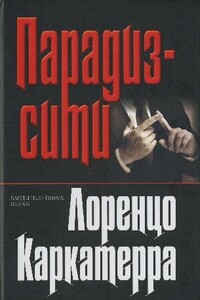
Вот уже почти двадцать лет Джанкарло Ло Манто — полицейский из Неаполя — личный враг мафиозной семьи Росси. Он нанес ей миллионный ущерб, не раз уходил от наемных убийц и, словно заговоренный, не боясь смерти, снова бросался в бой. Потому что его война с мафией — это не просто служебный долг, это возмездие за убийство отца, друзей, всех тех, кто не захотел покориться и жить по законам преступного мира. Теперь Ло Манто предстоит вернуться в Нью-Йорк, город его детства, город его памяти, для последнего решающего поединка.

Во время разгульного отдыха на знаменитом фестивале в пустыне «Горящий человек» у Гэри пропала девушка. Будто ее никогда и не существовало: исчезли все профили в социальных сетях и все офи-циальные записи, родительский дом абсолютно пуст. Единственной зацепкой становятся странные артефакты – свитки с молитвами о защите от неких Чужаков. Когда пораженного содержанием свитков парня похищают неизвестные, он решает, что это Чужаки пришли за ним. Но ему предстоит сделать страшное открытие: Чужак – он сам…

«Эксгумация» — превосходный психологический триллер одного из наиболее ярких представителей современной британской прозы. Роман, написанный Тоби Литтом в 2000 году, стал бестселлером в Великобритании и многих других странах. Главный герой книги, Конрад, подвергается нападению киллера в момент встречи со своей подругой-моделью Лили в фешенебельном лондонском ресторане. Лили погибает, сам Конрад оказывается в коме. Как только силы возвращаются к нему, он, с умением искушенного опытом детектива, начинает свое собственное расследование.

Найджел, Гарольд и Карма – обычные люди. Такие же, как мы с вами. Но кто сказал, что «обычные люди» не могут стать образцом настоящего насилия? Нью-Йорк. 2017-й год. Лучшее время и место для того, чтобы жить счастливо. Но они не могут. И у каждого на это своя причина: одиночество, зависть, неразделенная любовь.. Думаете, что вы никогда не переступите черту? Они тоже так думали. Но у жизни на нас свои планы.