36 Arguments for the Existence of God - [88]
Cass had liked the Valdener Rebbe quite a lot, almost in spite of himself, and certainly in spite of his mother. In fact, one of the Rebbe’s most endearing traits, at least to Cass, was the warmth he still harbored toward the former Devorah Sheiner. The Rebbe seemed to regard her with none of the severity with which she regarded him, though perhaps this was just part of his Socratic slyness. Still, listening to Professor Klapper’s assessment, he had to conclude that it was probably his own ignorance of Yiddish that had blocked him from seeing the full extent of the Rebbe’s extraordinariness, though he couldn’t dismiss the possibility that the blame lay in his intrinsic soul-shortage.
According to Professor Klapper, the Valdener Grand Rabbi was like the Palomar Observatory, which he had been compelled to visit with his fulsome hosts at the University of California at San Diego when he had been out there to deliver, soon after the publication of “my little book The Perversity of Persuasion,” the prestigious John Shade Lecture in Literature and Truth. They had organized quite the tour for him, in consequence of which he had immediately resolved never to accept another invitation from anywhere in the entire state of California, a ban he had, over the years, gradually widened until it included everything west of the Hudson. Jonas Elijah Klapper was ready to confess his vagueness on such details, since Sigmund Freud was as far as he would venture in the direction of the hard sciences, but he had carried away the impression that the contraption took the compass of the infinite cosmos. If that was so, then it was still as nothing compared with the observatory that was the Valdener Grand Rabbi.
“For it is the measure of the infinite soul that is taken by your inestimable relation, Reb Chaim.”
Everything the Valdener Rebbe said and did was both liminal and luminant. That is what Jonas Elijah Klapper might choose to call the graduate seminar next year:
“The Liminal, the Luminant, and the-”
The professor was brought up short by a rare aposiopesis. He looked over to his erstwhile student to see whether he might offer some help. The word that seditiously leaped into Cass’s mind was so inappropriate that Cass suspected Roz’s insidious sense of humor was infecting him again-long-distance, since she still hadn’t returned from the Amazon.
“Well, never mind that for now. We shall think of the apposite trinomial in time,” the professor was continuing.
The Valdener Sage had the capacity to speak the liminal words that transported the Self through the narrow threshold within the Self to enter into the hushed precinct where the Sublime sat on its throne of glory, an ecstatic knowledge that transformed the Self even as it revealed the Self, for it awoke within the Self the knowledge of what is immortal in the Self, not in the sense of duration, definable by time, but, rather, the Self that dwells, like the Place-or Ha-Makom, one of the monikers for YHVH- outside of time, the Self that cannot die because it was never born, begotten by no seed of man.
Professor Klapper had found everything relating to the Grand Rabbi fraught with hidden meanings, the humblest word or action setting off tremblings in the highest spheres, in what the Qabalists refer to as the Keter, the Crown of Being, the last gate behind which the Ayn Sof, That Without End, has withdrawn itself, coiled within the End of Thought.
“It is as the Valdener Rebbe himself masterfully put it: the Acharay Acharon, the One Who Comes After the Last.”
“That was Azarya.”
Cass couldn’t help himself. He had spoken before he had thought. “Azarya? Who is Azarya?”
“The Rebbe’s son. He was the one who spoke about the Acharay Acharon.”
Klapper widened his eye into his practiced glare but then, deciding upon leniency, waved Cass’s irrelevance away with a magisterial flourish of his hand.
“I am quite certain you are mistaken. The little boy sang a niggun, which I believe he had composed. Perhaps that is the source of your errancy. The child decidedly did not delve into the mysteries of the Ayn Sof. The suggestion is a preposterition.”
“Preposterition,” meaning “preposterous proposition,” was a neologism of his own coinage, and, employing it, he felt irked all over again by this presumptuous young person who was crowding his office and squandering his time. But then he recalled the young man’s lineage, the majestic luster that clung to his bloodline, manifesting itself in the very tint of his hair, and decided to forgive.
“The Valdener Rebbe has supplied some information that may yet prove to be surpassingly significant. It is as I suspected. To non-initiates it appears as if the denizens of New Walden have closed themselves off to the increments in human knowledge that have, it is commonly believed, proceeded pari passu with the so-called advancements in the sciences, which too often amount, I am forced to inform you, to no more than the merest scientism. Unlike the colossal confusions of pedantry in which I have been forced to collude-by which I mean a pedagogical cartel that could not begin to understand the meaning of the term ‘higher education,’ which misprision it manifests in its increasing insistence that every Tom, Dick, and Harry should misspend his youth, not to speak of his parents’ lucre, by parking his dullard head at an undergraduate institution for four years-the Valdeners recognize that not every Tevye, Dudel, and Hershel are meant to be introduced to subjects beyond their comprehension. The Rebbe, as an exalted master, does the learning for them and then transmits to each according to his capacity to receive. And of course his mastery extends to full command of the non-verbal lineaments of communication. There was no doubt in my mind that transmission at the profoundest level was taking place during the ritual of the
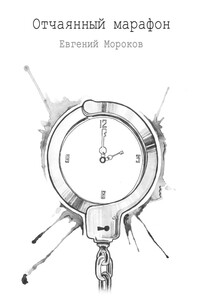
Помните ли вы свой предыдущий год? Как сильно он изменил ваш мир? И могут ли 365 дней разрушить все ваши планы на жизнь? В сборнике «Отчаянный марафон» главный герой Максим Маркин переживает год, который кардинально изменит его взгляды на жизнь, любовь, смерть и дружбу. Восемь самобытных рассказов, связанных между собой не только течением времени, но и неподдельными эмоциями. Каждая история привлекает своей откровенностью, показывая иной взгляд на жизненные ситуации.

Семья — это целый мир, о котором можно слагать мифы, легенды и предания. И вот в одной семье стали появляться на свет невиданные дети. Один за одним. И все — мальчики. Автор на протяжении 15 лет вел дневник наблюдений за этой ячейкой общества. Результатом стал самодлящийся эпос, в котором быль органично переплетается с выдумкой.

Действие романа классика нидерландской литературы В. Ф. Херманса (1921–1995) происходит в мае 1940 г., в первые дни после нападения гитлеровской Германии на Нидерланды. Главный герой – прокурор, его мать – знаменитая оперная певица, брат – художник. С нападением Германии их прежней богемной жизни приходит конец. На совести героя преступление: нечаянное убийство еврейской девочки, бежавшей из Германии и вынужденной скрываться. Благодаря детективной подоплеке книга отличается напряженностью действия, сочетающейся с философскими раздумьями автора.
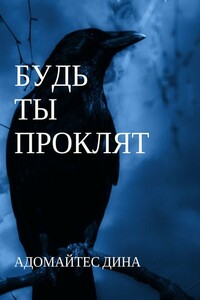
Жизнь Полины была похожа на сказку: обожаемая работа, родители, любимый мужчина. Но однажды всё рухнуло… Доведенная до отчаяния Полина знакомится на крыше многоэтажки со странным парнем Петей. Он работает в супермаркете, а в свободное время ходит по крышам, уговаривая девушек не совершать страшный поступок. Петя говорит, что земная жизнь временна, и жить нужно так, словно тебе дали роль в театре. Полина восхищается его хладнокровием, но она даже не представляет, кем на самом деле является Петя.
«Неконтролируемая мысль» — это сборник стихотворений и поэм о бытие, жизни и окружающем мире, содержащий в себе 51 поэтическое произведение. В каждом стихотворении заложена частица автора, которая очень точно передает состояние его души в момент написания конкретного стихотворения. Стихотворение — зеркало души, поэтому каждая его строка даёт читателю возможность понять душевное состояние поэта.
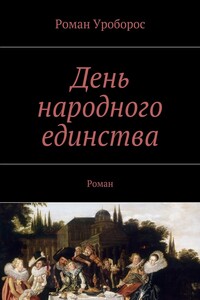
О чем этот роман? Казалось бы, это двенадцать не связанных друг с другом рассказов. Или что-то их все же объединяет? Что нас всех объединяет? Нас, русских. Водка? Кровь? Любовь! Вот, что нас всех объединяет. Несмотря на все ужасы, которые происходили в прошлом и, несомненно, произойдут в будущем. И сквозь века и сквозь столетия, одна женщина, певица поет нам эту песню. Я чувствую любовь! Поет она. И значит, любовь есть. Ты чувствуешь любовь, читатель?