36 Arguments for the Existence of God - [87]
“What do you think of Felix Fidley?” he had asked Lucinda. They were in bed, Lucinda tucked neatly into the pockets of the comforter, reading.
“Felix Fidley?” Lucinda looked up from A Proper English Murder. She’s addicted to mysteries. “He’s got a Nobel.”
“Yes, but what do you think of him?”
“He’s one of the most brilliant economists of the last twenty years. In fact, I co-authored a paper with him, ‘Mandelbaum Equilibria in Hostile Takeovers.’ Why?”
“He wants to debate me.”
“Really?” Lucinda marked her page with her bookmark and set A Proper English Murder down on her night table. “About what?”
“The existence of God.”
“I should have guessed!” She laughed. “Are you telling me Felix Fidley believes?”
“Belligerently.”
“How odd. He’s such a rationalist-University of Chicago and all. Are you sure?”
It was touching how sincerely Lucinda believed in reason. It was difficult for her to get her mind around the fact that believers weren’t all high-school dropouts who used their fingers and toes to add and subtract.
“For lots of people it’s become a matter of political coalitions more than anything having to do with theology. The enemy of my enemy is my friend. If liberals are going in one direction in the religion-versus-reason debates, defending the theory of evolution and secular humanism, neocons feel they have to head off in the opposite direction. Or they think that it’s okay for people like them, who are thoroughly civilized, to question God’s existence, but that it would be moral anarchy if the teeming masses started to doubt God. I suspect that that’s what Fidley believes.”
Provocation is a good example of what Cass was describing. It was founded by left-wing intellectuals in the 1940s, but its editors had been profoundly insulted by the new leftism of the sixties and reacted by lurching to the right. By now Provocation’s policy of opposing anything advocated by the liberals-a word it had helped besmirch-has carried it into open warfare against the entire project of the Enlightenment. Darwin has come in for multiple attacks, and religious scientists have shown off their creativity. There was an article by an Orthodox Jewish linguist who used Noam Chomsky’s theory of a universal grammar to vindicate the Bible’s story of the Tower of Babel. There was an article authored by a fundamentalist geologist on the movement of the tectonic plates of the earth as consistent with a worldwide flood on the order of Noah’s. There was an article by a Catholic anthropologist arguing against the liberal denial of distinct races and backing it up with Genesis 10, where the begettings of Noah’s three sons are explained. Provocation’s review of The Varieties of Religious Illusion had been so negative as to border on the actionable.
“Are you going to debate him?” Lucinda had asked him, turning over on her side so that she was facing Cass, her head propped up on her palm.
“Do you think I should?”
“What day did you say this thing is?” he’s asking Roz now on the phone.
“February 29. I think that’s tomorrow.”
“It is tomorrow! I’m fucked. And that’s when Lucinda is getting back from Santa Barbara. What was I thinking?”
“Well, if anyone is worth debating on this issue, then Felix Fidley is,” Lucinda had said. “It would certainly be a major win for you, and I don’t see how you could fail to win.” She’d smiled, and her delicate nostrils flared ever so slightly. “I’d like to see that.”
She’d reached out her hand and laid it on Cass’s stomach and then had slid it slowly up his chest. She reached up for Cass’s glasses and gently removed them, leaning over him to place them on his night table, her brandy-glass-shaped breasts just grazing his uplifted face.
That minute adjustment had come over her face, unstiffening her upper lip and unloosing the full extravagance of her beauty, flooding all of Cass’s modules, seizing him up with the one and wordless premise that composes the Argument from Lucinda.
“I’m fucked for real,” he says now to Roz.
XXI The Argument from the Remains
Jonas Elijah Klapper had intimate knowledge of all the prominent thinkers across the ages. There was not a novelist, poet, essayist, critic, historian, metaphysician, ethicist, theologian, or belletrist worth the reading (an emphatically necessary qualification) of whom he had not taken the reckoning. He had expended himself in exhaustively computing the ranking of anyone meriting mention in the great chain of genius. His project had been demanding. It had demanded neither more nor less than omniscience. The (all but) universal ovation was not disproportionate to the accomplishment. He had organized the vast reaches of human thought in a way that could be compared, mutatis mutandis, to the commendable efforts of Miss Ching in helping him to settle into his Frankfurter suite of offices, her admirable zeal in conceiving categories for the color-coded files, craftily alphabetized.
So, when Jonas Elijah Klapper stated that the Grand Rabbi of the Valdener Hasidim was a religious genius on the order of Meister Eck-hart, Emanuel Swedenborg, and Nathan Benjamin ben Elisha ha-Levi Ghazzati (also known as “Nathan of Gaza” or “Nathan the Prophet”), it was quite a statement. Professor Klapper confided in Cass that the Valdener Grand Rabbi was among the most extraordinary men of his lifetime-and he had met all the extraordinary men of his lifetime, including the pre-eminent secular scholar of Qabalah, one of the few non-Americans granted membership in the American Academy of Arts and Sciences (Jonas had been initiated as a mere pup of thirty-eight), the Jerusalemite Yehuda Ickel.
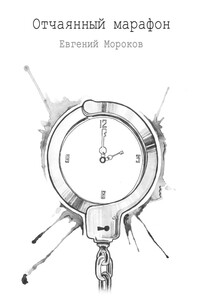
Помните ли вы свой предыдущий год? Как сильно он изменил ваш мир? И могут ли 365 дней разрушить все ваши планы на жизнь? В сборнике «Отчаянный марафон» главный герой Максим Маркин переживает год, который кардинально изменит его взгляды на жизнь, любовь, смерть и дружбу. Восемь самобытных рассказов, связанных между собой не только течением времени, но и неподдельными эмоциями. Каждая история привлекает своей откровенностью, показывая иной взгляд на жизненные ситуации.

Семья — это целый мир, о котором можно слагать мифы, легенды и предания. И вот в одной семье стали появляться на свет невиданные дети. Один за одним. И все — мальчики. Автор на протяжении 15 лет вел дневник наблюдений за этой ячейкой общества. Результатом стал самодлящийся эпос, в котором быль органично переплетается с выдумкой.

Действие романа классика нидерландской литературы В. Ф. Херманса (1921–1995) происходит в мае 1940 г., в первые дни после нападения гитлеровской Германии на Нидерланды. Главный герой – прокурор, его мать – знаменитая оперная певица, брат – художник. С нападением Германии их прежней богемной жизни приходит конец. На совести героя преступление: нечаянное убийство еврейской девочки, бежавшей из Германии и вынужденной скрываться. Благодаря детективной подоплеке книга отличается напряженностью действия, сочетающейся с философскими раздумьями автора.
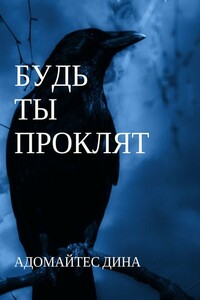
Жизнь Полины была похожа на сказку: обожаемая работа, родители, любимый мужчина. Но однажды всё рухнуло… Доведенная до отчаяния Полина знакомится на крыше многоэтажки со странным парнем Петей. Он работает в супермаркете, а в свободное время ходит по крышам, уговаривая девушек не совершать страшный поступок. Петя говорит, что земная жизнь временна, и жить нужно так, словно тебе дали роль в театре. Полина восхищается его хладнокровием, но она даже не представляет, кем на самом деле является Петя.
«Неконтролируемая мысль» — это сборник стихотворений и поэм о бытие, жизни и окружающем мире, содержащий в себе 51 поэтическое произведение. В каждом стихотворении заложена частица автора, которая очень точно передает состояние его души в момент написания конкретного стихотворения. Стихотворение — зеркало души, поэтому каждая его строка даёт читателю возможность понять душевное состояние поэта.
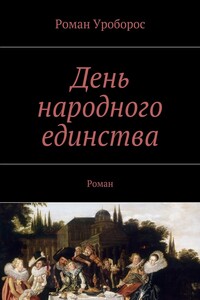
О чем этот роман? Казалось бы, это двенадцать не связанных друг с другом рассказов. Или что-то их все же объединяет? Что нас всех объединяет? Нас, русских. Водка? Кровь? Любовь! Вот, что нас всех объединяет. Несмотря на все ужасы, которые происходили в прошлом и, несомненно, произойдут в будущем. И сквозь века и сквозь столетия, одна женщина, певица поет нам эту песню. Я чувствую любовь! Поет она. И значит, любовь есть. Ты чувствуешь любовь, читатель?