36 Arguments for the Existence of God - [58]
Professor Klapper had, however, lectured Roz briefly but sternly on their way here on restraining herself in their audience with the Valdener Rebbe.
“Try to make yourself as inconspicuous as you possibly can, young lady. The Hasidim have a refined sensibility regarding the desirable trait of modesty, or tzniyus, in a woman. Recall the Bard’s words regarding the virtuous Cordelia: ‘Her voice was ever soft, gentle and low, an excellent thing in woman.’”
“Don’t you guys see?” Roz was saying now. “Every few feet there are signs nailed onto the trees. Cass, park the car a minute. I want to see what it says.”
“Indeed, do park the vehicle, Mr. Seltzer, and let the young lady alight and investigate to her heart’s content. We shall go straight to the Rebbe. We shall find you soon enough, or you us, of that I am certain.”
Roz climbed out onto the sidewalk, and the Lincoln Continental pulled away. Roz gave way to laughter, and it wasn’t soft, gentle, and low.
A woman walked by pushing a carriage, with two toddlers clinging to her skirt on either side of her; she was trying to maneuver her charges to make as wide a circle as possible around the woman staring at a tree.
“Hello,” Roz said to her, turning with a smile.
“Hello.” She didn’t smile back, but she didn’t turn tail and run either. Compared with the typical first contact with an unknown tribe, this was like being visited by a Welcome Wagon lady giving out free coupons to local businesses.
“I’m new in town, and I’m trying to figure out what these signs mean.”
“Menner seit. Froyen seit. Men’s side, women’s side. Men and women don’t walk on the same side of the street.” She had a slight European intonation, more a suggestion of foreign birth than a genuine accent.
“At least I ended up on the right side,” Roz said, with a small demure smile.
“Yes. There is the menner seit.” She pointed across the street. “Not for you,” she added, just in case there could still be any remaining question.
“Well, thanks. Those are beautiful children you have.”
The woman’s response was to turn her head slightly away from Roz. Was it forbidden to compliment the kids here? The mother was delicate-featured and little more than a girl herself. Roz thought, trying to peer beneath the rigid expression, that she was probably eighteen or nineteen. Her pale, delicate skin was not touched by makeup, and it was hard to believe it ever had been. She was a natural redhead, too, judging by her pale-reddish eyelashes and eyebrows. Her hair was hidden beneath a scarf, tied with less pizzazz than Roz’s.
“I have an appointment with the Rebbe.”
“Yes.” This babe was impossible to impress. She had a teenager’s sullenness mixed with a matron’s severity.
“Could you tell me the best way to get to his office?”
“His office is in his home. If you keep going straight down this street, you’ll see the shul, the synagogue. The shul you won’t be able to miss. Across the street from the shul, there is the Rebbe’s house.”
“Hello, sweetie.” Roz squatted down before the redheaded child nearer her. “And what’s your name?”
The child-Roz couldn’t tell if it was a girl or a boy-spun around and burrowed into its mother’s brown woolen coat. Roz had observed that this was common behavior for children, though not universal. The Onuma children weren’t timid or bashful. They’d march right up to you and start to explore your clothes, your hair, the contents of your pockets, just as their parents did. Roz stood back up.
“Shy, huh?”
“With outsiders.”
“Probably doesn’t get to see them that often?”
“No, we’re lucky that way.”
Roz wandered around for a while. The only people she saw were women hurrying with small children. The menner seit was deserted. It reminded her of an Onuma village when the men were off on a raid to replenish their supply of brides.
She walked down the road that led to the synagogue. Her informant had been right: there was no missing it. It was a huge rectangular white stucco mess of a building, with arches and castellated cornices. Despite the grandiose architectural touches, the sheer bulk of the building gave it the look of one of those giant stores where people wheel out a year’s supply of pet food and toilet paper. It was like a Costco that had found God. All of its windows, including two big ones in the front, were arched in a shape that Roz knew had some sort of religious significance. Oh yeah. Those tablets Moses schlepped down from the mountain.
Roz’s family was the assimilated sort, New York City vintage. For her family, one of the ten commandments might as well have been to eat at a Chinese restaurant on Friday nights. She’d had a college boyfriend, Len Solo, who sometimes used to spend vacations with Roz’s family. Once, Roz’s mother, Alicia, had been talking with Len, and he’d pronounced some Yiddish word wrong-“kibbitz” with the accent on the second syllable, like “the bits”-and Roz’s mother had corrected him, saying, “You sound like a goy.” To which Len had responded, “Alicia, I am a goy!” And Alicia had burst into laughter-Roz had inherited her mother’s laugh- saying, “I don’t know why I’d assumed you were Jewish!” That was where Roz’s family stood when it came to their own tribe. It was a curiosity to them that sophisticated people could continue to care, most especially when it came to dating and marriage.

Реальность — это то, что мы ощущаем. И как мы ощущаем — такова для нас реальность.
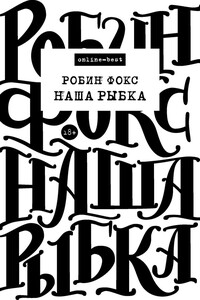
Я был примерным студентом, хорошим парнем из благополучной московской семьи. Плыл по течению в надежде на счастливое будущее, пока в один миг все не перевернулось с ног на голову. На пути к счастью мне пришлось отказаться от привычных взглядов и забыть давно вбитые в голову правила. Ведь, как известно, настоящее чувство не может быть загнано в рамки. Но, начав жить не по общепринятым нормам, я понял, как судьба поступает с теми, кто позволил себе стать свободным. Моя история о Москве, о любви, об искусстве и немного обо всех нас.
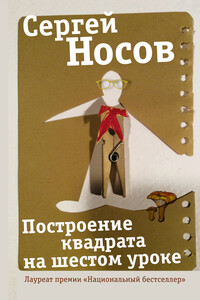
Сергей Носов – прозаик, драматург, автор шести романов, нескольких книг рассказов и эссе, а также оригинальных работ по психологии памятников; лауреат премии «Национальный бестселлер» (за роман «Фигурные скобки») и финалист «Большой книги» («Франсуаза, или Путь к леднику»). Новая книга «Построение квадрата на шестом уроке» приглашает взглянуть на нашу жизнь с четырех неожиданных сторон и узнать, почему опасно ночевать на комаровской даче Ахматовой, где купался Керенский, что происходит в голове шестиклассника Ромы и зачем автор этой книги залез на Александровскую колонну…
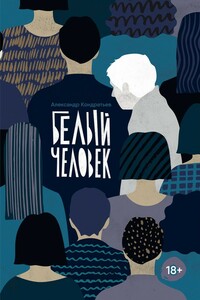
В городе появляется новое лицо: загадочный белый человек. Пейл Арсин — альбинос. Люди относятся к нему настороженно. Его появление совпадает с убийством девочки. В Приюте уже много лет не происходило ничего подобного, и Пейлу нужно убедить целый город, что цвет волос и кожи не делает человека преступником. Роман «Белый человек» — история о толерантности, отношении к меньшинствам и социальной справедливости. Категорически не рекомендуется впечатлительным читателям и любителям счастливых финалов.
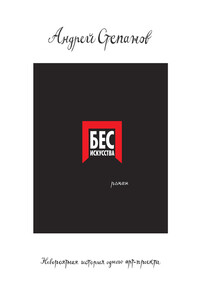
Кто продал искромсанный холст за три миллиона фунтов? Кто использовал мертвых зайцев и живых койотов в качестве материала для своих перформансов? Кто нарушил покой жителей уральского города, устроив у них под окнами новую культурную столицу России? Не знаете? Послушайте, да вы вообще ничего не знаете о современном искусстве! Эта книга даст вам возможность ликвидировать столь досадный пробел. Титанические аферы, шизофренические проекты, картины ада, а также блестящая лекция о том, куда же за сто лет приплыл пароход современности, – в сатирической дьяволиаде, написанной очень серьезным профессором-филологом. А началось все с того, что ясным мартовским утром 2009 года в тихий город Прыжовск прибыл голубоглазый галерист Кондрат Евсеевич Синькин, а за ним потянулись и лучшие силы актуального искусства.