36 Arguments for the Existence of God - [56]
“It’s not going to be traumatic for you to go back there?”
“No, not at all. I didn’t have to grow up there the way you did. I don’t have any trauma associated with the place.”
“Well, that’s good. I guess.” They both laughed. “Wait till I tell Jesse. He won’t believe you’re going with Klapper to New Walden.”
“How’s he doing?”
“Pretty well, I think. He’s got a job at the library. And he’s enrolled as a non-matric at Fairleigh Dickinson. I think the quiet time might be doing him some good. I’m hoping he’s reflecting.”
Jesse was living at home for the year, on a forced leave of absence from NYU for having been involved in a ring that sold term papers to other students.
“That’s good. Is he around now?”
“No, he’s out. I never ask him where. After all, if he were still at school, I wouldn’t know.”
“That seems right,” Cass said, though sometimes he wondered. His mother had strong scruples in regard to autonomy and self-determination. She had had to overcome so much external pressure-her parents, her community, the Valdener Rebbe-in choosing her own way through life that she was loath to exert pressure on anyone else. When it came to Jesse, pressure probably wouldn’t have made any difference anyway.
“I’ll give you a report on New Walden when I get back.”
“It won’t have changed much, that’s for sure. It’s a point of pride that if the Besht were resurrected and he made his way to New Walden…”
“Because, let’s face it, what else would he want to do with himself?”
“That goes without saying. Anyway, he’d get to New Walden and he’d speak to the Valdeners, ask them what they thought, what they knew, and he wouldn’t realize that a day had gone by since he’d walked the earth in the early eighteenth century. Nothing would have changed.”
“Better sanitation, though.”
“Marginally.”
His mother hated the place. But not Cass. As soon as they got across the bridge, he started looking out for landmarks.
They turned onto the Palisades Parkway toward Bear Mountain.
“This is it, this is the exit,” Cass said when he saw the sign for New Town.
They drove through New Town, down Main Street, and when they got to the T-junction where it ended, Cass surprised himself by knowing exactly which way to turn, the left-the other left, and then the right that brought the Lincoln Continental right there to the parking lot with the heap of buses that marked the entrance to New Walden.
The buses were the property of the New Walden Kosher Bus Company, owned by a Valdener Hasid who lived in New Walden. The bus company was the town’s biggest business, and the man who owned the company, Alter Luckstein, was New Walden’s richest man. None of the buses matched any of the others. They were different models, different sizes. Alter read the classified ads in the trade papers for any bus that had been in an accident or had caught fire. Then he bought it, fixed it up, and put it back on the road. Luckstein’s buses not only took the Valdeners back and forth between New Walden and Brooklyn or Manhattan, where many of them worked in the Diamond District or the large electronics-and-camera stores, but also were rented out across the wider metropolitan area by Orthodox Jewish day schools and other Jewish organizations. They even had some regular public routes from New York to nearby towns, competing well with Greyhound.
Just past the buses there was a sign: “Welcome to New Walden, America’s only shtetl. Please observe the custom of our ways and dress modestly. No women in shorts or pants or sleeveless tops.”
Otherwise, the place looked extraordinarily ordinary, at least at first blush, a nondescript tract of roads, little more than wending country lanes, that were lined with modest two-story houses, their front lawns strewn with plastic tricycles, slides, and toys.
They had an appointment to meet with the Grand Rabbi at four o’clock, and they were early.
“Let’s park and walk,” Roz suggested from the backseat. “Mingle with the natives, find some informants. You can’t do fieldwork from a car.”
“We are not here to do your fieldwork, young lady. If you want to get out and walk, please don’t restrain yourself. Mr. Seltzer and I shall console ourselves over the loss of your company.”
“Come on, don’t you want to stretch your legs after that long ride? And, Cass, you must want to check out your old haunts. Do you remember where your grandmother lived?”
“No, I do not wish to, as you say, ‘stretch my legs.’ ” Jonas Elijah Klapper shuddered.
It was too cold for children to be outside playing with the toys. They passed a few women pushing baby carriages, shepherding very young children, almost all of them seemingly girls, with long hair escaping from their hooded coats.
“The older kids are in school,” Cass said, as he drove around the neighborhood. “Sunday’s just a regular day for them.”
“So they go to school six days a week?” Roz asked.
“They get out early on Fridays. Especially in the winter, when the days are short, so the Sabbath, which starts at sundown, comes early. The Sabbath, Shabbes, is something to see. That’s when the men deck themselves out in these amazing fur hats called

Реальность — это то, что мы ощущаем. И как мы ощущаем — такова для нас реальность.

Я был примерным студентом, хорошим парнем из благополучной московской семьи. Плыл по течению в надежде на счастливое будущее, пока в один миг все не перевернулось с ног на голову. На пути к счастью мне пришлось отказаться от привычных взглядов и забыть давно вбитые в голову правила. Ведь, как известно, настоящее чувство не может быть загнано в рамки. Но, начав жить не по общепринятым нормам, я понял, как судьба поступает с теми, кто позволил себе стать свободным. Моя история о Москве, о любви, об искусстве и немного обо всех нас.
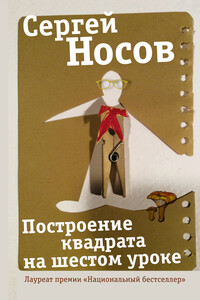
Сергей Носов – прозаик, драматург, автор шести романов, нескольких книг рассказов и эссе, а также оригинальных работ по психологии памятников; лауреат премии «Национальный бестселлер» (за роман «Фигурные скобки») и финалист «Большой книги» («Франсуаза, или Путь к леднику»). Новая книга «Построение квадрата на шестом уроке» приглашает взглянуть на нашу жизнь с четырех неожиданных сторон и узнать, почему опасно ночевать на комаровской даче Ахматовой, где купался Керенский, что происходит в голове шестиклассника Ромы и зачем автор этой книги залез на Александровскую колонну…


В городе появляется новое лицо: загадочный белый человек. Пейл Арсин — альбинос. Люди относятся к нему настороженно. Его появление совпадает с убийством девочки. В Приюте уже много лет не происходило ничего подобного, и Пейлу нужно убедить целый город, что цвет волос и кожи не делает человека преступником. Роман «Белый человек» — история о толерантности, отношении к меньшинствам и социальной справедливости. Категорически не рекомендуется впечатлительным читателям и любителям счастливых финалов.

Кто продал искромсанный холст за три миллиона фунтов? Кто использовал мертвых зайцев и живых койотов в качестве материала для своих перформансов? Кто нарушил покой жителей уральского города, устроив у них под окнами новую культурную столицу России? Не знаете? Послушайте, да вы вообще ничего не знаете о современном искусстве! Эта книга даст вам возможность ликвидировать столь досадный пробел. Титанические аферы, шизофренические проекты, картины ада, а также блестящая лекция о том, куда же за сто лет приплыл пароход современности, – в сатирической дьяволиаде, написанной очень серьезным профессором-филологом. А началось все с того, что ясным мартовским утром 2009 года в тихий город Прыжовск прибыл голубоглазый галерист Кондрат Евсеевич Синькин, а за ним потянулись и лучшие силы актуального искусства.