36 Arguments for the Existence of God - [59]
Roz had given a lot of work to figuring out the kinship relations of the various Onuma villages. Kinship was at the center of their social organization, determining the two most important aspects of their social relations-namely, which men they went to war with and which women they could marry. There were complicated incest prohibitions, as there would have to be in villages in which just about everybody was related to everybody else, though sometimes the men would do some fancy kinship reclassifying so that they could get women they wanted for themselves or their sons. This could lead to big fights between the reclassifier and others who had also wanted the women for themselves or their own sons.
Cass had told Roz about how his mother had blamed inbreeding- what anthropologists called endogamy-for a host of the Valdeners’ problems. Deb jokingly told her sons-only Cass wasn’t so sure whether it was a joke-to marry women from as far away from their own group as possible-what anthropologists call exogamy-to “dilute those concentrated Valdener genes.”
Finding the synagogue, and the Rebbe’s house, had solved one mystery. The streets of New Walden were emptied of men because all of them were here, dressed identically in long black wool coats and large-brimmed black felt hats. The young boys were wearing these hats, too. Almost all of the men had beards, and all of them, young and old, had magnificent side locks, shaped like corkscrews and reaching down to their shoulders. There were a lot of blonds and redheads. You could see it with the men, since they didn’t cover their hair the way women did.
Wait a minute. Hadn’t Cass told her that in this sect the women actually shaved off their hair right after their weddings, and that any hair you saw on their heads, peeking out from their kerchiefs, was a wig? That rated right up there on the bizarro scale with almost anything she’d seen among the Onuma. It made the large families the Hasidim produced a minor miracle. These men were bedding bald women.
The men, on the other hand, were splendidly coiffed. It had to take some doing to get their side locks to curl like that. Did they use rollers? There were dozens of men swarming in the streets outside the shul, and dozens more outside the Rebbe’s house, which was twice as large as any of the other houses, redbrick with black shutters.
She looked for a sign indicating the froyen seit. Any town that segregated the sidewalks was going to segregate the entrance to the Rebbe’s house. She didn’t see Cass or the Klap anywhere, and she wondered how she was going to get herself inside for the powwow with the Rebbe. She didn’t want to miss it. It was probably unsafe to approach any of the men to ask them for instructions. There were clearly female-contamination taboos in place here.
She walked down the paved driveway, keeping far to her right to avoid passing too close to the men, and was rewarded by the sight of two women standing outside a side door. She walked up to them and, before she opened her mouth, they pointed her to the open side door.
She walked a few steps in and saw an empty room to her right. She looked back at the women questioningly. “Gei, gei”-“Go, go”-the older woman urged, flicking her wrist in a motion bespeaking “be gone.” Roz turned back to the room. There were a few wooden slatted chairs, and no windows. It looked like a converted pantry. Was she just supposed to sit here and wait?
She walked back down the hall to the women at the door. One was about sixty and one was about eighteen, but they were dressed almost identically, with kerchiefs wrapping their heads as a diaper does a baby’s bottom, and a little fringe of synthetic bangs sticking out in front, looking as natural as the bristles from a plastic whisk broom.
“I’m supposed to see the Rebbe.”
“Yes,” the younger woman responded. “We showed you. There. There.”
“I came here with two friends. Menner. I think they’re already in with the Rebbe. Our appointment was for four o’clock. I drove all the way from Boston to see the Rebbe.”
“Yes. There. There. Froyen tsimmer.”
“I’d like to speak to the person in charge.”
Now the older woman stepped in.
“There.” She pointed back inside.
Roz went back inside. These gender taboos were inconvenient. She should have dressed up as a man, like Barbra Streisand in Yentl. Roz could be convincing. She had done it before. If someone didn’t come and get her soon, she’d just go and insert her big contaminated female self into that crowd of homeboys in the front yard. That ought to get their attention.
She should have stuck with the men. Klapper had written to the Rebbe on his professional stationery, embossed with his full title: “Extreme Distinguished Professor of Faith, Literature, and Values, Frankfurter University, Weedham, Massachusetts.” Cass and the Klap were probably lounging like pashas on tufted settees, being served herring in cream sauce.
But they weren’t. They were sitting, like Roz, on wooden folding chairs, although the room they were in was larger and had windows, and there were quite a few other men, all Hasidim, waiting along with them. But the stationery must have done the trick, since they had hardly sat down before a Hasid came for them and ushered them into the Rebbe’s office.

Я был примерным студентом, хорошим парнем из благополучной московской семьи. Плыл по течению в надежде на счастливое будущее, пока в один миг все не перевернулось с ног на голову. На пути к счастью мне пришлось отказаться от привычных взглядов и забыть давно вбитые в голову правила. Ведь, как известно, настоящее чувство не может быть загнано в рамки. Но, начав жить не по общепринятым нормам, я понял, как судьба поступает с теми, кто позволил себе стать свободным. Моя история о Москве, о любви, об искусстве и немного обо всех нас.
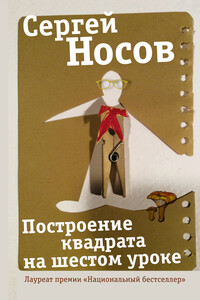
Сергей Носов – прозаик, драматург, автор шести романов, нескольких книг рассказов и эссе, а также оригинальных работ по психологии памятников; лауреат премии «Национальный бестселлер» (за роман «Фигурные скобки») и финалист «Большой книги» («Франсуаза, или Путь к леднику»). Новая книга «Построение квадрата на шестом уроке» приглашает взглянуть на нашу жизнь с четырех неожиданных сторон и узнать, почему опасно ночевать на комаровской даче Ахматовой, где купался Керенский, что происходит в голове шестиклассника Ромы и зачем автор этой книги залез на Александровскую колонну…

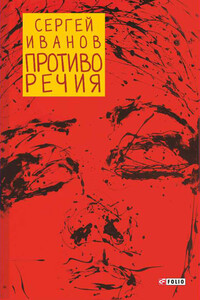
Сергей Иванов – украинский журналист и блогер. Родился в 1976 году в городе Зимогорье Луганской области. Закончил юридический факультет. С 1998-го по 2008 г. работал в прокуратуре. Как пишет сам Сергей, больше всего в жизни он ненавидит государство и идиотов, хотя зарабатывает на жизнь, ежедневно взаимодействуя и с тем, и с другим. Широкую известность получил в период Майдана и во время так называемой «русской весны», в присущем ему стиле описывая в своем блоге события, приведшие к оккупации Донбасса. Летом 2014-го переехал в Киев, где проживает до сих пор. Тексты, которые вошли в этот сборник, были написаны в период с 2011-го по 2014 г.

В городе появляется новое лицо: загадочный белый человек. Пейл Арсин — альбинос. Люди относятся к нему настороженно. Его появление совпадает с убийством девочки. В Приюте уже много лет не происходило ничего подобного, и Пейлу нужно убедить целый город, что цвет волос и кожи не делает человека преступником. Роман «Белый человек» — история о толерантности, отношении к меньшинствам и социальной справедливости. Категорически не рекомендуется впечатлительным читателям и любителям счастливых финалов.

Кто продал искромсанный холст за три миллиона фунтов? Кто использовал мертвых зайцев и живых койотов в качестве материала для своих перформансов? Кто нарушил покой жителей уральского города, устроив у них под окнами новую культурную столицу России? Не знаете? Послушайте, да вы вообще ничего не знаете о современном искусстве! Эта книга даст вам возможность ликвидировать столь досадный пробел. Титанические аферы, шизофренические проекты, картины ада, а также блестящая лекция о том, куда же за сто лет приплыл пароход современности, – в сатирической дьяволиаде, написанной очень серьезным профессором-филологом. А началось все с того, что ясным мартовским утром 2009 года в тихий город Прыжовск прибыл голубоглазый галерист Кондрат Евсеевич Синькин, а за ним потянулись и лучшие силы актуального искусства.