Я одна, и мне по… - [130]
U. S. Census Bureau. “Facts for Features: Mother’s Day.” April 19, 2004. http://www.cen-sus.gov/Press-Release/www/2004/cb04-ff08.pdf
U. S. Census Bureau. “Facts for Features: Women’s History Month (March).” February 22, 2005. http://www.census.gov/Press-Release/www/releases/archives/cb05-ff.04.pdf
U. S. Census Bureau. “Mini-Historical Statistics.” No. HS- 11. Marital status of the population by sex: 1900 to 2002. Statistical Abstract of the United States: 2003.
U. S. Commission on Civil Rights, “Mission.” http://www.usccr.gov/about/mission.htm, accessed June 1, 2005.
U. S. Equal Employment Opportunity Commission, “Discrimination by Type: Facts and Guidance.” http://www.eeoc.gov.
Van Buren, Abigail. “Bridesmaid’s Dress Alteration is Not Gift Enough for Bride.” (Dear Abby column.) Santa Barbara News-Press, February 29, 2004.
Varian, Hal R. “Analyzing the Marriage Gap.” The New York Times, July 29, 2004.
Vartanian, Thomas P., and Justine M. McNamara. “Older Women in Poverty: The Impact of Midlife Factors.” Journal of Marriage and Family 64 (2002): 532–548.
Victor, Christina R., Sasha J. Scambler, Sunil Shah, Derek G. Cook, Tess Harris, Elizabeth Rink, and Stephen de Wilde. “Has Loneliness Amongst Older People Increased? An Investigation into Variations Between Cohorts.” Ageing & Society 22 (2002): 585–597.
Vraney, Mary W., and Carol J. Barrett. “Marital Status: Its Effects on the Portrayal of Older Characters in Children’s Literature.” Journal of Reading 24 (19 81): 487–493.
Waite, Linda J. “The Importance of Marriage Is Being Overlooked.” USA Today, January 1, 1999, magazine.
Waite, Linda J., and Maggie Gallagher. The Case for Marriage: Why Married People Are Happier, Healthier, and Better Off Financially. New York: Doubleday, 2000.
Wall Street Journal, “The Marriage Bonus,” September 1, 2000.
Wall Street Journal, “Voting Matters: Every Single Vote Counts,” June 3, 2004.
Watters, Ethan. Urban Tribes: A Generation Redefines Friendship, Family, and Commitment. New York: Bloomsbury, 2003.
Webb, Andrew. “The Myth of Military Poverty.” Washington Monthly, April, 2001.
Wedding Gazette. “The Costs of Being a Bridesmaid.” http://www.weddinggazette.com/content/002494.shtml, accessed March 24, 2005.
Week, “Why Crow Is Alone.” 21, XI, 2003.
Wellman, Barry, Ove Frank, Vincente Espinoza, Staffan Lundquist, and Craig Wilson. “Integrating Individual, Relational, and Structural Analysis.” Social Networks 13 (19 91): 223–249.
Wheaton, Blair. “Life Transitions, Role Histories, and Mental Health.” American Sociological Review 55 (1990): 209–223.
White, Jack E. “Marching for a Dream.” Time, March 31, 2003.
White, Lynn, and Stacy J. Rogers. “Economic Circumstances and Family Outcomes: A Review of the 1990s.” Journal of Marriage and the Family 62 (2000): 1035-10 51.
Whitehead, Barbara Dafoe. Why There Are No Good Men Left: The Romantic Plight of the New Single Woman. New York: Broadway Books, 2003.
Williams, Kipling D., Christopher K. T. Cheung, and Wilma Choi. “Cyberostracism: Effects o(2f0B0e0in):g7I4g8n-o7r6e2d.Over the Internet.” Journal of Personality and Social Psychology 79
Williams, Kristi, and Debra Umberson. “Marital Status, Marital Transitions, and Health: A Gendered Life Course Perspective.” Journal of Health and Social Behavior 45 (2004): 81-98.
Wilgoren, Jodi. “The. Wedding Candidate on the Trail.” The New York Times, October 24, 2004. Wilmoth, Janet, and Gregor Koso. “Does Marital History Matter? Marital Status and Wealth Outcomes Among Preretirement Adults.” Journal of Marriage and Family 64 (2002): 254-268.
Wilson, Anamaria. “In. Brief: Good Will.” Time, May 1, 2000.
Wilson, Margo, and Martin Daly. “Spousal Homicide Rate and Estrangement.” Violence and Victims 8 (1993): 3-15.
Witman, Edward P. “Letters.” Time, September 18, 2000.
Wood, Julia T. “The Normalization of Violence in Heterosexual Romantic Relationships: Women’s Narratives of Love and Violence.” Journal of Social and Personal Relationships 18 (2001): 239–261.
Woodward, Bob. Bush at War. New York: Simon & Schuster, 2002.
Wright, Robert. The Moral Animal. New York: Pantheon, 1994.
Wu, Zheng, and Randy Hart. “The Effects of Marital and Nonmarital Union Transition on Health.” Journal of Marriage and Family 64 (2002): 420–432.
Yamada, Masahiro. Parasite Single no Jidai (The Era of Parasite Singles). Tokyo: Chikuma Shinsho, 1999.
Yamada, Masahiro. “The Growing Crop of Spoiled Singles.” Japan Echo 27 (2000). Accessed online at http://japanecho.co.jp/sum/2000/270313.html on January 15, 2005.
Yoest, Charmaine. “Income Splitting: A Solution to the Marriage Penalty?” (No date.) http://www.people.virginia.edu/~ccy2c/income_splitting.html. Accessed July 22, 2005.
Zacharek, Stephanie. “Not Just Another Pretty Face.” Salon, April 19, 2001. http://dir.salon.com/ent/movies/feature/2001/04/19/johnny_depp/index.html
Zucchino, David. The Myth of the Welfare Queen. New York: Simon & Schuster, 1999.

Управление Историей, как оно могло бы выглядеть? Какая цель оправдывает средства? Что на самом деле властвует над умами, и какие люди ввязались бы в битву за будущее.
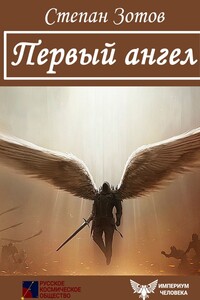
Наш современник обнаруживает в себе психические силы, выходящие за пределы обычного. Он изучает границы своих возможностей и пытается не стать изгоем. Внутри себя он давно начал Долгую Войну — кампанию с целью включить «одаренных» в общество как его полноправных членов. Изучать и развивать их силы, навсегда изменить возможности всей расы.

Психиатрическая больница… сумасшедший… религиозный бред… Или что-то большее? Эта книга о картине мира странных людей. Эта книга о новой вере. Эта книга — библия цифровой эпохи.
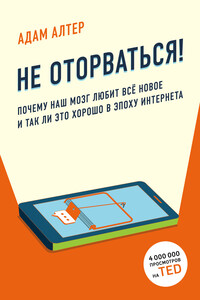
Добро пожаловать в эпоху новых технологий – эпоху, когда мы используем наши смартфоны минимум по 3 часа в день. Мы зациклены на наших электронных письмах, лайках в Instagram и Facebook, обожаем сериалы и с нетерпением ждём выхода нового видеоролика на YouTube. Дети, родившиеся в эпоху интернета, проводят столько времени перед экранами, что общение с живыми людьми вызывает существенные трудности. В своей революционной книге психолог Адам Алтер объясняет, почему многие из сегодняшних приложений так неотразимы и как снизить их влияние на нашу жизнь.
«О чём вы думаете?» — спрашивает Фейсбук. Сборник авторских миниатюр для размышлений, бесед и доброго расположения духа, в который вошли посты из соцсети.
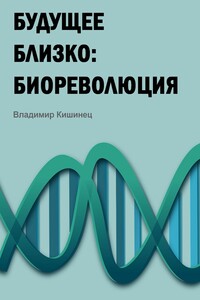
За прошедшие с этого момента 150—200 лет человек получил неизмеримо больше знаний о свойствах природы и создал существенно больше технологий, чем за все предыдущие тысячелетия. Вполне закономерно, что в результате этого наш мир оказался сегодня на пороге новых, грандиозных и во многом неожиданных метаисторических перемен. Эти перемены связаны с зарождающейся сегодня научной биотехнологической революцией, с созданием новой биомедицины.
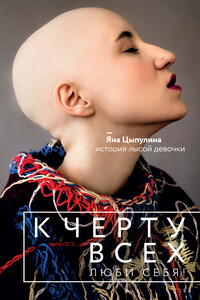
Как часто тебе приходится сталкиваться с непрошеной критикой? Как часто ты переживаешь о том, что недостаточно красива, талантлива, успешна, счастлива, просматривая по вечерам ленты в соцсетях? Ты устала быть несчастливой в своем теле? Меня зовут Цыпулина Яна, и я 23 года жила с ненавистью к себе и своей внешности, потому что болею алопецией. На большей части головы у меня не растут волосы, и из-за этого десять лет в школе я была знаменитостью – «лысым уродом», на которого каждый день показывали пальцем и над которым всячески издевались. Долгое время мне хотелось просто исчезнуть, я просыпалась и засыпала с ощущением беспомощности и отвращением к себе.