Власть, влияние и политика в организациях - [156]
Martin Patchen, «Th e Locus and Basis of Infl uence in Organizational Decisions», Organizational Behavior and Human Performance 11 (1974):
195–221.
Nelson W. Polsby, «How to Study Community Power: Th e Pluralist Alternative», Journal of Politics 22 (1960): 474–484.
Pfeff er and Salancik, «Organizational Decision Making»; Pfeff er and Moore, «Power in University Budgeting».
Stevens, Sudden Death, 160.
T.L. Whisler et al., Centralization of Organizational Control: An Empirical Study of Its Meaning and Measurement”, Journal of Business 40 (1967): 10–26.
Michael Lewis, Liar’s Poker: Rising through the Wreckage on Wall Street (New York: Penguin, 1990), 59.
John R.P. French, Jr., and Bertram Raven, «Th e Bases of Social Power», Group Dynamics, eds. Dorwin Cartwright and Alvin Zander, 3rd ed. (New York: Harper and Row, 1968), 259–269; Patchen, «Locus and Basis of Infl uence», 210.
Stevens, Sudden Death.
Глава 4
Michael L. Tushman, William H. Newman, and Elaine Romanelli, «Convergence and Upheaval: Managing the Unsteady Pace of Organizational Evolution», California Management Review 29 (1986): 29–44.
R.E. Nisbett and L. Ross, Human Inferences: Strategies and Shortcomings of Social Judgment (Englewood Cliff s, NJ: Prentice-Half, 1980).
Linda E. Ginzel, «Th e Impact of Biased Feedback Strategies on Performance Judgments», Research Paper #1102 (Palo Alto, CA: Graduate School of Business, Stanford University, 1990).
Ibid., 26.
Robert W. Allen et al., «Organizational Politics: Tactics and Characteristics of Its Actors», California Management Review 22 (1979): 77–83.
David G. Winter, «Leader Appeal, Leader Performance, and the Motive Profi les of Leaders and Followers: A Study of American Presidents and Elections», Journal of Personality and Social Psychology 52 (1987): 196–202.
Ibid., 200.
Christopher H. Achen, Th e Statistical Analysis of Quasi-Experiments (Berkeley: University of California Press, 1986).
Andrew M. Pettigrew, Politics of Organizational Decision-Making London: Tavistock, 1973), 17.
Ibid., 31.
D.J. Hickson et al., «A Strategic Contingencies’ Th eory of Intraorganizational Power», Administrative Science Quarterly 16 (1971): 216–229.
Martin Patchen, «Th e Locus and Basis of Infl uence in Organizational Decisions», Organizational Behavior and Human Performance 11 (1974): 209.
Ibid., 213.
George Strauss, «Tactics of Lateral Relationship: Th e Purchasing Agent», Administrative Science Quarterly 7 (1962): 161–186.
Michael L. Tushman and Elaine Romanelli, «Uncertainty, Social Location and Infl uence in Decision Making: A Sociometric Analysis», Management Science 29 (1983): 12–23.
Gerald R. Salancik, Jeff rey Pfeff er, and J. Patrick Kelly, «A Contingency Model of Infl uence in Organizational Decision Making», Pacifi c Sociological Review 21 (1978): 239–256.
Ibid., 253.
Bernard M. Bass, «Evolving Perspectives on Charismatic Leadership», Charismatic Leadership, eds. Jay A. Conger, Rabindra N. Kanungo and Associates (San Francisco: Jossey-Bass, 1988), 40–77.
Robert J. House, William D. Spangler, and James Woycke, «Personality and Charisma in the U.S. Presidency: A Psychological Th eory of Leadership Effectiveness», unpublished, Wharton School, University of Pennsylvania, 1989.
Ibid.; Robert J. House, «A 1976 Th eory of Charismatic Leadership» Leadership: Th e Cutting Edge, eds. J.G. Huntand L.L. Larson (Carbondale:
Southern Illinois University Press, 1977).
House, Spangler, and Woycke, «Personality and Charisma».
Nancy C. Roberts and Raymond Trevor Bradley, «Limits of Charisma» Charismatic Leadership, eds. Jay A. Conger, Rabindra N. Karmngo and Associates (San Francisco: Jossey-Bass, 1988), 253–275.
Ibid., 254. 24. Ibid., 260.
Ibid., 263.
Ibid.
Ibid., 264.
Ibid., 269.
Ibid.
Ibid., 268.
Глава 5
Robert A. Caro, Th e Power Broker: Robert Moses and the Fall of New York (New York: Random House, 1974).
Robert A. Caro, Th e Path to Power: Th e Years of Lyndon Johnson (New York: Alfred A. Knopf, 1982), 261.
Ibid., 263.
Ibid., 264–265.
David Halberstam, Th e Reckoning (New York: William Morrow, 1986); Maryann Keller, Rude Awakening: Th e Rise, Fall, and Struggle for Recovery of General Motors (New York: William Morrow, 1989).
Douglas K. Smith and Robert C. Alexander, Fumbling the Future: How Xerox Invented, Th en Ignored, the First Personal Computer (New York: William Morrow, 1988).
Max Holland, When the Machine Stopped (Boston: Harvard Business School Press, 1989).
Jeff rey Pfeff er and Gerald R. Salancik, Th e External Control of Organizations: A Resource Dependence Perspective (New York: Harper and Row, 1978), 48–49.
Richard C. Edwards, Contested Terrain: Th e Transformation of the Workplace in the Twentieth Century (New York: Basic Books, 1979).
Sanford M. Jacoby, Employing Bureaucracy: Managers, Unions, and the Transformation of Work in American Industry, 1900–1945 (New York: Columbia University Press, 1985).
John M. Barry, Th e Ambition and the Power (New York: Viking, 1989).
Ibid., 68.
Ibid., 69. 14. Ibid., 70.
Ibid.
Richard M. Emerson, «Power-Dependence Relations», American Sociological Review 27 (1962): 31–41; Peter M. Blau, Exchange and Power in Social Life (New York: John Wiley, 1964).

В своей книге Бретт Кинг, автор бестселлеров, эксперт-футуролог, известный журналист и телеведущий, рисует яркую картину будущего. Это время, когда дополненная реальность – интернет-медицина, искусственный интеллект, роботы, умные вещи и города – станет повседневной нормой. Ближайшие два десятилетия принесут человечеству намного больше изменений, чем минувшие 250 лет. Исследуя вопрос, как новые технологии повлияют на человека, общество и государства, Бретт Кинг приходит к оптимистичному выводу. Он уверен, что инновации будут использованы во благо: возникнут новые творческие профессии, сократятся часы работы, вырастут доходы. Эта книга интересна и полезна каждому: она расширяет горизонты знаний о дополненной реальности и готовит нас к грядущим переменам.

Сегодня искусственный интеллект меняет каждый аспект нашей жизни — ничего подобного мы не видели со времен открытия электричества. Но любая новая мощная технология несет с собой потенциальные опасности, и такие выдающиеся личности, как Стивен Хокинг и Илон Маск, не скрывают, что видят в ИИ возможную угрозу существованию человечества. Так стоит ли нам бояться умных машин? Матчи Гарри Каспарова с суперкомпьютером IBM Deep Blue стали самыми известными в истории поединков человека с машинами. И теперь он использует свой многолетний опыт противостояния с компьютерами, чтобы взглянуть на будущее искусственного интеллекта.

Самые необычные природные явления: брайникл, фата-моргана, прибрежное капучино, огни Святого Эльма, шаровая молния, огненная радуга, огненный вихрь, двояковыпуклые облака, красные приливы, световые столбы, волны-убийцы.

Нам предстоит познакомиться с загадочным племенем рудокопов, обитавших около 2–4 тысячелетий назад в бассейне реки Россь (Западная Белоруссия). Именно этот район называл М. В. Ломоносов как предполагаемую прародину племени россов. Новые данные позволяют более убедительно обосновать и развить эту гипотезу. Подобные знания помогают нам лучше понять некоторые национальные традиции, закономерности развития и взаимодействия культур, формирования национального характера, а также единство прошлого и настоящего, человека и природы.http://znak.traumlibrary.net.
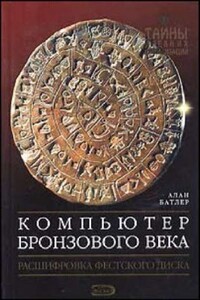
Созданный более 4000 лет назад Фестский диск до сих пор скрывает множество тайн. Этот уникальный археологический артефакт погибшей минойской цивилизации, обнаруженный на острове Крит в начале XX века, является одной из величайших загадок в истории человечества. За годы, прошедшие со дня его находки, многие исследователи пытались расшифровать нанесенные на нем пиктограммы, однако до настоящего времени ни одна из сотен интерпретаций не получила всеобщего признания.Алан Батлер предлагает собственную научно обоснованную версию дешифровки содержимого Фестского диска.

Автором произведенена попытка проследить и систематизировать историю появления НЛО.