Murder at Cape Three Points - [2]
Dawson was off from work for ten days. It had not been easy to obtain clearance for temporary leave from the Homicide Unit at the Criminal Investigations Unit, CID, whereas Christine, who was a primary school teacher, had easily secured extended time off from work so she could be with Hosiah until he was well enough to return to school.
Christine had gone down the hall to the washroom. Dawson glanced over to the next bed where a four-year-old boy, also recovering from cardiac surgery, was sitting up in bed working on a coloring book. At the third bed, a nurse was attending to a teenage girl.
This hospital room was semi-private. In the adjacent ward, private rooms existed for those who could afford them. Everyone at this exceptionally well-equipped center had either money or good fortune. Located in Ghana’s capital, Accra, where Dawson and his family lived, the center was the only one of its kind in the entire country. He could not help but think of the multitude of children in Ghana dying from congenital heart disease for lack of medical facilities.
Dawson occupied himself by reading the lead article in today’s Daily Graphic newspaper. The headline was “Malgam Makes New Offshore Find.” Malgam, a UK oil company, had been the first to discover substantial petroleum deposits off the coast at Cape Three Points in Ghana’s Western Region. It had been producing oil at the rate of about 70,000 barrels a day. On an international scale, this wasn’t much, but the plan was to increase it to 120,000 bpd over the next twelve months. Meanwhile, Malgam kept making new discoveries and appeared to be doing very well financially.
The oil find was changing the political and economic landscape of the Western Region, especially in the regional capital, Sekondi-Takoradi, the twin city about 180 kilometers west of Accra. Its unofficial name was now the “Oil City,” and apparently, Ghanaians, foreigners, banks, insurance companies, and hotels were flocking to it. Since one visit to see his aunt when he was a teenager, Dawson had not been back to Takoradi, or “Tadi,” as people affectionately called it. He could only imagine how much the city had transformed in that time.
Christine came back to the ward, looking lovely in a batik skirt and a kingfisher-blue top. Dawson could not count the number of times she had turned men’s heads today alone. It always made him smile with pride and think, Sorry, you can’t have her.
She sat down beside him, leaning on his thigh. “You can take a break for a while, if you like.”
“I’m okay for now,” he said, slipping his fingers into her soft palm.
Hosiah must have heard their voices. He stirred and his eyes fluttered open.
“Hey, Champ,” Dawson said, smiling. He passed his hand gently back and forth over Hosiah’s hair, cut low just like his dad’s. The more the boy grew up, the more he resembled Dawson.
Hosiah’s eyes lingered on Dawson’s face first and then traveled to his mother’s and back to Dawson’s.
“How do you feel?” Dawson asked him.
“Good.” Hosiah gazed around the room for a moment as he again familiarized himself with his surroundings. General anesthesia played tricks on the mind and the memory. “Mama?”
Christine went to the other side of the bed to be closer to him. “What is it, sweetie?”
“I’m hungry.”
She exchanged a smile with Dawson. That was a good sign. She kissed Hosiah’s forehead. “They’re going to bring you something soon.”
“How hungry are you, Champ?” Dawson asked.
Through his sleepy haze, a smile played at the corners of Hosiah’s lips. He had a little game with his father. “I’m very, very, very, very hungry.”
“Hungry enough to eat twenty balls of kenkey?”
Kenkey, made from fermented corn, was a staple particularly among the Ga people.
Hosiah began to laugh, then winced. “Daddy, don’t make me laugh. It hurts.”
“Dark,” Christine said reproachfully.
“Sorry,” he apologized sheepishly.
Hosiah turned pensive. “Daddy, did they really fix the hole in my heart?”
“Yes, they did.”
“So, now I’ll be fine? I can play soccer and do everything?”
“If the operation went the way it was supposed to and you heal up well.”
“And how is my favorite patient?”
One of the nurses had arrived with Hosiah’s lunch on a tray. She smiled at him. “Are you ready to eat something?”
“He’s more than ready,” Dawson said.
Christine and Dawson helped Hosiah to sit up. Dawson watched the boy’s face to see how much discomfort he was having, but his son registered little. Over countless visits to the hospital, Dawson had observed just how tough sick children could be. Hosiah could take any injection or tolerate a large-bore intravenous catheter with barely a ripple of concern. Dawson, on the other hand, was afraid of needles.
The meal was light-two slices of tea bread with honey, and a bowl of Tom Brown, a popular cereal made from lightly toasted corn. Hosiah attacked it ferociously.
“Slow down,” Christine said, laughing. “Breathe in between mouthfuls.”
The boy took a rest. “When is Sly going to be here?”
“I’ll pick him up from school later and bring him to spend time with you,” Dawson said.
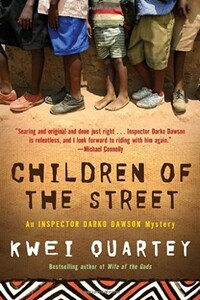
"Searing and original and done just right… Inspector Darko Dawson is relentless, and I look forward to riding with him again." – Michael ConnellyIn the slums of Accra, Ghana's fast-moving, cosmopolitan capital, teenagers are turning up dead. Inspector Darko Dawson has seen many crimes, but this latest string of murders – in which all the young victims bear a chilling signature – is the most unsettling of his career. Are these heinous acts a form of ritual killing or the work of a lone, cold-blooded monster? With time running out, Dawson embarks on a harrowing journey through the city's underbelly and confronts the brutal world of the urban poor, where street children are forced to fight for their very survival – and a cunning killer seems just out of reach.
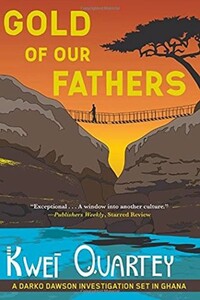
Darko Dawson, Chief Inspector in the Ghana police service, returns in this atmospheric crime series often compared to Alexander McCall Smith's The No. 1 Ladies' Detective Agency novels.Darko Dawson has just been promoted to Chief Inspector in the Ghana Police Service – the promotion even comes with a (rather modest) salary bump. But he doesn't have long to celebrate because his new boss is transferring him from Accra, Ghana's capital, out to remote Obuasi in the Ashanti region, an area now notorious for the illegal exploitation of its gold mines.When Dawson arrives at the Obuasi headquarters, he finds it in complete disarray.
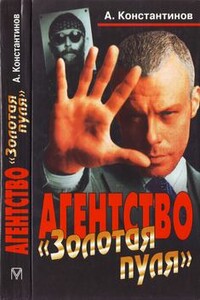
«Золотая пуля» — так коллеги-журналисты называют Агентство журналистских расследований, работающее в Петербурге. Выполняя задания Агентства, его сотрудники встречаются с политиками и бизнесменами, милиционерами и представителями криминального мира. То и дело они попадают в опасные и комичные ситуации.Первая книга цикла состоит из тринадцати новелл, рассказываемых от лица журналистов, работающих в Агентстве. У каждого из них свой взгляд на мир, и они по-разному оценивают происходящие как внутри, так и вне Агентства события.Все совпадения героев книги с реальными лицами лежат на совести авторов.

В книге рассказывается история главного героя, который сталкивается с различными проблемами и препятствиями на протяжении всего своего путешествия. По пути он встречает множество второстепенных персонажей, которые играют важные роли в истории. Благодаря опыту главного героя книга исследует такие темы, как любовь, потеря, надежда и стойкость. По мере того, как главный герой преодолевает свои трудности, он усваивает ценные уроки жизни и растет как личность.
В книге рассказывается история главного героя, который сталкивается с различными проблемами и препятствиями на протяжении всего своего путешествия. По пути он встречает множество второстепенных персонажей, которые играют важные роли в истории. Благодаря опыту главного героя книга исследует такие темы, как любовь, потеря, надежда и стойкость. По мере того, как главный герой преодолевает свои трудности, он усваивает ценные уроки жизни и растет как личность.
О них, о братьях наших меньших. Собачий детектив. Рассказ опубликован в киевском журнале "Детектив+" (№ 1-2006)
В книге рассказывается история главного героя, который сталкивается с различными проблемами и препятствиями на протяжении всего своего путешествия. По пути он встречает множество второстепенных персонажей, которые играют важные роли в истории. Благодаря опыту главного героя книга исследует такие темы, как любовь, потеря, надежда и стойкость. По мере того, как главный герой преодолевает свои трудности, он усваивает ценные уроки жизни и растет как личность.
В книге рассказывается история главного героя, который сталкивается с различными проблемами и препятствиями на протяжении всего своего путешествия. По пути он встречает множество второстепенных персонажей, которые играют важные роли в истории. Благодаря опыту главного героя книга исследует такие темы, как любовь, потеря, надежда и стойкость. По мере того, как главный герой преодолевает свои трудности, он усваивает ценные уроки жизни и растет как личность.