Модернизм как архаизм. Национализм и поиски модернистской эстетики в России - [129]
is the impact of the Russo-Japanese War (1904–1905) in shaping the discourse of nationalism in modernist publications such as the journals Novyi put’, Voprosy zhizni, and Vesy. I demonstrate here how military defeats and the events of the first Russian revolution (1905) unfolding against the background of these defeats not only triggered the crisis of loyalty to Russian imperial statehood among modernist intellectuals but also undermined, in their own eyes, the value of their European, westernized identity. This prompted the turn to theorizing the “national” as divorced from modern statehood, with increased emphasis on its pre-modern, indigenous foundations. Hence the influence Viacheslav Ivanov’s ideas acquire in the second half of the 1900s, which is the subject of the third section. Against the background of the crisis of political institutions, Ivanov develops his vision of the role of an artist as an agent of social consolidation. On the one hand, Ivanov’s artist discovers and resurrects the national (indigenous) myth, which encapsulates the shared “national” past of all the estates; on the other, the artist seeks to transform the realm of aesthetic production itself by removing the divide between creators and spectators, i.e., by making them join forces in an artistic creation. The new aesthetic idiom that consciously evokes the “national archaic” and new forms of art’s institutionalization are both markers, in Ivanov’s terms, of the overcoming of modern “individualism” and of the approach of a new epoch of the vsenarodnoe (“all-people’s,” “universal”) art. Finally, setting the ideals of statehood and nationhood against one another, Ivanov, like other Russian thinkers of that time, theorizes religious confession (Orthodoxy) as an important vehicle of social (national) transformation, the declared goals of which make us recall Vladimir Solovyov’s concept of “free theocracy.” In the fourth section my attention shifts to adaptations of Ivanov’s ideas in the broader literary-critical discourse of the second half of the 1900s, and to the discussion of the twofold role of this discourse: on the one hand it boosts “archaistic” tendencies in literature of the time, while on the other it conceptually deforms them by imposing a singular interpretative frame on a variety of practices (with most examples coming from reviews of books by Alexei Remizov, Sergei Gorodetsky, and Ivanov himself). Finally, in the fifth section of this chapter I discuss the use of the Panslavic matrix in radicalizing the “national” aesthetic project of Russian modernism. Interpreting programmatic statements by Ivanov, Gorodetsky, and especially Velimir Khlebnikov, I demonstrate how radical linguistic experiment becomes conceptualized as a means of reviving the “national.” Nineteenth-century Panslavism as an ideological movement emphasized a common “spiritual descent” of all Slavic peoples: a common faith and written language, received from the hands of Saints Cyril and Methodius, defined for Panslavists the shared heritage of Slavdom. It was precisely the idea of the revival of an “all-Slavonic” language on the basis of modern Russian that allowed young Khlebnikov to interpret linguistic innovations as a “return to the sources.” A destabilization of the linguistic system of modern Russian appeared in this perspective as an instrument of the return to Slavonic linguistic unity, in which all lexical, morphological, and other riches of all contemporary Slavic languages could come together. Ivanov’s “myth-creation” and Khlebnikov’s “word-creation” laid the groundwork for the “national” project within Russian modernism that made all but impossible a distinction between a “return to the sources” and radical innovation, archaisms and neologisms, and which discursively constructed artistic experiment as a path toward the authentically national.
Chapter Four has a circular composition: its first and, partially, fourth (final) sections are devoted to the story of an unrealized ballet by Sergei Prokofiev, Ala and Lollii (1915), the libretto for which was written by Gorodetsky. Initially commissioned from Prokofiev by Diaghilev in 1914 and later rejected by him as “international music,” this ballet was soon reworked by Prokofiev into a suite that acquired the name Scythian Suite. One of the reviews of its first performance in 1916, written by Andrei Rimsky-Korsakov (the composer’s son), directly – and disapprovingly – linked this piece with the Parisian fascination with the “Russian primitive,” thus insisting on its dependence on Diaghilev’s concept of the “national.” In order to explain how the two mutually exclusive interpretations of Prokofiev’s music became possible, in the second and third sections of this chapter I trace the formation of the aesthetic ideology of Diaghilev’s “Russian Seasons” in Europe and the reception of the “national” aesthetic, as manifested in its select productions, in Russian art, music, and theatre criticism. On the one hand, I analyze declarative statements by such contributors to these productions as Leon Bakst, Nikolai Roerich, Alexander Benois, Igor Stravinsky, and Diaghilev himself, which allow me to speculate about the creative and ideological intentions each of the participants brought into the project. On the other, I discuss the critical response in Russia to some of these productions, specifically turning in
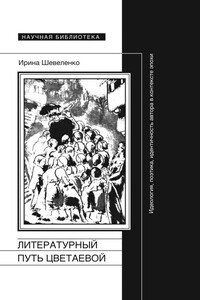
Книга посвящена анализу творческого развития М. Цветаевой и формирования ее прижизненной литературной репутации. История писательского опыта автора рассматривается в соотнесении с культурным контекстом и ключевыми дискурсами эпохи модернизма (ницшеанство, демонизм художника, метафизика пола, антиномия природы и культуры и т. д.). Это позволяет связать воедино проблематику творческой идеологии, поэтики и авторской идентичности. Эволюция и сложное взаимодействие этих рядов прослеживаются на материале всего творчества Цветаевой, с привлечением обширного пласта прижизненной критики и архивных источников.
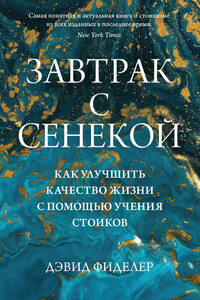
Стоицизм, самая влиятельная философская школа в Римской империи, предлагает действенные способы укрепить характер перед вызовами современных реалий. Сенека, которого считают самым талантливым и гуманным автором в истории стоицизма, учит нас необходимости свободы и цели в жизни. Его самый объемный труд, более сотни «Нравственных писем к Луцилию», адресованных близкому другу, рассказывает о том, как научиться утраченному искусству дружбы и осознать истинную ее природу, как преодолеть гнев, как встречать горе, как превратить неудачи в возможности для развития, как жить в обществе, как быть искренним, как жить, не боясь смерти, как полной грудью ощущать любовь и благодарность и как обрести свободу, спокойствие и радость. В этой книге, права на перевод которой купили 14 стран, философ Дэвид Фиделер анализирует классические работы Сенеки, объясняя его идеи, но не упрощая их.
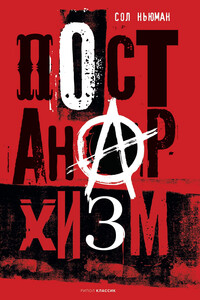
Какую форму может принять радикальная политика в то время, когда заброшены революционные проекты прошлого? В свете недавних восстаний против неолиберального капиталистического строя, Сол Ньюман утверждает, сейчас наш современный политический горизонт формирует пост анархизм. В этой книге Ньюман развивает оригинальную политическую теорию антиавторитарной политики, которая начинается, а не заканчивается анархией. Опираясь на ряд неортодоксальных мыслителей, включая Штирнера и Фуко, автор не только исследует текущие условия для радикальной политической мысли и действий, но и предлагает новые формы политики в стремлении к автономной жизни. По мере того, как обнажается нигилизм и пустота политического и экономического порядка, постанархизм предлагает нам подлинный освободительный потенциал.
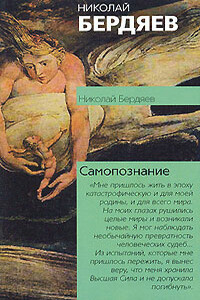
«… Книга эта мной давно задумана. Замысел книги мне представляется своеобразным. Книги, написанные о себе, очень эгоцентричны. В литературе „воспоминаний“ это часто раздражает. Автор вспоминает о других людях и событиях и говорит больше всего о себе. Есть несколько типов книг, написанных о себе и своей жизни. Моя книга не принадлежит вполне ни к одному из этих типов. Я никогда не писал дневника. Я не собираюсь публично каяться. Я не хочу писать воспоминаний о событиях жизни моей эпохи, не такова моя главная цель.
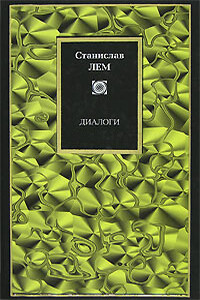
Размышления знаменитого писателя-фантаста и философа о кибернетике, ее роли и месте в современном мире в контексте связанных с этой наукой – и порождаемых ею – социальных, психологических и нравственных проблемах. Как выглядят с точки зрения кибернетики различные модели общества? Какая система более устойчива: абсолютная тирания или полная анархия? Может ли современная наука даровать человеку бессмертие, и если да, то как быть в этом случае с проблемой идентичности личности?Написанная в конце пятидесятых годов XX века, снабженная впоследствии приложением и дополнением, эта книга по-прежнему актуальна.
В книге рассказывается история главного героя, который сталкивается с различными проблемами и препятствиями на протяжении всего своего путешествия. По пути он встречает множество второстепенных персонажей, которые играют важные роли в истории. Благодаря опыту главного героя книга исследует такие темы, как любовь, потеря, надежда и стойкость. По мере того, как главный герой преодолевает свои трудности, он усваивает ценные уроки жизни и растет как личность.
В книге рассказывается история главного героя, который сталкивается с различными проблемами и препятствиями на протяжении всего своего путешествия. По пути он встречает множество второстепенных персонажей, которые играют важные роли в истории. Благодаря опыту главного героя книга исследует такие темы, как любовь, потеря, надежда и стойкость. По мере того, как главный герой преодолевает свои трудности, он усваивает ценные уроки жизни и растет как личность.