Ледовое побоище в зеркале эпохи - [115]
Selart Anti (Tartu). The Battle of the Ice in 1242. The paper presents a shortened and slightly reworked Russian version of the relevant chapter from the monograph «Livland und die Rus' im 13. Jahrhundert» (Cologne 2007). The political background of the battle consisted of internal conflicts in Pskov between the prince Alexanded Yaroslavich («Nevskii») and his rivals. The latter party had already traditional political ties in Livonia, especially in the bishopric of Tartu. The Teutonic Order probably played in the events on the Pskov-Livonian border in 1240–1242 merely a secondary role. It is an anachronistic exaggeration indeed to see in these local political developments a conflict between the «West» and the «East», or designate the battle as a turning point of the ecclesiastical history of relations between the Catholic and the Orthodox churches.
Khrustalev Denis (Saint-Petersburg). The Battle of the Ice and the status of Pskov: In article the analysis of sources of the status of Pskov in relation to Novgorod in the XIII century is made. Processed by the information of primary sources, which rarely employed for this purpose in the national historiography: Thе Livonian Chronicle of Henry and other Western sources. Particular attention is paid to the conflict of Pskov with the Novgorodian prince in 1228, as well as the peace treaty concluded between Novgorod and the Livonian Germans after the Battle of the Ice. It can be argued that the community of Pskov was dependent on Novgorod, at least in the choice of the prince and foreign policy, and the first princes of Pskov (Vladimir, Dovmont) were not sovereigns in Pskov.
Dirks Bernhard (Hamburg). War and peace in a relationship Livonia with Russian lands. The analysis of the Livonian Germans characteristics in Novgorod and Pskov chronicles leads to the conclusion that there was no the irreconcilable antagonism between the Germans and the Russian and there were various forms of their relationship in the XIII century. Along with the armed conflicts caused primarily due to a competition for the right to collect tribute from the local population. Bilateral co-operation agreements including the organizing of joint military campaigns were widespread.
Konoplenko Andrej (Saratow). The presented article investigates the conquests of the South Estonia by German Crusaders in 1217–1224. The article proves the thesis about correlation of german-russian confrontation, territorial and legal mutual relations of the Order of Swordbrothers and Livonian bishops in this region. Special significance is given to the analysis of the warfare on the South Estonian territory. A conclusion on stipulation of the admission of the rights of bishops on the part of south Estonian lands is made. The reason of it is the incapability of the Order of Swordbrothers to struggle all by itself with military pressure of Novgorod and Pskov. The researcher resumes that Russian-Livonian agreement in 1224 put an end to active phase of separation of spheres of influence in Livonia and meet the interests of both countries.
Gansowska Maja (Warszawa). Ezel in the first half of the XIII century. The art icle provides a detailed description of methods of feudal development of Ezel (Saaremaa) by German landsgerrami in the first half of the XIII century. They expected the recognition of substantial autonomy of the local people whose dependence manifested itself mainly in the obligation of delivery of the annual tribute. So gentle handling is not only due to economic and political weakness of Ezel bishop but to the participation of the bishop and the Teutonic Order in the fight for the Izhorskaya land.
Baranov Alexandr (Berlin). The Conquest of Courland by the Teutonic Order, 1241–1242. The article describes the first major military campaign of the Teutonic Order in Livonia after incorporation of the Swordbrothers in 1237. The primary stage of successful conquest of Courland in the years 1241–1242 was completed by legal struggle of the Teutonic Knights for the legitimization of their possession of the conquered territory. Military campaign of the Order in Courland was characterized by a powerful opening blow of almost all available forces against the enemy, a construction of the castle to control the conquered areas and a systematic further assault on pockets of resistance, repeating well-established methods in Prussia.
Ustinova Anastasija (Lipezk). Pope Gregory IX and the Crusades in the Baltic. The content of the Bull of Gregory IX in 1236 which proclaimed the crusade shows that his aim was Christianization of Izhora and the Finns but not the conquest of the Russian lands. The Livonia campaigns near Pskov in 1240–1241 had nothing to do with the program. During this period the Pope had hoped to the Orthodox princes and their subjects conversion to the Catholic faith with peaceful way and had intended to use them against the Mongols.
Bakhtin Anatolij (Kaliningrad). The problem of the German Order domestic and foreign policy at the end of 1230th — the beginning of 1240th in Prussia and Livonia
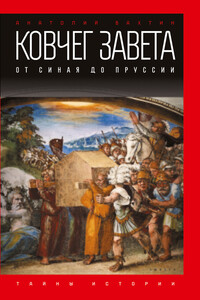
На основании анализа исторических источников и документальных свидетельств автор прослеживает историю величайшей святыни – библейского Ковчега Завета.
Данная работа представляет первое издание истории человечества на основе научного понимания истории, которое было запрещено в СССР Сталиным. Были запрещены 40 тысяч работ, созданных диалектическим методом. Без этих работ становятся в разряд запрещенных и все работы Маркса, Энгельса, Ленина, весь марксизм-ленинизм, как основа научного понимания истории. В предоставленной читателю работе автор в течение 27 лет старался собрать в единую естественную систему все работы разработанные единственно правильным научным, диалектическим методом.

"3 феврале — марте 1919 года комиссия сената США слушала людей, вернувшихся из революционной России. Для оправдания интервенции нужно было собрать доказательства, что власть в России узурпирована кучкой преступников, безнравственных и корыстных людей, подчинивших себе народ с помощью «агитаторов из Ист-Сайда» и германских офицеров." Статья из журнала Энергия, экология 1990 № 11.
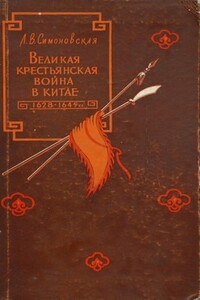
Очерк истории крестьянской войны XVII в. в Китае. В книге рассказывается о Китае в конце правления династии Мин, причинах развития повстанческих движений, ходе и итогах восстания.
В книге рассказывается история главного героя, который сталкивается с различными проблемами и препятствиями на протяжении всего своего путешествия. По пути он встречает множество второстепенных персонажей, которые играют важные роли в истории. Благодаря опыту главного героя книга исследует такие темы, как любовь, потеря, надежда и стойкость. По мере того, как главный герой преодолевает свои трудности, он усваивает ценные уроки жизни и растет как личность.
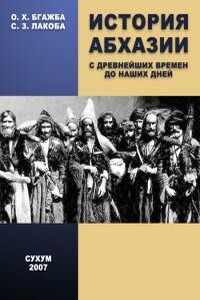
В основе книги лежит историко-культурная концепция, суть которой – рассмотрение истории абхазов, коренного населения Абхазии не изолированно, а в тесном взаимодействии с другими соседними народами и древними цивилизациями. Здесь всегда хорошо прослеживалось биение пульса мировой политики, а сама страна не раз становилась ареной военных действий и политико-дипломатических хитросплетений между великими державами древности и средневековья, нового и новейшего времени. За последние годы были выявлены новые археологические материалы, архивные документы, письменные источники, позволившие объективнее рассмотреть многие исторические события.
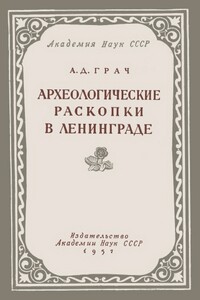
Книга, написанная археологом А. Д. Грачем, рассказывает о том, что лежит в земле, по которой ходят ленинградцы, о вещественных памятниках жизни населения нашего города в первые десятилетия его существования. Книги об этом никогда еще не было напечатано. Твердо установилось представление, что археологические раскопки выявляют памятники седой старины. А оказывается и за два с половиной столетия под проспектами и улицами, по которым бегут автобусы и трамваи, под дворами и скверами, где играют дети, накопились ценные археологические материалы.