Империя Александра Македонского. Крушение великой державы - [104]
New York.
Carter, J. M. (1971) 'Athens, Euboea and Olynthos',Historia 20, 418-29.
Cartledge, P. (2004)Alexander the Great, the Hunt for a New Past, London.
Cartledge P. and Spawforth, A. (1989)Hellenistic and Roman Sparta, a Tale of Two Cities, London.
Gary, M. (1951)A History of the Greek World, 323–146ВС, 2nd edn, London.
Caven, B. (1990)Dionysios /, War-Lord of Sicily, New Haven CT.
Cawkwell, G. L. (1962) 'The Defence of Olynthos',CQ, NS 12, 122-40.
(1978)Philip of Macedon, London.
(2005)The Greek Wars, Oxford.
Chamoux, F. (1956) 'Le roi Magas',Revue Historique 216, 18–34.
Chaniotis, A. (2005)War in the Hellenistic World, Oxford.
Cloche, P. (1955)Un Fondateur d'Empire, St Etienne.
(1957)Demosthenes et la fin de la democratic athenienne, Paris.
Collart, P. (1937)Philippes, Ville deMacedoine, Paris.
Cook, J. M. (1983)The Persian Empire, London.
Cornell, T. J. (1995)The Beginnings of Rome, London.
Cunliffe, B. (1988)Greeks, Romans and Barbarians, Spheres of Interaction, London.
David, E. (1981)Sparta between Empire and Revolution (404–243 ВС), Salem NH.
Davis, N. and Kraay, C. (1973)The Hellenistic Kingdoms: Portrait Coins and History, London.
Dodge, T. A. (1890)Alexander, Boston.
Doherty, P. (2004)Alexander, Death of a God, London.
Eddy, S. K. (1961)The King is Dead, Lincoln NB.
Edson, C. (1958) 'Imperium Macedonicum: the Seleucid Empire and the literary evidence',Classical Philology 53, 153-70.
Ehrenburg, V. (1938) 'Pothos', inAlexander and the Greeks, Oxford, pp. 52–61.
Ellis, J. R. (1969) 'Amyntas III, Ulyria and Olynthos, 383/2-380/ 379',Makedonika 9, 1–8.
(1971) 'Amyntas Perdikka, Philip II, and Alexander the Great', JHS 91, 15–25.
(1976)Philip II and Macedonian Imperialism, London.
Ellis, J. R. and Milns, R. D. (1970)The Spectre of Philip, Sydney.
Engel, R. (c.1978)Untersuchungen zum Machtaufstieg des Antigonos I Monophthalmos, Kallmunz.
Engels, D. W. (1979)Alexander the Great and the Logistics of the Macedonian Army, Berkeley and Los Angeles CA.
Errington, R. M. (1970) 'From Babylon to Triparadeisos: 323–320 ВС', /#£90, 49–77.
(1977) 'Diodorus Siculus and the chronology of the early Diadochoi, 320–311 ВС', Hermes 105, 478–504.
(1990)A History of Macedonia, Berkeley and Los Angeles CA.
Ferguson, W. S. (1911)Hellenistic Athens, an Historical Essay,
London.
Finley, M. I. (1969)Ancient Sicily to the Arab Conquest, London.
Flower, M. A. (1994)Theopompos of Chios, History and Rhetoric in
the Fourth Century ВС, Oxford. Foertmeyer, V. (1988) The dating of the Pompe of Ptolemy II
Philadelphia', Historic 37, 90-104. Fontana, M. J. (1960)Le lotteper la successione diAlessandro Magno
dat 323 al 315, Palermo. Fox, R. L. (1973) Alexander the Great, London. Fraser, P. M. (1972)Ptolemaic Alexandria, 3 vols, Oxford.
(1996)Cities of Alexander the Great, Oxford. Fredericksmeyer, E. A. (1982) 'On the final aims of Philip 1Г
in Adams, W. L. and Borza, E. N. (eds)Philip II, Alexander the Great and the Macedonian Heritage, Washington DC, pp. 85–98.
Fuks, A. (1974) 'Patterns and types of social-economic revolution in Greece from the fourth to the second century ВС',Ancient Society 5,51–81. Fuller, J. F. C. (1958)The Generalship of Alexander the Great, London. Funck, B. (1974) 'Zur Innenpolitik des Seleukos Nikator',Acta
Antiqua academiae scientiarum Hungaricae 22, 505-20. Garland, R. (1987)The Piraeus from the Fifth to the First Century
ВС, Ithaca NY. Grainger, J. D. (1990a)The Cities of Seleukid Syria, Oxford.
(1990b)Seleukos Nikator, London.
(1999)The League of the Aitolians, Leiden.
Grant, M. (1990)The Hellenistic Greeks from Alexander to Cleopatra,
new edn, London. Grayson, A. K. (1975)Assyrian and Babylonian Chronicles, Locust Valley NY.
Green, P. (1974)Alexander of Macedon, Harmondsworth.
(1990)Alexander toActium, Berkeley and Los Angeles CA. Griffith, G. T. (1935)The Mercenaries of the Hellenistic World,
Cambridge.
Griffith, G. T. (ed.) (1996)Alexander the Great, the Main Problems, Cambridge.
Grimal, P., Bengtson, H., Caskel, W., Derchain, P. and Smith, M.
(1968)Hellenism and the Rise of Rome, London. Gruen, E. S. (1985) 'The Coronation of the Diadochoi', in Eadie,
J. H. and Ober, J. (eds),The Craft of the Ancient Historian, Essays in Honor of Chester G. Starr, Lanham MD, pp. 253-71.
Habicht, C. (1997)Athens from Alexander to Antony (trans. C. L. Schneider), Cambridge MA.
Hadley, R. A. (1974) 'Royal propaganda of Seleucus I and Lysimachus',JHS 94, 50–65.
Hamilton, J. R. (1973)Alexander the Great, London.
(1987) 'Alexander's Iranian policy', in Will, W. and Heinrichs, J. (eds),Zu Alexander der Grosse, Festschrift G. Wirth, Amsterdam, pp. 467-86.
Hammond, N. G. L. (1938) 'The two battles of Chaeronea (338 ВС and 86 BC),/ffio3, 186–218.
(1966) 'The kingdoms in Illyria, c.400–167 ВС',Annual of the British School at Athens 61, 73–85.
(1967)Epirus, Oxford.
(1981)Alexander the Great, London.
(1982) 'The evidence for the identity of the royal tombs at Vergina', in Adams, W. L. and Borza, E. N. (eds) (1982)Philip II, Alexander the Great and the Macedonian Heritage, Washington DC.
(1983)Three Historians of Alexander the Great
Данная работа представляет первое издание истории человечества на основе научного понимания истории, которое было запрещено в СССР Сталиным. Были запрещены 40 тысяч работ, созданных диалектическим методом. Без этих работ становятся в разряд запрещенных и все работы Маркса, Энгельса, Ленина, весь марксизм-ленинизм, как основа научного понимания истории. В предоставленной читателю работе автор в течение 27 лет старался собрать в единую естественную систему все работы разработанные единственно правильным научным, диалектическим методом.
"3 феврале — марте 1919 года комиссия сената США слушала людей, вернувшихся из революционной России. Для оправдания интервенции нужно было собрать доказательства, что власть в России узурпирована кучкой преступников, безнравственных и корыстных людей, подчинивших себе народ с помощью «агитаторов из Ист-Сайда» и германских офицеров." Статья из журнала Энергия, экология 1990 № 11.
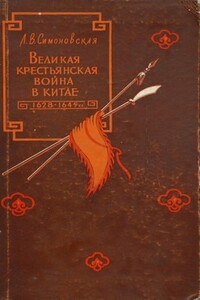
Очерк истории крестьянской войны XVII в. в Китае. В книге рассказывается о Китае в конце правления династии Мин, причинах развития повстанческих движений, ходе и итогах восстания.
В книге рассказывается история главного героя, который сталкивается с различными проблемами и препятствиями на протяжении всего своего путешествия. По пути он встречает множество второстепенных персонажей, которые играют важные роли в истории. Благодаря опыту главного героя книга исследует такие темы, как любовь, потеря, надежда и стойкость. По мере того, как главный герой преодолевает свои трудности, он усваивает ценные уроки жизни и растет как личность.
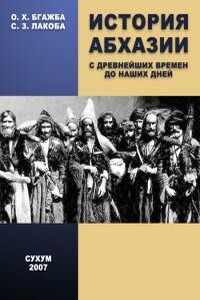
В основе книги лежит историко-культурная концепция, суть которой – рассмотрение истории абхазов, коренного населения Абхазии не изолированно, а в тесном взаимодействии с другими соседними народами и древними цивилизациями. Здесь всегда хорошо прослеживалось биение пульса мировой политики, а сама страна не раз становилась ареной военных действий и политико-дипломатических хитросплетений между великими державами древности и средневековья, нового и новейшего времени. За последние годы были выявлены новые археологические материалы, архивные документы, письменные источники, позволившие объективнее рассмотреть многие исторические события.
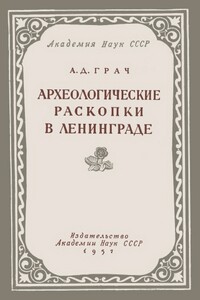
Книга, написанная археологом А. Д. Грачем, рассказывает о том, что лежит в земле, по которой ходят ленинградцы, о вещественных памятниках жизни населения нашего города в первые десятилетия его существования. Книги об этом никогда еще не было напечатано. Твердо установилось представление, что археологические раскопки выявляют памятники седой старины. А оказывается и за два с половиной столетия под проспектами и улицами, по которым бегут автобусы и трамваи, под дворами и скверами, где играют дети, накопились ценные археологические материалы.