Империя Александра Македонского. Крушение великой державы - [103]
Austin М.М. Austin, The Hellenistic World from Alexander to the Roman Conquest, Cambridge 1981
ВCH Bulletin de Correspondance Hellenique
САН Cambridge Ancient History
CQ Classical Quarterly
FGrH P. Jacoby, Die Fragmente der Griechischen Historiker, Berlin, from 1923
IG Inscriptions Graecae
JHS Journal of Hellenic Studies
Macedonia N. G. L. Hammond et al., A History of Macedonia, Oxford 1972–1978
OGIS W. Dittenberger, (ed.) Orientis Graeci Inscriptones Selectae, Leipzig, 1903–1905
REA Кумгу des Etudes Anciennes
SVA Die StaatsvertagedesAltertums, vol. 2 ed. H. Bengtson, vol. 3 by H. H. Schmitt, Munich 1962 and 1969
Tod, GHl M.N. Tod, A Selection of Greek Historical Inscriptions, Oxford 1948
Библиография
Adams, W. L. (1996) ‘In the wake of Alexander the Great: the impact of conquest on the Aegean world’,Ancient World 27, 29–37.
Adams, W. L. and Borza, E. N. (eds) (1982)Philip II, Alexander the Great and the Macedonian Heritage, Washington DC.
Alexandre le Grand, Image et Realitė (1976) Fondation Hardt, Geneva.
Allen, R. E. (1983)The Attalid Kingdom, Oxford.
Andronicos, M. (1970) 'Sarisa', BCH, 94, 91-107.
Anson, E. M. (1988) 'Antigonos, Satrap of Phrygia',Historia 37, 471-7.
Ashley, J. R. (1998)The Macedonian Empire, The Era of Warfare under Philip II and Alexander the Great, 359–323ВС, Jefferson NC.
Avi-Yonah, M. (1978)Hellenism in the East, Jerusalem.
Aymard, A. (1954) 'Philippe de Macedoine otage a Thebes',REA 5, 15–36.
Badian, E. (1958) 'Alexander the Great and the unity of mankind', Historia 1, 425-44.
(1961) 'Harpalus',JHS&\, 16–43.
(1963) 'The Death of Philip IF,Phoenix 17, 244-50.
(1966) 'Alexander the Great and the Greeks of Asia', in Badian, E. (ed.),Ancient Society and Institutions, Studies Presented to Victor Ehrenburgon his 75th Birthday, Oxford, pp. 37–69.
(2000) 'Conspiracies', in Bosworth, A. B. and Baynham, E. J. Alexander the Great in Fact and Fiction, Oxford.
Bagnall, R. S. (1976)The Administration of the Ptolemaic Possessions outside Egypt, Leiden.
Bagnall, R. S. and Derow, P. (2004)The Hellenistic Period: Historical sources in Translation, 2nd edn, Oxford.
Bar-Kochva, B. (1973) 'On the sources and chronology of Antiochos I's battle against the Galatians',Proceedings of the Cambridge Philosophical Society 119, 1–8.
(1976)The SeleucidArmy, Cambridge.
Baynham, E. J. (1998)Alexander the Great, Ann Arbor Ml.
Bellinger, A. R. (1963)Essays in the Coinage of Alexander the Great, New York.
Bernard, R (1967) 'Ai Khanum on the Oxus: a Hellenistic city in Central Asia',Proceedings of the British Academy 53, 71–95.
(1994) 'L'Asie centrale et l'empire seleucide',Topoi 4, 473511.
Bevan, E. R. (1902)The House of Seleucus, vol. 1, London.
(1927)History of Egypt under the Ptolemaic Dynasty, London.
Bickerman, E. (1938)Institutions des Seleucides, Paris.
(1940)>4 La lettre d'Alexandre le Grand aux bannus grecs',REA, 53, 25–35.
Billows, R. A. (1990)Antigonos the One-Eyed and the Creation of the Hellenistic State, Berkeley and Los Angeles CA.
(1995)Kings and Colonists: Aspects of Macedonian Imperialism, Leiden.
Boardman, J. (1964)The Greeks Overseas, Harmondsworth.
Borza, E. N. (1987) Timber and politics in the ancient world: Macedon and the Greeks',Proceedings of the American Philosophical Association, 131, 32–52.
Borza, E. N. (1990)In the Shadow of Olympos, the Emergence of Macedon, Princeton NJ.
(1999)Before Alexander, Constructing Early Macedonia, Claremont CA. Bosworth, A. B. (1971) 'Philip II and Upper Macedon',CQ, NS 21, 93-105.
(1971) 'The Death of Alexander the Great: rumour and propaganda', C0NS 21, 112-36.
(1974) 'The Government of Syria under Alexander the Great', CQ NS 24, 46–64.
(1980) 'Alexander and the Iranians',JHS 100 1-21.
(1986) 'Alexander the Great and the decline of Macedon',JHS 106, 1-12.
(1988)Conquest and Empire, Cambridge.
(1996)Alexander and the East, Oxford.
(2002)The Legacy of Alexander, Oxford.
Bosworth, А. В. and Baynham, E. J. (eds) (2000)Alexander the Great in Fact and Fiction, Oxford.
Bouche-Leclercq, A. (1903–1907)Histoiredes Lagides, 4 vols, Paris.
— (1913–1914)Histoire des Seleucides, 2 vols, Paris.
Briant, P. (1972) 'D'Alexandre le Grand aux Diadoques: le Cas d'Eumenes de Kardia',REA 74, 32–73 and 73, 43–81.
(1973)Antigone le Borgne, Paris.
(1978) 'Colonisation hellenistiques et populations indigenes; la phase d'installation',Klio 60, 57–98.
Brunt, P. A. (1969) 'Euboea in the Time of Philip 1Г,CQ, NS 19, 245-65.
Buckler, J. (1996) 'Philip II's designs on Greece', in Wallace, R. W. and Harris, E. M.Transitions to Empire, Essays in Greco-Roman History 360–146ВС in Honor of E. Badian, Norman OK, 77–98.
Burn, A. R. (1952) 'Notes on Alexander's Campaigns 332–330', JHS12, 81-4.
Burstein, S. M. (1974)Outpost of Hellenism, the Emergence of Heraclea on the Black Sea, Berkeley and Los Angeles CA.
(1982) 'Arsinoe II Philadelphos: a revisionist view', in Adams, W.
L. and Borza, E. N. (eds) (1982)Philip //, Alexander the Great and the Macedonian Heritage, Washington, DC, pp. 197–212.
Cantor, N. (2005)Alexander the Great, Journey to the End of the Earth,

"3 феврале — марте 1919 года комиссия сената США слушала людей, вернувшихся из революционной России. Для оправдания интервенции нужно было собрать доказательства, что власть в России узурпирована кучкой преступников, безнравственных и корыстных людей, подчинивших себе народ с помощью «агитаторов из Ист-Сайда» и германских офицеров." Статья из журнала Энергия, экология 1990 № 11.
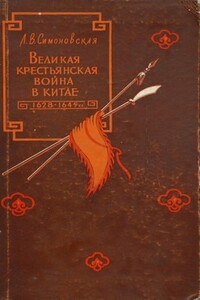
Очерк истории крестьянской войны XVII в. в Китае. В книге рассказывается о Китае в конце правления династии Мин, причинах развития повстанческих движений, ходе и итогах восстания.
В книге рассказывается история главного героя, который сталкивается с различными проблемами и препятствиями на протяжении всего своего путешествия. По пути он встречает множество второстепенных персонажей, которые играют важные роли в истории. Благодаря опыту главного героя книга исследует такие темы, как любовь, потеря, надежда и стойкость. По мере того, как главный герой преодолевает свои трудности, он усваивает ценные уроки жизни и растет как личность.
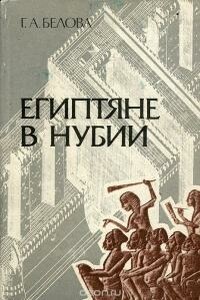
В монографии исследуется один из вопросов взаимоотношений древнего Египта с Нубией, а именно вопрос становления аппарата египетской военной и гражданской администрации на этой территории. Прослеживаются три этапа, связанные с изменениями характера политики Египта в этом регионе, которые в конечном счете привели к превращению Нубии в египетскую провинцию. Выделена роль местного населения в системе сложившихся египетских административных институтов. Исследование охватывает период Древнего, Среднего и Нового царств.
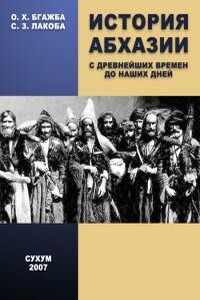
В основе книги лежит историко-культурная концепция, суть которой – рассмотрение истории абхазов, коренного населения Абхазии не изолированно, а в тесном взаимодействии с другими соседними народами и древними цивилизациями. Здесь всегда хорошо прослеживалось биение пульса мировой политики, а сама страна не раз становилась ареной военных действий и политико-дипломатических хитросплетений между великими державами древности и средневековья, нового и новейшего времени. За последние годы были выявлены новые археологические материалы, архивные документы, письменные источники, позволившие объективнее рассмотреть многие исторические события.
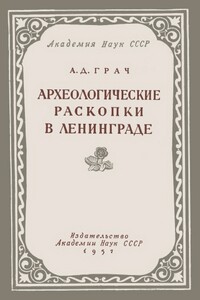
Книга, написанная археологом А. Д. Грачем, рассказывает о том, что лежит в земле, по которой ходят ленинградцы, о вещественных памятниках жизни населения нашего города в первые десятилетия его существования. Книги об этом никогда еще не было напечатано. Твердо установилось представление, что археологические раскопки выявляют памятники седой старины. А оказывается и за два с половиной столетия под проспектами и улицами, по которым бегут автобусы и трамваи, под дворами и скверами, где играют дети, накопились ценные археологические материалы.