Children of the Street - [10]
“Church wins every time,” Dawson commented.
“Oh, yes.” Cuthbert smiled. “Have you ever visited our plant before, Mr. Dawson?”
“No, I haven’t.”
Cuthbert stood up. “Then come along. I’m happy to show you around. We’ll go to the pump station first.”
After they had been in the air-conditioned office, the heat outside hit them like a cricket bat. They walked across the parking area down east of the second building and around the corner. The whir of the pump and the powerful swish of water got louder, and the sewage smell became stronger. Cuthbert led the way to the base of the pump. Towering above them in a brick housing was a huge, spinning piece of machinery that looked like a giant corkscrew.
“It’s called an Archimedes’ screw,” Cuthbert told Dawson, raising his voice above the din. “It may not seem that its turning action could pump water up, but it does-at a good two cubic meters per second from the base to the top of the tower.”
They climbed a platform beyond the pump for a panoramic view of the surroundings.
“Where was the boy found?” Cuthbert asked.
“That’s what I’m trying to figure out,” Dawson said, frowning. “I was on the Agbogbloshie side of the canal yesterday. Everything looks different from this angle.”
“Let me help you get your bearings, then, sir.” Cuthbert looked south. “The outlet of the lagoon to the sea underneath the Winneba Bridge is over there-where you just came from. That’s a mangrove island you see in the middle of the lagoon.”
He turned the opposite direction now.
“The Odaw River comes from several miles north. Once it crosses Abossey Okai Road, it becomes Korle Canal, which is the only portion we can see from here because of the way it curves out of sight. Agbogbloshie, where you were yesterday, is on the opposite bank from us.”
Dawson gazed across at the landscape of trash and wooden shacks seen through the haze of smoke from the burning copper wire.
“Some people don’t even realize we have a river in Accra,” Cuthbert continued. “At any rate, the poor Odaw has become part of Accra’s open sewer. Garbage, human waste, domestic waste, factory waste-you name it, they dump it, and after it’s accumulated all that nastiness, it arrives here.”
“Not pretty,” Dawson said. “There must be, what, millions of plastic water bottles and water bags in there.”
“Not to mention toxic waste and chemicals. We have two excavators to take out as much of the solid waste as possible as it arrives, but it’s tough to keep up.”
“What’s that dam that goes from this side to the other bank?” Dawson asked, indicating the broad, partitioned concrete wall spanning the canal.
“That’s the interceptor. It stops solids from getting into the lagoon. It also has twenty flap gates to regulate water levels during flood season.”
In front of the interceptor, a boom lay across the breadth of the lagoon to help trap floating material. At the boom, the garbage was so dense it looked like a solid mass. Egrets, light enough to stand on it, pecked around for morsels. What food could they possibly find in there?
“Now, look carefully, Inspector, sir,” Cuthbert said. “Slightly upstream from the interceptor, you can make out the Agbogbloshie Canal as it joins the Korle Canal. It’s difficult to spot because it’s so much smaller than the Korle Canal.”
“I see it now,” Dawson said. “And that’s where the body was found.”
“Aha. Now you’ve got your bearings.”
Because the Agbogbloshie Canal was upstream from the interceptor, Dawson now saw that the dead body could not have got there if it had been dumped in the sea or even the lagoon. Even if an extremely high tide had washed the corpse in, the interceptor would have done exactly that: intercepted the body before it got to the Agbogbloshie Canal. Which brought up the next logical question.
“Could the body have floated down the Odaw River into the Korle Canal and then the Agbogbloshie Canal?” Dawson asked.
“I doubt it, sir,” Cuthbert said, shaking his head. “More likely it would have ended up at the boom with all the rest of the floating debris. Maybe, just maybe, that could happen if there was an extreme flood situation, but that hasn’t occurred recently.”
“So the body had to have been dumped right where it was found.”
“Yes, sir.”
Dawson turned and gazed as far as he could see down the lagoon. “It could be a beautiful place. But then there’s that.” He gestured toward Agbogbloshie. “Seriously, Mr. Plange, what are we going to do about it?”
“The government is moving all these squatters out.”
Dawson was incredulous. “Moving them out? To where?”
“To a place outside of the city. Everything. The yam market, the timber market, everything going.”
“I’ll believe it when I see it.”
Cuthbert looked intently at Dawson. “I understand your skepticism, Inspector, and I’ve heard it a lot. Many people say to me, ‘Aren’t you just wasting your time dredging this place when trash is being dumped faster than you can remove it?’ But my answer is, Can we really afford not to try? One day in the future when I’m old and gray, I’ll come down here and look at the beautiful, clear water of the lagoon where people are fishing, swimming, and sailing, and I’ll feel thankful and proud that we never gave up.”
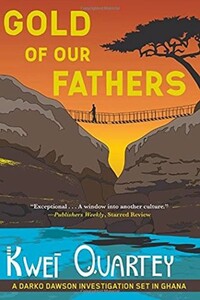
Darko Dawson, Chief Inspector in the Ghana police service, returns in this atmospheric crime series often compared to Alexander McCall Smith's The No. 1 Ladies' Detective Agency novels.Darko Dawson has just been promoted to Chief Inspector in the Ghana Police Service – the promotion even comes with a (rather modest) salary bump. But he doesn't have long to celebrate because his new boss is transferring him from Accra, Ghana's capital, out to remote Obuasi in the Ashanti region, an area now notorious for the illegal exploitation of its gold mines.When Dawson arrives at the Obuasi headquarters, he finds it in complete disarray.
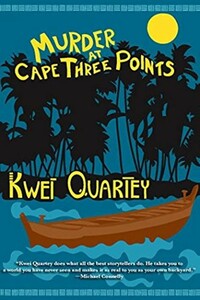
At Cape Three Points on the beautiful Ghanaian coast, a canoe washes up at an oil rig site. The two bodies in the canoe – who turn out to be a prominent, wealthy, middle-aged married couple – have obviously been murdered; the way Mr. Smith-Aidoo has been gruesomely decapitated suggests the killer was trying to send a specific message – but what, and to whom, is a mystery.The Smith-Aidoos, pillars in their community, are mourned by everyone, but especially by their niece Sapphire, a successful pediatric surgeon in Ghana's capital, Accra.

Люси и Джейк – образцовые супруги. У них двое детей, уютный домик и налаженный семейный быт. Он строит карьеру. Она посвятила всю себя семье. Но тихую идиллию нарушает шокирующая весть. Джейк изменил Люси. Теперь уже ничто не будет как прежде… Боль от предательства. Разбитые надежды. Люси и Джейк решают остаться вместе, но с одним условием. Чтобы «уравнять» супругов и спасти брак, Люси трижды причинит боль Джейку… Любым способом, каким захочет.

Во время летнего фестиваля искусств на территории бывшей графской усадьбы происходит убийство. Чеховская чайка, призванная олицетворять свободный творческий полёт, может стать символом тёмного мира, где жизнь не имеет цены. Поймёт ли следователь Кречетов, к какому миру принадлежит каждый из персонажей? Сумеет ли он распутать цепочку странных взаимосвязей? А может быть, в этой цепочке замешан призрак графини, блуждающий по аллеям парка и охраняющий тайну старинного клада?
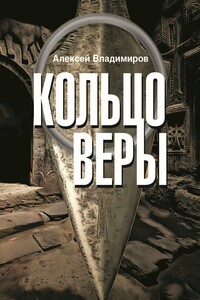
Археолог Вера Буковская при раскопках монастыря в Армении обнаруживает кусок льняной ткани с непонятными надписями и чертежом. Странная находка погружает «везучую Верочку» в кольцо динамично развивающихся событий, предсказать которые не может никто. Командор Тайного ордена хранителей Священного Копья и римский кардинал, магистр Мальтийского ордена и отставной полковник Котов, петербургский академик-востоковед Пиоровский и безжалостный итальянский специалист по «щекотливым делам» охвачены азартом охоты за утерянным тысячелетия назад артефактом.

В книге рассказывается история главного героя, который сталкивается с различными проблемами и препятствиями на протяжении всего своего путешествия. По пути он встречает множество второстепенных персонажей, которые играют важные роли в истории. Благодаря опыту главного героя книга исследует такие темы, как любовь, потеря, надежда и стойкость. По мере того, как главный герой преодолевает свои трудности, он усваивает ценные уроки жизни и растет как личность.
В книге рассказывается история главного героя, который сталкивается с различными проблемами и препятствиями на протяжении всего своего путешествия. По пути он встречает множество второстепенных персонажей, которые играют важные роли в истории. Благодаря опыту главного героя книга исследует такие темы, как любовь, потеря, надежда и стойкость. По мере того, как главный герой преодолевает свои трудности, он усваивает ценные уроки жизни и растет как личность.
В книге рассказывается история главного героя, который сталкивается с различными проблемами и препятствиями на протяжении всего своего путешествия. По пути он встречает множество второстепенных персонажей, которые играют важные роли в истории. Благодаря опыту главного героя книга исследует такие темы, как любовь, потеря, надежда и стойкость. По мере того, как главный герой преодолевает свои трудности, он усваивает ценные уроки жизни и растет как личность.