Английский язык для специальных и академических целей: Международные отношения и зарубежное регионоведение. Часть 1 - [67]
What might be done to re-connect today's youth generation to the formal political process and to convert their broad democratic outlooks into attendance at the ballot booth? Is compulsory voting the way forward? Recently, a report from Sarah Birch and IPPR has suggested that one way to arrest the decline in youth voter turnout is to introduce a system of compulsory voting for first-time voters. This suggestion is not as radical as it might at first seem. There are several established democracies that have compulsory voting laws, including Belgium, Australia, Greece, Luxembourg — and several more which have all had such systems for at least a period during the modern era (such as Italy, Austria, and the Netherlands).
There would certainly appear to be some major advantages should voting be made compulsory for first time voters. At present, there is a momentum developing in Britain for the idea of extending the vote to 16 and 17 year olds; the Labour party are considering making this part of their platform for office at the next general election, while these younger groups will be granted the right to vote at the Scottish Independence Referendum in 2014. It is also argued that compelling these young people to vote will help towards eliminating the generational electoral divide. In doing so, it will force professional politicians, the political parties and future governments to treat young people and their policy concerns more respectfully and on a par with those of their older contemporaries. Furthermore, evidence suggests that voting (and by implication, non-voting) is habit-forming (Franklin, 2004). Consequently, requiring young people to vote will help shape their commitment to voting in the future.
The Reader
A major drawback of introducing such a compulsory voting scheme for young people is that it singles them out as ‘different' from the rest of the adult population, helping to reinforce the stereotype of this current youth generation as apathetic and politically irresponsible. The implication being that it is the behaviour of young people that needs changing — rather than a reform of the political process and of democratic institutions to make the latter more accessible and meaningful for today's youth generation. Furthermore, critics might argue that compelling any young person to vote who has only limited interest in mainstream electoral politics or who feels no affinity with the parties on offer, has serious negative implications for the health of our democratic system; by forcing them to vote, they may develop an attitude of entrenched disdain for the parties, or indeed become particularly susceptible to parties with antidemocratic tendencies — especially those of the far-right. However, offering the option to vote for ‘None of the above' on the ballot paper may help militate against this latter point.
In our research study, we asked young people if the introduction of compulsory voting would make a difference to their turnout in future elections. Perhaps not surprisingly, the largest group (47 per cent) said it would, although a large minority (40 per cent) reported it would make no difference. Of particular note, Table 1 compares the views of those young people claiming to have voted at the 2010 General Election with those reporting that they had not. These ‘Voters' and ‘nonvoters' were similar in stating that that they would be more likely to vote in the future if compulsory voting were introduced (46 per cent and 50 per cent respectively). However, 28 per cent of those who didn't vote in 2010 said that compulsory voting would make no difference — and that they would continue not to vote. Furthermore, and perhaps worryingly, twice as many previous non-voters (12 per cent) than voters (6 per cent) stated that they'd actually be less inclined to vote in the future should compulsory voting be introduced.
| Table 1: Compulsory voting by voting behaviour at the 2010 General Election (% | ||
|---|---|---|
| Would you be more likely or less likely to vote in the future if voting was compulsory? | Voted at the 2010 General Election | Did not vote at the 2010 General Election |
| More likely | 46 | 50 |
| Make no difference | 44 | 28 |
| Less likely | 6 | 12 |
| Don't know | 4 | 10 |
Projecting forward, our results reveal important attitudinal differences between those already planning to vote at the next general election, and those intending to abstain. As Table 2 reveals, 58 per cent of those reporting that they were already very unlikely to vote felt that compulsory voting would make either no difference to this decision (38 per cent), or indeed make them even less likely to vote (20 per cent). From this we can infer that the introduction of compulsory voting would merely serve to reinforce existing feelings of resentment.
| Table 2: Compulsory voting by likelihood to vote at the next General Election (%) | |||
|---|---|---|---|
| Would you be more likely or less likely to vote in the future if voting was compulsory? | All | Very likelyto vote | Very unlikely to vote |
| More likely | 47 | 50 | 32 |
| Make no difference | 39 | 42 | 38 |
| Less likely | 8 | 5 | |
Книга для чтения содержит иллюстративные примеры к принципам подготовки курсовых работ, взятые из текстов курсовых работ по направлению «Международные отношения». Теоретическое объяснение сопровождается фрагментами, при анализе которых студенты учатся не только выявлять и употреблять клише научного стиля речи, но и продуцировать собственные тексты с опорой на имеющиеся образцы.
Сегодня искусственный интеллект меняет каждый аспект нашей жизни — ничего подобного мы не видели со времен открытия электричества. Но любая новая мощная технология несет с собой потенциальные опасности, и такие выдающиеся личности, как Стивен Хокинг и Илон Маск, не скрывают, что видят в ИИ возможную угрозу существованию человечества. Так стоит ли нам бояться умных машин? Матчи Гарри Каспарова с суперкомпьютером IBM Deep Blue стали самыми известными в истории поединков человека с машинами. И теперь он использует свой многолетний опыт противостояния с компьютерами, чтобы взглянуть на будущее искусственного интеллекта.
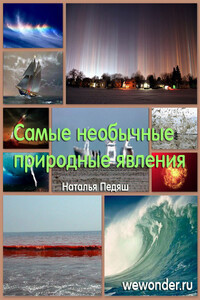
Самые необычные природные явления: брайникл, фата-моргана, прибрежное капучино, огни Святого Эльма, шаровая молния, огненная радуга, огненный вихрь, двояковыпуклые облака, красные приливы, световые столбы, волны-убийцы.

Нам предстоит познакомиться с загадочным племенем рудокопов, обитавших около 2–4 тысячелетий назад в бассейне реки Россь (Западная Белоруссия). Именно этот район называл М. В. Ломоносов как предполагаемую прародину племени россов. Новые данные позволяют более убедительно обосновать и развить эту гипотезу. Подобные знания помогают нам лучше понять некоторые национальные традиции, закономерности развития и взаимодействия культур, формирования национального характера, а также единство прошлого и настоящего, человека и природы.http://znak.traumlibrary.net.

Созданный более 4000 лет назад Фестский диск до сих пор скрывает множество тайн. Этот уникальный археологический артефакт погибшей минойской цивилизации, обнаруженный на острове Крит в начале XX века, является одной из величайших загадок в истории человечества. За годы, прошедшие со дня его находки, многие исследователи пытались расшифровать нанесенные на нем пиктограммы, однако до настоящего времени ни одна из сотен интерпретаций не получила всеобщего признания.Алан Батлер предлагает собственную научно обоснованную версию дешифровки содержимого Фестского диска.

Автором произведенена попытка проследить и систематизировать историю появления НЛО.