Английский язык для специальных и академических целей: Международные отношения и зарубежное регионоведение. Часть 1 - [54]
This story of British ambivalence towards Europe is well-entrenched in the national mind and also those of EU member states; hence the vituperative>1 tone of recent criticisms of Britain. Like British leaders before him, Cameron has been accused of asking for something, while offering nothing in return. As a former Belgian MP said: ‘You're either at the table or you're on the menu.'
Unit III. EU at the Crossroads
The British have always wanted to be at the table. It has just taken a while to get there and they have not found the seat that comfortable. In 1897 Prime Minister Lord Salisbury believed that the ‘Federation of Europe is the only hope we have' to avert European war. That has not changed. Indeed, it is why the first post-1945 Labour government pursued Anglo-European unity, before the Cold War prioritised Anglo-American co-operation. Throughout the 1950s and 1960s Britain's European policy, though short on supranationality — the leitmotif of the Six — was purposeful. After entry, Britain worked as a member state to further the EC and rigorously applied European legislation. To this day Britain functions as a nation whose greatest interests are European. Trade figures, financial ties, international politics and, to an extent, law all point that way. So does the fact that so many Brits holiday in Europe. Yet the country is not at peace with this reality.
Monnet once gave an explanation for Britain's predicament. ‘I never understood why the British did not join,' he said. ‘I came to the conclusion that it must have been because it was the price of victory — the illusion that you could maintain what you had, without change.' The Second World War also cut a much deeper cultural scar on the nation. In 1949, when British diplomats debated a future in Europe, one Labour minister was unequivocal: ‘Anti-European feeling is a commonplace of British thought. Everyone has relatives in the US and Canada. Most have no one in Europe except the dead of two wars.' Sixty years later that sentiment may no longer be entirely correct, but it remains powerful and may have been revalidated by failed diplomacy. Unless we understand why imagery from the Second World War has been used in Britain over Cameron's veto — the PM showed ‘bulldog spirit' — and why this latest spat>55>>56 between Britain and Europe is more atypical than many think — the untold story is more about co-operation than conflict — the relationship between the British and their European partners will be imprisoned in the past.
1. The Franco-German Armistice of June 22, 1940, divided France into two zones: one to be underGerman military occupation and one to be left to the French in full sovereignty, at least nominally. The unoccupied zone comprised the southeastern two-fifths of the country, from the Swiss frontier near Geneva to a point 12 miles (19 km) east of Tours and thence southwest to the Spanish frontier, 30 miles (48 km) from the Bay of Biscay.
2. Philippe Petain, in full Henri-Philippe Benoni Omer Joseph Petain (born April 24, 1856, Cau-chy-a-la-Tour, France — died July 23, 1951, Ile d'Yeu), French general who was a national hero for his victory at the Battle of Verdun in World War I but was discredited as chief of state of the French government at Vichy in World War II. He died under sentence in a prison fortress.
3. The Schuman Declaration of 9 May 1950 was a governmental proposal by then-French Foreign Minister Robert Schuman to create a new form of organisation of states in Europe called a supranational community. Following the experiences of two world wars, France concluded that certain values such as justice could not be defined by the State apparatus alone. It involved far more than a technical Community to place the coal and steel industries of France, West Germany and other countries under a common High Authority. It led to the re-organization of post- World War western Europe by treaty. The proposal led first to the creation of the European Coal and Steel Community (ECSC). It was also the forerunner of several other European Communities and also what is now the European Union (EU). The event is commemorated annually as Europe Day and Schuman himself is considered one of the Founding fathers of the European Union.
4. Richard Austen Butler, Baron Butler of Saffron Walden, (9 December 1902 — 8 March 1982), generally known as R. A. Butler and familiarly known as Rab, was a British Conservative politician. Butler was one of only two British politicians (the other being John Simon, 1st Viscount Simon) to have served in three of the four Great Offices of State (Chancellor of the Exchequer, Home Secretary and Foreign Secretary) but never to have been the Prime Minister, for which he was twice passed over.
Unit III. EU at the Crossroads
5. Maurice Harold Macmillan, 1st Earl of Stockton, OM, PC, FRS>57>>58 (10 February 1894 — 29 December 1986) was a British Conservative politician and statesman who served as the Prime Minister of the United Kingdom from 10 January 1957 to 18 October 1963. Macmillan worked with states outside the European Economic Community (EEC) to form the European Free Trade Association (EFTA), which from 3 May 1960 established a free-trade area. Macmillan also saw the value of rapprochement with the EEC, to which his government sought belated entry, but Britain's application was vetoed by French president Charles de Gaulle on 29 January 1963. De Gaulle was always strongly opposed to British entry for many reasons. He sensed the British were inevitably closely linked to the Americans. He saw the EEC as a continental arrangement primarily between France and Germany, and if Britain joined France's role would diminish.
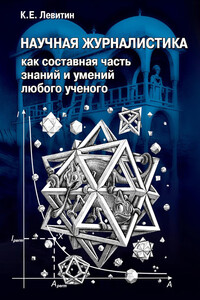
Эта книга адресована сразу трем аудиториям – будущим журналистам, решившим посвятить себя научной журналистике, широкой публике и тем людям, которые делают науку – ученым. По сути дела, это итог почти полувековой работы журналиста, пишущего о науке, и редактора научно-популярного и научно-художественного журнала. Название книги «Научная журналистика как составная часть знаний и умений любого ученого» возникло не случайно. Так назывался курс лекций, который автор книги читал в течение последних десяти лет в разных странах и на разных языках.
В книге рассказывается история главного героя, который сталкивается с различными проблемами и препятствиями на протяжении всего своего путешествия. По пути он встречает множество второстепенных персонажей, которые играют важные роли в истории. Благодаря опыту главного героя книга исследует такие темы, как любовь, потеря, надежда и стойкость. По мере того, как главный герой преодолевает свои трудности, он усваивает ценные уроки жизни и растет как личность.
В книге рассказывается история главного героя, который сталкивается с различными проблемами и препятствиями на протяжении всего своего путешествия. По пути он встречает множество второстепенных персонажей, которые играют важные роли в истории. Благодаря опыту главного героя книга исследует такие темы, как любовь, потеря, надежда и стойкость. По мере того, как главный герой преодолевает свои трудности, он усваивает ценные уроки жизни и растет как личность.
В книге рассказывается история главного героя, который сталкивается с различными проблемами и препятствиями на протяжении всего своего путешествия. По пути он встречает множество второстепенных персонажей, которые играют важные роли в истории. Благодаря опыту главного героя книга исследует такие темы, как любовь, потеря, надежда и стойкость. По мере того, как главный герой преодолевает свои трудности, он усваивает ценные уроки жизни и растет как личность.
В книге рассказывается история главного героя, который сталкивается с различными проблемами и препятствиями на протяжении всего своего путешествия. По пути он встречает множество второстепенных персонажей, которые играют важные роли в истории. Благодаря опыту главного героя книга исследует такие темы, как любовь, потеря, надежда и стойкость. По мере того, как главный герой преодолевает свои трудности, он усваивает ценные уроки жизни и растет как личность.
В книге рассказывается история главного героя, который сталкивается с различными проблемами и препятствиями на протяжении всего своего путешествия. По пути он встречает множество второстепенных персонажей, которые играют важные роли в истории. Благодаря опыту главного героя книга исследует такие темы, как любовь, потеря, надежда и стойкость. По мере того, как главный герой преодолевает свои трудности, он усваивает ценные уроки жизни и растет как личность.