Английский язык для специальных и академических целей: Международные отношения и зарубежное регионоведение. Часть 1 - [53]
a. right-wing
b. sensible
c. nationalist
Unit III. EU at the Crossroads
5. Eurosceptics speak out against
a. economic cooperation
b. immigration
c. political union
1. Why don't Eurosceptics embrace the idea of a political union?
2. Why do you think nationalist populism is gaining ground in the EU member states?
1. How long has the UK been in the EU?
2. Why isn't the UK a member of the Eurozone?
3. Why do you think David Cameron had to pledge to hold a referendum on Britain's EU membership if he remains Prime Minister after 2015?
http://www.historytoday.com/james-ellison/britain-more-european-it-thinks
By James Ellison>1 | Published in History Today Volume: 62 Issue: 2 2012
Britain's recent disputes with the European Union are part of a long historical narrative, argues James Ellison — but it is not the whole story.
There is the old joke about British reports of ‘Fog in the Channel — Continent cut off.' The ‘fog' is now thicker and perhaps even more hazardous than it was. David Cameron's veto>50>>51 last December during the Eurozone crisis gave it an unhelpful and familiar ‘Britain versus the EU' dimension as Europe faced its darkest economic moment since the Great Depression. While Angela Merkel and Nicolas Sarkozy tried to pump blood into the collapsing veins of the euro, Cameron's demands for City of London safeguards appeared self-centred and anti-communautaire.
The French hit back. Sarkozy told Le Monde: ‘There are clearly now two Europes.' No code there: there is the EU and there is Britain. Merkel was more emollient>1, telling the Bundestag that it is ‘beyond doubt that Britain will remain an important partner in the EU'. As long as the euro survives this crisis will be put down to experience, like others in the EU's past. What Cameron asked for was neither unreasonable nor unexpected to those in the know, it was just that he asked for it undiplomatically and at the last moment. The real fallout from these events is that they reaffirm a damaging and distorted history of Britain and Europe. But there is another story to tell.
Unit III. EU at the Crossroads
Let us first reprise>52>>53 the tired narrative of Britain and Europe. Of the contenders for the title ‘Father of Europe', a short French economist, planner and statesman, Jean Monnet (1888-1979), stands tall. He laid the foundation stone of the EU after the Second World War and wanted the British in from the beginning. Alongside Charles de Gaulle, Monnet travelled to London amid the drama of June 1940. He took with him a proposal for ‘indissoluble union' between Britain and France, but the plan fell with Petain's submission to the Nazis. Preventing future Nazis was in part the stimulus for Monnet to write the Schuman Plan of 1950. Named after Robert Schuman, then the French foreign minister, it called for a coal and steel union in Western Europe to neutralise historical enmities. Monnet ensured that the British received an invitation to join, but they demurred. One of Monnet's compatriots recalled the British saying: ‘You in Europe have been defeated; you have been occupied; that is not our situation.'
When the six Schuman Plan countries — Belgium, France, Germany, Italy, Luxembourg and the Netherlands — built on their success with the creation of the European Economic Community (EEC) in 1957, Britain's position looked like hubris>54>. The British dismissed the Six's chances leading up to 1957. Rab Butler, former Chancellor of the Exchequer, even described their plans as ‘archaeological excavations'. Yet in 1961, eating partly digestible humble pie, Harold Macmillan's government decided that Britain had no alternative but to seek membership. The economic imperative was strong — Britain needed a new sense of purpose and economic growth — but so too was an age-old British strategy: no one nation could be allowed to dominate the Continent. Macmillan warned privately of the danger that, through the EEC, the Germans would revive their power: ‘It is really giving them on a plate what we fought two world wars to prevent.'
Yet it was not a German who dominated Europe as Britain tried to get into the EEC, but a Frenchman. General de Gaulle blocked two British applications to join the Community. In saying ‘non' to the first in January 1963 he stated that Britain was ‘insular' and ‘maritime' and set apart by ‘habits and traditions'. He maintained his position throughout the 1960s. Indeed one reason that Britain could enter the EEC on January 1st, 1973 was that de Gaulle had left office in 1969. At last Britain was European, or so it was hoped by Edward Heath's government. Horizons of economic revival and political rebirth stretched out, but sadly not for Heath, who was a casualty of Britain's mid-1970s malaise. Part of the country's identity crisis at that time came from Harold Wilson's decision to put EEC membership to the public in a historic referendum 18 months after entry; the overwhelming ‘yes' vote of June 6th, 1975, however, did not end the debate.
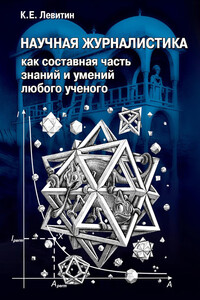
Эта книга адресована сразу трем аудиториям – будущим журналистам, решившим посвятить себя научной журналистике, широкой публике и тем людям, которые делают науку – ученым. По сути дела, это итог почти полувековой работы журналиста, пишущего о науке, и редактора научно-популярного и научно-художественного журнала. Название книги «Научная журналистика как составная часть знаний и умений любого ученого» возникло не случайно. Так назывался курс лекций, который автор книги читал в течение последних десяти лет в разных странах и на разных языках.
В книге рассказывается история главного героя, который сталкивается с различными проблемами и препятствиями на протяжении всего своего путешествия. По пути он встречает множество второстепенных персонажей, которые играют важные роли в истории. Благодаря опыту главного героя книга исследует такие темы, как любовь, потеря, надежда и стойкость. По мере того, как главный герой преодолевает свои трудности, он усваивает ценные уроки жизни и растет как личность.
В книге рассказывается история главного героя, который сталкивается с различными проблемами и препятствиями на протяжении всего своего путешествия. По пути он встречает множество второстепенных персонажей, которые играют важные роли в истории. Благодаря опыту главного героя книга исследует такие темы, как любовь, потеря, надежда и стойкость. По мере того, как главный герой преодолевает свои трудности, он усваивает ценные уроки жизни и растет как личность.
В книге рассказывается история главного героя, который сталкивается с различными проблемами и препятствиями на протяжении всего своего путешествия. По пути он встречает множество второстепенных персонажей, которые играют важные роли в истории. Благодаря опыту главного героя книга исследует такие темы, как любовь, потеря, надежда и стойкость. По мере того, как главный герой преодолевает свои трудности, он усваивает ценные уроки жизни и растет как личность.
В книге рассказывается история главного героя, который сталкивается с различными проблемами и препятствиями на протяжении всего своего путешествия. По пути он встречает множество второстепенных персонажей, которые играют важные роли в истории. Благодаря опыту главного героя книга исследует такие темы, как любовь, потеря, надежда и стойкость. По мере того, как главный герой преодолевает свои трудности, он усваивает ценные уроки жизни и растет как личность.
В книге рассказывается история главного героя, который сталкивается с различными проблемами и препятствиями на протяжении всего своего путешествия. По пути он встречает множество второстепенных персонажей, которые играют важные роли в истории. Благодаря опыту главного героя книга исследует такие темы, как любовь, потеря, надежда и стойкость. По мере того, как главный герой преодолевает свои трудности, он усваивает ценные уроки жизни и растет как личность.