Английский язык для специальных и академических целей: Международные отношения и зарубежное регионоведение. Часть 1 - [50]
Europe (that just so happens to look rather like Europe before the big bang enlargement).
14. The concept of a ____________________ Europe is a controversial and highly sensitive
subject.
15. One of the most ambitious proposals that could be found in the drafts for the future of the EU
and the euro zone in particular was the creation of a _______________________, called in the
draft documents a ‘fiscal capacity' for absorbing shocks.
1. Do you think the concept of a common European identity is a myth or reality?
2. What processes are, in your view, fostering / hindering the formation of a common identity?
http://www.europeanvoice.com/article/too-early-to-say-homo-europaeus-is-doomed/
By John Wyles>46>>4725.01.2012
Europeans may not view Europe as a homeland, but the notion of a common identity emerging should not yet be dismissed.
For at least 40 years, journalists, politicians and political and social scientists have been scouring Europe for a new species of animal. It would be recognisable by eyes that are focused on matters higher than the parochial>48> interests of the nation state, and a preference for entering its habitat through the door marked ‘Europe'. Closely related species tend to choose the entrance symbolised by their native territory, but the concept of a European door spoke to an ideal, an inclusive identity and shared loyalties.
This animal had no clear profile and its DNA had scarcely formed during the early post-war years when the idea of integration began to enthuse the political classes in the western part of the European mainland. But it was an islander, Winston Churchill, who in 1948 offered a first definition of what it would feel like to belong to this new breed.
“We hope to see a Europe where men of every country will think of being a European as of belonging to their native land, and ... wherever they go in this wide domain ... will truly feel, ‘Here I am at home.'”
Unit III. EU at the Crossroads
For more than 60 years, this aspiration has shaped hopes and expectations of the benefits of European integration. The legacy of Churchillian thinking, the desire to make people feel at home in Europe, is evident in the widespread search for a formula that would make a reality of a European demos. The goal is to forge a stronger European identity through heightened political participation and institutional accountability.
Many have shared Churchill's vision and closely examined polling evidence and political behaviour for signs of its emergence. It was assumed that he offered a legitimate benchmark against which to judge the impact, or lack of it, of European integration on the citizens of Europe's nation states. When this assumption seemed to be feeble, especially with the growth of nationalist populism in many member states, the conclusion was drawn that Europe was failing to capture the loyalty and trust of its citizens. Its legitimacy is now held to be in peril. The inability of people to identify with the Union and its institutions is underscored and depicted as a major political adjunct to the economic crises currently afflicting Europe.
Gareth Harding, a former European Voice journalist, evangelises>49> this view in an article for the latest issue of Foreign Policy. His charge sheet itemises four important failures of European integration: regional and national differences have not dissolved; Europeans are divided on everything from the role of the state to the obligation to pay taxes; there is no real consensus on what are European values; and the nation state remains the primary focus of loyalty and identity.
Is a sense of European identity really absent beyond the 10% who regularly claim to feel its weight rather than their national origins? Could it be that Harding and many others are looking for a political mirage and, therefore, highlighting misleading evidence? What should we make of Eurobarometer polls consistently reporting that freedom to travel, study and work is the attribute most strongly and positively associated with EU membership? This may not imply a widespread sense of a common homeland, but it does suggest that many people identify with the European space enough as to feel at ease about moving around in it.
This comfort zone provides some insulation against the unwelcome realisation that the Union has lost reputation and prestige at home and abroad through its handling of the eurozone debt crisis. It should surprise no one that there has been a loss of trust and confidence in EU leadership and institutions when ‘Europeans' as diverse as George Osborne, the UK finance minister, and Mario Monti, a former European commissioner and now Italy's prime minister, complain about the quality of crisis management.
Resistance and protest against austerity and structural reforms in Greece, Italy, Portugal and Spain is entirely predictable. Much less predictable is the headway that at least three of these governments are making in winning popular acceptance of draconian measures vital not only for national economic survival, but also for sustaining the European project. The eurozone crisis and the affliction and infliction of fiscal austerity across many of the 27 may be creating a panEuropean identity out of shared negative experience.
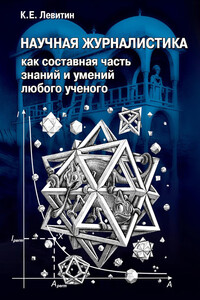
Эта книга адресована сразу трем аудиториям – будущим журналистам, решившим посвятить себя научной журналистике, широкой публике и тем людям, которые делают науку – ученым. По сути дела, это итог почти полувековой работы журналиста, пишущего о науке, и редактора научно-популярного и научно-художественного журнала. Название книги «Научная журналистика как составная часть знаний и умений любого ученого» возникло не случайно. Так назывался курс лекций, который автор книги читал в течение последних десяти лет в разных странах и на разных языках.
В книге рассказывается история главного героя, который сталкивается с различными проблемами и препятствиями на протяжении всего своего путешествия. По пути он встречает множество второстепенных персонажей, которые играют важные роли в истории. Благодаря опыту главного героя книга исследует такие темы, как любовь, потеря, надежда и стойкость. По мере того, как главный герой преодолевает свои трудности, он усваивает ценные уроки жизни и растет как личность.
В книге рассказывается история главного героя, который сталкивается с различными проблемами и препятствиями на протяжении всего своего путешествия. По пути он встречает множество второстепенных персонажей, которые играют важные роли в истории. Благодаря опыту главного героя книга исследует такие темы, как любовь, потеря, надежда и стойкость. По мере того, как главный герой преодолевает свои трудности, он усваивает ценные уроки жизни и растет как личность.
В книге рассказывается история главного героя, который сталкивается с различными проблемами и препятствиями на протяжении всего своего путешествия. По пути он встречает множество второстепенных персонажей, которые играют важные роли в истории. Благодаря опыту главного героя книга исследует такие темы, как любовь, потеря, надежда и стойкость. По мере того, как главный герой преодолевает свои трудности, он усваивает ценные уроки жизни и растет как личность.
В книге рассказывается история главного героя, который сталкивается с различными проблемами и препятствиями на протяжении всего своего путешествия. По пути он встречает множество второстепенных персонажей, которые играют важные роли в истории. Благодаря опыту главного героя книга исследует такие темы, как любовь, потеря, надежда и стойкость. По мере того, как главный герой преодолевает свои трудности, он усваивает ценные уроки жизни и растет как личность.
В книге рассказывается история главного героя, который сталкивается с различными проблемами и препятствиями на протяжении всего своего путешествия. По пути он встречает множество второстепенных персонажей, которые играют важные роли в истории. Благодаря опыту главного героя книга исследует такие темы, как любовь, потеря, надежда и стойкость. По мере того, как главный герой преодолевает свои трудности, он усваивает ценные уроки жизни и растет как личность.