Английский язык для специальных и академических целей: Международные отношения и зарубежное регионоведение. Часть 1 - [47]
An intergovernmental agreement of this kind would allow member states to avoid the pain of ratification in the 27 member states and prevent the 17 from being blackmailed by the renegotiation demands of British Eurosceptics. Even some Eurozone countries such as Slovakia and Finland could be excluded if their parliaments refused to ratify the agreement. However, the paradox of this idea of a “euro-core” is that it could be a kind of federalism without the federalists: it could exclude EU institutions such as the European Commission, the European Parliament and the European Court of Justice (ECJ). Moreover, many of the most pro-European member states — including Poland (which currently holds the presidency), Latvia and Lithuania — would also be left in the slow lane of European integration.
Angela Merkel has said that the fragmentation of the euro would lead to the end of the EU. But, as Wolfgang Munchau has argued, saving the euro could also lead to the destruction of the EU. This danger is in part an institutional question: the inner core that is emerging is breaking some of the elements of the consensus that has allowed the EU to function in recent years. It has sidelined the European Commission, empowered and co-opted the European Council by appointing Jean-Claude Juncker as chair of the group, and has acted through a Franco-German core that does not fully reflect the interests of small member states or the deficit countries.
At the same time, the danger of a two-speed Europe is a policy question. It is inevitable that the “euro-core” will increasingly speak with one voice within the EU as well as outside it. For example, in negotiations on the single market in financial services it is quite likely that the “euro-core” would agree a single position and only then negotiate with the 10 states outside the Eurozone. If an inner core of European states moves forward, the excluded states will be very nervous about ensuring that control of key policy areas such as the single market, common trade policy and the common budget remain with the 27 rather than being decided by the “euro-core”.
Unit III. EU at the Crossroads
There are also big questions about the effects of a two-speed Europe on the other two big integration projects: the common judicial space and common foreign policy. For example, it will be hard for the EU to rise to its potential on the world stage if geopolitically powerful countries such as Britain and Poland are excluded from the core. The implications for justice and legal affairs could be equally profound. Some of the Schengen countries could be excluded from the “eurocore”, but it is possible that countries that have entered a fiscal union with each other might want to unite their migration policies. As David Miliband has argued, a two-speed Europe would be unbalanced on economic issues such as free trade and the single market and foreign-policy issues such as Russia.
This could in turn create a danger of the fragmentation of the EU into informal or even formal alliances and the emergence of geo-economic power struggles within it. There has already been some co-ordination between the Polish presidency, Denmark, Sweden and the UK. Some have suggested that the non-Eurozone states should formally organise themselves into a “Non-Euro Group” (NEG) that would elect its own chair and hold its own summits in order to protect itself from discrimination (in particular, by ensuring that future Council and Commission presidents can still come from non-euro countries). However, unless the Eurozone behaves in an aggressive way, it is unlikely that this group — which includes some states such as Poland that want one day to join the euro, others such as Denmark that haven't yet decided, and others such as the UK that are unlikely to join for the foreseeable future — will cohere into a coalition with shared interests. As well as a lack of cohesion among the “euro-outs”, there is also a lack of cohesion within the Eurozone: one Eurozone minister recently said in private that “the countries we want in the Eurozone like Sweden and the UK are not there and the ones we do not want are.”
In order to avoid the break-up of the EU, attention should be devoted to the relations between the 17 and the 10, as well as to the governance of the Eurozone. It will be important to devise membership criteria that are open so that other countries can join at any time if and when they are willing and able (many Eastern Europeans are keen to make sure they are able to join when they meet the convergence criteria). It will also be important to leave a gateway open for the absorption of the core into the larger union at a later stage. The best outcome would be to develop the two-speed Europe within the existing treaties under the provisions for “enhanced cooperation”>45>. This would make it possible for non-euro countries to stay in the room when discussions take place and to prevent the “euro-core” formally discussing without them issues that fall within the scope of the existing treaties. This would also keep alive the prospect of a messy Europe of variable geometry rather than a two-speed Europe of first- and second-class states.
Земная цивилизация достигла критического порога, и потеря людьми интереса к космосу лишь вершина айсберга. Первые космические программы имели ясную цель, объявленную Циолковским: расселение человечества по Солнечной системе. Сейчас цель потеряна как для развития космонавтики, так и для человечества в целом. Оно должно сдать экзамен на разумность и обеспечить себе переход на новую ступень развития.(«Техника-молодежи», № 8/2004)
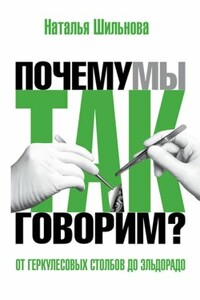
Азию мы называем Азией, а Антарктиду – Антарктидой. Вот Фарерские острова, но нам лучше на Канарские. Слова, известные со школы, звучат, будто музыка: Гренландия и Исландия, Миссури и Ориноко, Босфор и Дарданеллы. С чем и с кем связано то или иное географическое название – кто так назвал, когда и почему? Знать бы! И удивлять других: «Кстати, о Миссисипи…»Эта книга раскрывает многие историко-географические тайны. Рассказы о происхождении названий географических объектов часто оказываются посильнее детективных романов.
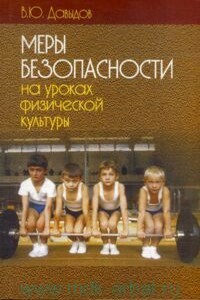
Настоящее пособие знакомит учителей физической культуры с нормами санитарно-гигиенического режима, мерами пожарной безопасности на уроках физкультуры. В нем представлены нормативные акты, формы документов, извлечения из методических указаний, правил и инструкций по охране труда, регламентирующие безопасность проведения физкультурно-оздоровительной, учебной и внеклассной работы в образовательных учреждениях; показан порядок и правила проведения инструктажей по мерам безопасности.Пособие предназначено для студентов, преподавателей, учителей физической культуры и школьников.
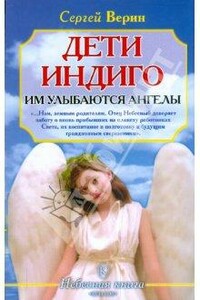
Эта книга о наших детях, о происшествиях и явлениях, связанных с ними и выходящих за рамки традиционного мировосприятия.Вас, уважаемый читатель, ждут встречи с героями невероятных историй, удивительными людьми, участниками и очевидцами феноменальных событий, необъяснимых с точки зрения логики и «приземленного» мышления.Также вы получите возможность побывать в гостях у известной духовной целительницы Зины Ивановны, побеседовать с ней, вместе проанализировать почерпнутую информацию. Эта необычная женщина будет комментировать те удивительные истории, которые рассказаны на этих страницах.
В книге рассказывается история главного героя, который сталкивается с различными проблемами и препятствиями на протяжении всего своего путешествия. По пути он встречает множество второстепенных персонажей, которые играют важные роли в истории. Благодаря опыту главного героя книга исследует такие темы, как любовь, потеря, надежда и стойкость. По мере того, как главный герой преодолевает свои трудности, он усваивает ценные уроки жизни и растет как личность.
В книге рассказывается история главного героя, который сталкивается с различными проблемами и препятствиями на протяжении всего своего путешествия. По пути он встречает множество второстепенных персонажей, которые играют важные роли в истории. Благодаря опыту главного героя книга исследует такие темы, как любовь, потеря, надежда и стойкость. По мере того, как главный герой преодолевает свои трудности, он усваивает ценные уроки жизни и растет как личность.