36 Arguments for the Existence of God - [84]
“Hear, then, what the holy Arizal said of the sons of Aharon! In the last dr’ash that the Arizal gave before his death in the sacred city of S’fat, the Arizal spoke of Nadab and Avihu. The Arizal compared them to the fawns of the gazelle. Just as the gazelle, as it is written in the Zohar, requires the serpent’s bite in order to give birth, so Nadab and Avihu were korbanim, sacrifices, to hasten the coming of Moshiach.
“The gazelle is the Shechinah, the indwelling Presence; the snake is the snake; the child being born is, if the moment is right, the Moshiach of the line of David, but otherwise just another Moshiach of the line of Joseph, doomed himself and not yet capable of returning Israel from its exile.
“The strange fire, aysh zarah, was not avodah zarah, not idol worship! Not at all! Do not make the mistake of thinking that, chas ve-shalom, heaven forbid, Aharon’s sons, Moshe Rabenu’s own nephews, succumbed to idolatry!
“The strange fire was the redemptive fire that leaps out to purify the world, consuming the innocent only to return them back again into the holy service, as it will always be, the gilgul turning round and round until the redemption of our days, may it be in our lifetime, Amen.”
A thunderous “Amen” answered the Rebbe’s own.
The Rebbe switched back to Yiddish now, and Cass found that his knowledge of Yiddish was really as limited as he’d remembered. He didn’t understand another word. Still, he enjoyed listening to the Rebbe’s words, watching the expressions on his face and the dance of his hands.
When the Rebbe stopped speaking, a little commotion started up beside him-not on Professor Klapper’s side but on the other side. Cass hadn’t noticed the tiny figure of a child sitting there, who now was being lifted up onto the tish, placed beside gigantic bowls of apples and oranges.
Unlike all the other unmarried males, he was wearing a fur hat, smaller than those of the grown men but still enormous on his tiny head, and he was wearing a shiny little kaputa of pale blue.
It was a strange sight, the child standing on the table. In his little shtreimel, he resembled an oversize mushroom displayed beside the fruit. The disturbing thought of child sacrifice came to Cass’s mind. He knew that the idea had been, from the earliest days, anathema to the Hebrews. The prophets had ranted about the child sacrifices of the neighboring tribes. They had denounced as abominations the pagan practice of burning children at altars to the cruel gods of Baal and Baal-zebub. But there was also that horrific story of the binding of Isaac to set off a chain of unwanted associations, of the father, Abraham, rising early in the morning to heed Yahweh’s terrible command to offer his son as a burnt offering on a mountaintop. Like Aharon the High Priest, Abraham, too, hadn’t cried out in protest or grief, but wordlessly prepared for the sacrifice.
“I give my dr’ash in the honor of the visitor, Rav Klapper,” the child announced in his chimelike voice, and the black sea of men drew in toward the tiny figure standing poised on the foam. Cass could feel the irresistible undertow straining toward him, the prodigious child and future Rebbe, whose lineage of chosenness traced back all the way to the holy Ba’al Shem Tov.
“The beauty of the maloychim comes down on us. The maloychim are above. But also they are here, everywhere, in everything.” He patted the air down in front of him, and then he turned his hands over and gestured with them in the classic Hasidic gesture of explanation. “As they are, it must be.
“The maloychim are in everything. They are even in some of the maloychim!” And now he smiled, and all the Valdeners smiled. “They are there, side by side, and above and below and in the center.
“Here at the tish, we are sitting, and the maloych 36, lamed vav, also sits, and in lamed vav is sitting 2, beys, 2 times, and that 2 times 2 is sitting 3 times, gimel, and that 2 times 2 times 3 is sitting 3 times. There in the maloych, lamed vav, the maloychim beys and gimel are sitting at a tish. Their tish sits here with us at our tish!
“But there are differences between the maloychim. Beys and gimel are not like lamed vav. Beys and gimel are more simple and more beautiful. You look and look, and each is one maloych. In them there are no other maloychim sitting above and below and to the side. These are the prime maloychim. They are in all the other maloychim, and they are in them exactly so. As they are, it must be.”
And again he paused to let the Valdeners admire the sight before him.
“Rav Klapper asks: How many prime maloychim are there? How long does this go on?” He cast his smile on the honored guest who stared back at him. “Ayn sof! Without end! Just as, with all the maloychim, there are always more, so it is also with the prime maloychim. Not one of them is the biggest. How long do they go on? Forever! L’olam va-ed! The prime angels are singing their own niggun, and they are singing that they are always more!”
He looked around at the room full of his father’s followers, whose faces told him that they were as joyous to hear this
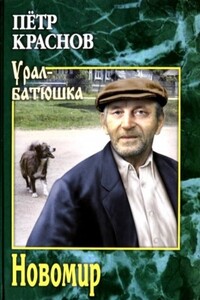
События, описанные в повестях «Новомир» и «Звезда моя, вечерница», происходят в сёлах Южного Урала (Оренбуржья) в конце перестройки и начале пресловутых «реформ». Главный персонаж повести «Новомир» — пенсионер, всю жизнь проработавший механизатором, доживающий свой век в полузаброшенной нынешней деревне, но сумевший, несмотря ни на что, сохранить в себе то человеческое, что напрочь утрачено так называемыми новыми русскими. Героиня повести «Звезда моя, вечерница» встречает наконец того единственного, кого не теряла надежды найти, — свою любовь, опору, соратника по жизни, и это во времена очередной русской смуты, обрушения всего, чем жили и на что так надеялись… Новая книга известного российского прозаика, лауреата премий имени И.А. Бунина, Александра Невского, Д.Н. Мамина-Сибиряка и многих других.

Две женщины — наша современница студентка и советская поэтесса, их судьбы пересекаются, скрещиваться и в них, как в зеркале отражается эпоха…

Жизнь в театре и после него — в заметках, притчах и стихах. С юмором и без оного, с лирикой и почти физикой, но без всякого сожаления!

От автора… В русской литературе уже были «Записки юного врача» и «Записки врача». Это – «Записки поюзанного врача», сумевшего пережить стадии карьеры «Ничего не знаю, ничего не умею» и «Все знаю, все умею» и дожившего-таки до стадии «Что-то знаю, что-то умею и что?»…

У Славика из пригородного лесхоза появляется щенок-найдёныш. Подросток всей душой отдаётся воспитанию Жульки, не подозревая, что в её жилах течёт кровь древнейших боевых псов. Беда, в которую попадает Славик, показывает, что Жулька унаследовала лучшие гены предков: рискуя жизнью, собака беззаветно бросается на защиту друга. Но будет ли Славик с прежней любовью относиться к своей спасительнице, видя, что после страшного боя Жулька стала инвалидом?

История подростка Ромы, который ходит в обычную школу, живет, кажется, обычной жизнью: прогуливает уроки, забирает младшую сестренку из детского сада, влюбляется в новенькую одноклассницу… Однако у Ромы есть свои большие секреты, о которых никто не должен знать.