36 Arguments for the Existence of God - [78]
There’s a little side yard with a blue spruce that reaches down to the ground in an invitingly cozy way. He often pictures it inhabited by little people playing hide-and-seek. “Please close the gate, remember our children.” The inscription provokes a feeling akin to nostalgia, only directed at the future.
The kettle is whistling, and he gets up and makes himself some strong tea and takes it back to the couch and picks up the phone and dials Lucinda’s cell and hears her voice on the recorded message and leaves one for her:
“It’s me. I’ve been thinking about you all day, wondering how your talk went. Call me when you can. I love you.”
Before he’s even replaced the receiver, he’s gagging on regret. What had he done? What had possessed him? He’s circling the living room in a blurry haze, and he’s bashing his forehead with his open palm to the down-down-down beat of his idiocy.
It was hearing her voice on the recorded message-her formal voice that held a tinge from the year she’d spent at Oxford. “Lucinda Mandel-baum here. Leave your coordinates, and I shall return your call.” Those tones in his ear had sent that bolt of longing through him. It had bypassed his own will and ended up in his larynx, and, without any intent to do so, he was blathering out those three explosive words. Cass here- that elusive metaphysical substance he had been trying to chase down ever since he was a kid-was collateral damage.
So much for his late-night cuddles with textbooks on game theory. So much for his grids. So much for his dreams of the Seltzer Equilibrium.
He considers calling her back, leaving a message to cancel out the other. He could pretend to be drunk, so that she’d conclude that he had been drunk when he called the first time and couldn’t be held responsible. Better yet, since he’s not much of an actor, he can get himself drunk.
Stop thinking like one of your undergraduates, he tells himself out loud. (He’s talking to himself out loud.)
He has a vivid sense that if only he concentrates forcefully enough he can rewind the tape of his disaster. What happened isn’t irreversible, it can’t be, Lucinda hasn’t even heard it yet, and also it’s three hours earlier in Santa Barbara, which he knows is irrelevant, but, still, there must be some way to undo that swerve of recklessness that had momentarily knocked him off course, flip that arrow of time back, but, no (he is still circling the room), no force of exertion is going to return him to that moment before this disaster happened so that he can make it not happen, the irrevocable past, so close and yet so closed, it’s fleeing his grasp, hurtling, hurtling, and then the phone rings.
“Hello.”
“Hi, Cass. It’s me.”
“Lucinda!”
“You sound surprised.” She sounds amused.
“No, I’m not surprised. In fact, I just called you.” She must not have listened to the message, and what reason will she have to listen to it now, after all, when she’s already speaking to him, making that past message obsolete, she’ll just delete it, and it will be as if it had never been, and all shall be well, and all shall be well, and all manner of things shall be well.
“Yes, I know. I got your message. So, anyway, my talk went very well. The Q & A was certainly the liveliest of the conference so far.”
So she’d heard his message. She must have heard him say, “I love you.”
“So you’re happy with the way it all went?”
They were having a conversation as if nothing had changed. Maybe she hadn’t heard the message through to the end? Or maybe she just hadn’t noticed?
“Yes, I suppose. I can’t really judge yet. Rishi is speaking later tonight.”
Can it be that he’s landed in neither bliss nor hell? Can it be that his midnight grids are all wrong?
“Yes, I know.”
She’s acting as if he had never uttered the words, and his autonomic nervous system is returning to baseline, and he decides to continue the conversation as if nothing has changed, because quite possibly nothing has.
“Well, that’s the thing, you see. I’ll only know how well I did when I know whether I did better than Rishi.”
Or maybe she’s signaling something more?
“I’m not sure that makes sense, Lucinda. Intellectual achievement isn’t a zero-sum game.”
“Listen, Cass, you may be the expert on my soul, but I’m the expert on zero-sum games.”
Her voice is smiling.
“And this is a zero-sum game?”
“It is, Cass. Most of what matters in life is a zero-sum game.”
He laughs at her joke, and they hang up soon after, Lucinda rushing off to dinner, which will be followed by Rishi’s backward-causative talk.
It’s only later, after they hung up, that it occurs to him to wonder whether her zero-sum comment had been a joke. She hadn’t laughed, and Lucinda always laughs at her own jokes.
XIX The Argument from the Overheard Whispers of Angels
They had bad Friday-afternoon traffic almost the entire way, and though Klapper was serenely oblivious, Cass was acutely aware of the sinking of the sun as they approached the witching hour of 6:44, when, as Cass had been informed by Cousin Henoch, the Sabbath would begin and travel was prohibited. They had made far too many stops, sometimes for scenic purposes but more often to sample the “facilities and comestibles.” The Merritt Parkway’s rest stops were deemed by the professor to be vastly superior to those of the Massachusetts Turnpike.

В книгу вошли небольшие рассказы и сказки в жанре магического реализма. Мистика, тайны, странные существа и говорящие животные, а также смерть, которая не конец, а начало — все это вы найдете здесь.

Строгая школьная дисциплина, райский остров в постапокалиптическом мире, представления о жизни после смерти, поезд, способный доставить вас в любую точку мира за считанные секунды, вполне безобидный с виду отбеливатель, сборник рассказов теряющей популярность писательницы — на самом деле всё это совсем не то, чем кажется на первый взгляд…

Книга Тимура Бикбулатова «Opus marginum» содержит тексты, дефинируемые как «метафорический нарратив». «Все, что натекстовано в этой сумбурной брошюрке, писалось кусками, рывками, без помарок и обдумывания. На пресс-конференциях в правительстве и научных библиотеках, в алкогольных притонах и наркоклиниках, на художественных вернисажах и в ночных вагонах электричек. Это не сборник и не альбом, это стенограмма стенаний без шумоподавления и корректуры. Чтобы было, чтобы не забыть, не потерять…».

В жизни шестнадцатилетнего Лео Борлока не было ничего интересного, пока он не встретил в школьной столовой новенькую. Девчонка оказалась со странностями. Она называет себя Старгерл, носит причудливые наряды, играет на гавайской гитаре, смеется, когда никто не шутит, танцует без музыки и повсюду таскает в сумке ручную крысу. Лео оказался в безвыходной ситуации – эта необычная девчонка перевернет с ног на голову его ничем не примечательную жизнь и создаст кучу проблем. Конечно же, он не собирался с ней дружить.
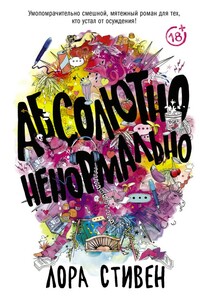
У Иззи О`Нилл нет родителей, дорогой одежды, денег на колледж… Зато есть любимая бабушка, двое лучших друзей и непревзойденное чувство юмора. Что еще нужно для счастья? Стать сценаристом! Отправляя свою работу на конкурс молодых писателей, Иззи даже не догадывается, что в скором времени одноклассники превратят ее жизнь в плохое шоу из-за откровенных фотографий, которые сначала разлетятся по школе, а потом и по всей стране. Иззи не сдается: юмор выручает и здесь. Но с каждым днем ситуация усугубляется.

В пустыне ветер своим дыханием создает барханы и дюны из песка, которые за год продвигаются на несколько метров. Остановить их может только дождь. Там, где его влага орошает поверхность, начинает пробиваться на свет растительность, замедляя губительное продвижение песка. Человека по жизни ведет судьба, вера и Любовь, толкая его, то сильно, то бережно, в спину, в плечи, в лицо… Остановить этот извилистый путь под силу только времени… Все события в истории повторяются, и у каждой цивилизации есть свой круг жизни, у которого есть свое начало и свой конец.