36 Arguments for the Existence of God - [38]
“I’ll see what I can do.”
“Thanks, Cass. You know, it’s wonderful that you’ve come up so much in the world, and it’s wonderful that you’re willing to be so generous and help me with connections, and it would be wonderful, too, if you became a friend of the Immortality Foundation. Even if you didn’t want to be a major financial donor, but just enough to indicate that you support what I do.”
“Well, actually, Roz, I’m not sure that I do.”
“You think it’s unrealistic, right? You think it’s science on selective serotonin reuptake inhibitors! But it’s not! Some of the biologists that my foundation is supporting have results that are going to make the possibility of radically extending life a reality. I’m talking radically radically!”
“Well, I’ll tell you, Roz, I’m just not altogether convinced that radically radically is such a good idea.”
“Huh?”
“Well, obviously, adding a few years or even decades to our normal life spans would be terrific; nobody would want to go back to the days when forty was considered a ripe old age…”
“Forty! For the first few hundred thousand years of human history, half of the population died in infancy and childhood! A third of young men died in warfare before they were twenty. A woman’s marriage ceremony was rape, and she had a good chance of dying if a pregnancy came from it. Talk about nasty, brutish, and short! But did our species give in to this barbarism? Of course not! And we’re the lucky results of the Glorious Refusal, which means we have the obligation to keep on refusing the barbarities that nature is constantly trying to force on us!”
“Right,” Cass said, smiling. She had delivered her last lines to an imaginary audience of potential donors. “Obviously, the move toward four score and ten has been good. But what I’m not convinced would be so good is extending life so much that the whole meaning of what it is to live a human life would change. And that’s the sort of thing you’re talking about, right? That’s what you mean by radically radically? Radically radically would mean reframing all the basic existential questions. And it’s not clear that we have the wherewithal to think that through. We have a hard enough time with the old set of questions.”
Roz had carefully laid down her fork, which had been on its way to her mouth loaded up with pollo al ajillo.
“I never know how to respond when people say things like that to me. I’m at a loss. It’s like someone saying that they don’t know whether suffering is a bad thing.”
“Well, people say that, too, you know, that it’s necessary that there be some amount of suffering in the world to create the opportunity for certain virtues to develop, virtues like forbearance and compassion…”
“Courage, charity, forgiveness, empathy-even true love, which don’t mean a thing if it ain’t got that sting.” Roz finished his sentence for him. “Suffering provides us wonderful opportunities for character-building. Yes, I’m familiar with this line of reasoning. The only people who push it are the God-apologists, who are trying to make excuses for what an insufferable world this is, even though there’s supposed to be an omnipotent, omniscient, and well-intentioned Big Boy running the show. Any suffering the apologists can’t rationalize away as a product of our having the ennobling capacity for free will, including the free will to inflict unspeakable atrocities on one another, they try to explain with this character-building song and dance. I find the song pornographic and the dance macabre. A grieving mother whose child was senselessly lost has the chance-in-a-lifetime opportunity to develop her soul toward tranquil acceptance. And what of that dying child himself, who doesn’t have the psychological and spiritual equipment to transcend what’s happening to him and is never going to get it because he’s going to be dead? Wouldn’t this theodicy require, at the least, that all humans-I’m not even going to bring up the suffering of animals-have an equal opportunity to develop their capacities for nobility? Cass, this is obscene. I don’t have to tell you any of this. I learned it all from The Varieties of Religious Illusion. That’s where I learned the bloody word ‘theodicy’ in the first place.”
A change had come over Roz, a modulation into a lower key. She had been hyper, even for her, since she’d landed on his doorstep yesterday morning. But now her voice had lost its manic edge, her face its clowning slant. She looked, if anything, even younger, flushed and earnest.
“You’re right, of course. I wasn’t actually pushing that argument about suffering, just making the point that it’s not a tautology to say, ‘Suffering is bad.’”
“I think it is. I think that ‘Suffering is bad’ is as obvious as it gets. And even if people don’t think it’s so obvious in the generic case, they catch on fast enough when the suffering is theirs. ‘My suffering is bad’ is a tautology to anyone who says it. I’d like to see someone in the throes of agony still pushing this treacle called theodicy. Sure, the transcendent possibilities afforded by suffering make this a better world. But only when it’s the other guy doing the suffering.”

«Ашантийская куколка» — второй роман камерунского писателя. Написанный легко и непринужденно, в свойственной Бебею слегка иронической тональности, этот роман лишь внешне представляет собой незатейливую любовную историю Эдны, внучки рыночной торговки, и молодого чиновника Спио. Писателю удалось показать становление новой африканской женщины, ее роль в общественной жизни.

Настоящая книга целиком посвящена будням современной венгерской Народной армии. В романе «Особенный год» автор рассказывает о событиях одного года из жизни стрелковой роты, повествует о том, как формируются характеры солдат, как складывается коллектив. Повседневный ратный труд небольшого, но сплоченного воинского коллектива предстает перед читателем нелегким, но важным и полезным. И. Уйвари, сам опытный офицер-воспитатель, со знанием дела пишет о жизни и службе венгерских воинов, показывает суровую романтику армейских будней. Книга рассчитана на широкий круг читателей.
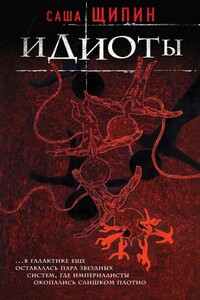
Боги катаются на лыжах, пришельцы работают в бизнес-центрах, а люди ищут потерянный рай — в офисах, похожих на пещеры с сокровищами, в космосе или просто в своих снах. В мире рассказов Саши Щипина правду сложно отделить от вымысла, но сказочные декорации часто скрывают за собой печальную реальность. Герои Щипина продолжают верить в чудо — пусть даже в собственных глазах они выглядят полными идиотами.

Роман «Деревянные волки» — произведение, которое сработано на стыке реализма и мистики. Но все же, оно настолько заземлено тонкостями реальных событий, что без особого труда можно поверить в существование невидимого волка, от имени которого происходит повествование, который «охраняет» главного героя, передвигаясь за ним во времени и пространстве. Этот особый взгляд с неопределенной точки придает обыденным события (рождение, любовь, смерть) необъяснимый колорит — и уже не удивляют рассказы о том, что после смерти мы некоторое время можем видеть себя со стороны и очень многое понимать совсем по-другому.

Есть такая избитая уже фраза «блюз простого человека», но тем не менее, придётся ее повторить. Книга 40 000 – это и есть тот самый блюз. Без претензии на духовные раскопки или поколенческую трагедию. Но именно этим книга и интересна – нахождением важного и в простых вещах, в повседневности, которая оказывается отнюдь не всепожирающей бытовухой, а жизнью, в которой есть место для радости.

«Голубь с зеленым горошком» — это роман, сочетающий в себе разнообразие жанров. Любовь и приключения, история и искусство, Париж и великолепная Мадейра. Одна случайно забытая в женевском аэропорту книга, которая объединит две совершенно разные жизни……Май 2010 года. Раннее утро. Музей современного искусства, Париж. Заспанная охрана в недоумении смотрит на стену, на которой покоятся пять пустых рам. В этот момент по бульвару Сен-Жермен спокойно идет человек с картиной Пабло Пикассо под курткой. У него свой четкий план, но судьба внесет свои коррективы.