The Pain Nurse - [18]
Down the hill was Over-the-Rhine, the old immigrant German neighborhood. The Germans were long gone and it was one of the toughest ghettos in the Midwest, a fact barely belied by its impressive architecture and dense, mystical streets. Many of the buildings had been left to rot and drug dealers ran the street corners. The mentally ill homeless roamed the sidewalks and camped in decaying Italianate landmarks. Years before, the city had stowed most of the social services in OTR. Tote up all the calls, all the cases, and Will had spent years of his career there. Main Street and a few other places were being gentrified and celebrated in the newspapers. Soon all those grand old row houses would be restored and gleaming, they said. But Will knew something the white chamber of commerce types didn’t: OTR was defiantly black territory. Lots of hardcore Over-the-Rhine residents regarded the renovations and teardowns and Saturday night bar traffic by the westside white kids as an invasion. Cross Central Parkway south and you were in the white territory of downtown. But the north side of Central Parkway was an invisible boundary.
Cincinnati was good at boundaries. Interstate 75 was the Sauerkraut Curtain: to the west lay Price Hill and, beyond, the neat houses to which the German families had moved in the 1930s and 1940s as they grew more prosperous. East, beyond downtown, ranged the once-grand neighborhoods of Mount Auburn and Walnut Hills, now decrepit and dangerous. Once-grand estates had been subdivided into a dozen rat-infested apartments, and the teenagers carried guns like white kids carried cell phones. Then, another boundary, and you slipped into the leafy affluence of the old gentry in Hyde Park and Mount Lookout and Indian Hill. It was a nice polite midwestern city on the surface. Anybody who paid attention knew better. Neighborhood was identity, and some of the neighborhoods were lethal.
The leaves were all gone. Nothing could conceal Cincinnati: half its population decamped for the suburbs or the Sunbelt, leaving lovely old buildings and trees that had lost their leaves. His best friend from high school had left last year to sell houses in Arizona. The stubborn ones stayed and loved the city. Sometimes he felt that Cincinnati was a museum that was building new stadiums, a torn and wounded city without even knowing it, old money and denial being the camouflage, the best pain drug. Will knew better. Every place he looked he remembered trouble. It was the cop’s lot. In college, he had taken a course on urban planning where the books would inevitably talk about this or that city as a “contradiction.” Cincinnati was different. It was one reinforcement laid upon another, like the levees that held back the Ohio. Yet the great river still had its way.
Still, to Will’s wonder Cincinnati looked luminous. Cindy looked luminous. He was alive. He had held her for long minutes. She was still as slender as the first day he had met her, and he could still touch his elbows with his hands when he embraced her. She kept trying to pull away gently and he knew he must smell rank, but he just held on, feeling her sharp shoulder blades, the firm warmth of her breasts. For those minutes it all went away, the hospital, the killing, the pain.
She had pulled away before he could kiss her. Now he wheeled the chair around from the big windows and faced her. She wore her new charcoal gray suit. She had come straight from work. Her blue eyes that were startling in their intensity, and her chestnut hair looked the same color as when she was twenty-two, because or in spite of those expensive trips to the salon that they had once bickered over. So much money for such a severe hairstyle. He loved her hair natural, parted in the middle, and slightly wild as it hit her shoulders. She had said she couldn’t look like a high school girl and be taken seriously at the bank. Just as she had said, after being promoted to senior vice president, that she would prefer to be known as Cynthia. He had squirmed when she wanted him to go with her to the symphony or the May Festival. Baseball bored her. It all seemed foolishly trivial now.
“You look beautiful.”
She patted his knee. He couldn’t really feel it.
“Cindy, you’ve got to get me out of here.”
“What are you talking about?”
He knew he had blurted out the words with too much desperation. He looked down, slowed his breathing. He laughed and spoke in a slower voice.
“It’s been nearly two weeks. Now-a-days they kick people out in two days after major surgery, but I’m stuck here.” As he talked, he could hear the anxiety taking control again. “I feel like I’m in prison. I can’t sleep. I can’t get better.”
He glanced up and she had an utterly foreign look on her face.
“Let me come home, please.”
“You don’t even like the house.” She gave a light laugh. “‘Out in Maineville, middle of nowhere.’ That’s what you used to say. What’s the first thing you did when we separated? Moved back here to the city. Do you know how dangerous it is? A girl from our department had her purse snatched by a black kid just yesterday. I was walking down Court Street and there was this group of young, black men ahead of me. One of them bent down and a gun fell out of his pants! He just picked it up like nothing had happened. I dread the drive in here every day. But somehow you like it.”

In this "prequel" to the popular David Mapstone mysteries, author Jon Talton takes us back to 1999, when everything dot-com was making money, the Y2K bug was the greatest danger facing the world, and the good times seemed as if they would never end.It was a time before David and Lindsey were together, before Mike Peralta was sherriff, and before David had rid himself of the sexy and mysterious Gretchen.In Phoenix, it's the sweet season and Christmas and the new millennium are only weeks away. But history professor David Mapstone, just hired by the Sheriff's Office, still finds trouble, chasing a robber into an abandoned warehouse and discovering a gruesome crime from six decades ago.Mapstone begins an investigation into a Depression-era kidnapping that transfixed Arizona and the nation: the disappearance of a cattle baron's grandsons, their bodies never found.
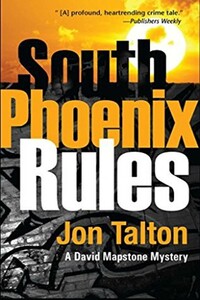
A handsome young New York professor comes to Phoenix to research his new book. But when he's brutally murdered, police connect him to one of the world's most deadly drug cartels. This shouldn't be a case for historian-turned-deputy David Mapstone – except the victim has been dating David's sister-in-law Robin and now she's a target, too. David's wife Lindsey is in Washington with an elite anti-cyber terror unit and she makes one demand of him: protect Robin.This won't be an easy job with the city police suspicious of Robin and trying to pressure her.
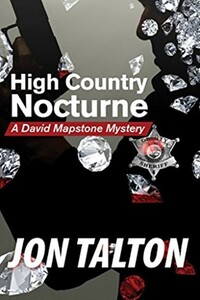
A cache of diamonds is stolen in Phoenix. The prime suspect is former Maricopa County Sheriff Mike Peralta, now a private investigator. Disappearing into Arizona's mountainous High Country, Peralta leaves his business partner and longtime friend David Mapstone with a stark choice. He can cooperate with the FBI, or strike out on his own to find Peralta and what really happened. Mapstone knows he can count on his wife Lindsey, one of the top "good hackers" in law enforcement. But what if they've both been betrayed? Mapstone is tested further when the new sheriff wants him back as a deputy, putting to use his historian's expertise to solve a very special cold case.
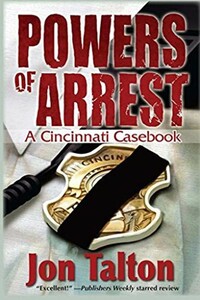
Cincinnati homicide Detective Will Borders now walks with a cane and lives alone with constant discomfort. He's lucky to be alive. He's lucky to have a job, as public information officer for the department. But when a star cop is brutally murdered, he's assigned to find her killer. The crime bears a chilling similarity to killings on the peaceful college campus nearby, where his friend Cheryl Beth Wilson is teaching nursing. The two young victims were her students. Most homicides are routine, the suspects readily apparent.
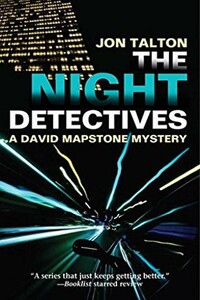
The private-detective business starts out badly for former Phoenix Deputy David Mapstone, who has teamed up with his old friend and boss, Sheriff Mike Peralta. Their first client is gunned down just after hiring them. The case: A suspicious death investigation involving a young Arizona woman who fell from a condo tower in San Diego. The police call Grace Hunter's death a suicide, but the client doesn't buy it. He's her brother. Or is he? After his murder, police find multiple driver's licenses and his real identity is a mystery.

На горнолыжной базе «Джаловчат» в вагоне канатной дороги застряли парень с девушкой. На помощь им примчалась бригада спасателей МЧС – Борис Мостовой, Олег Чистяков и Ольга Синицкая. Вызволить горемычную парочку – дело техники. Но приключения спасателей еще только начинаются… Внезапно в горах происходит обвал, блокирующий единственную дорогу с базы. И в это же время спасатели находят под обрывом автомобиль, а в нем – водителя со смертельным ножевым ранением. Убийца не мог прорваться через завал, а значит, он где-то на базе, среди отдыхающих.

Фармацевтическая фирма «Гелиос» с размахом праздновала день рождения одной из сотрудниц. В самый разгар торжества был найден труп любимой собаки начальника. Подозрительное происшествие совпало с исчезновением хозяина фирмы Бориса Гольдмана, что привлекло внимание милиции. Следователь Тарасов хладнокровно взялся распутать клубок интриг и разоблачить преступный клан. Все его подозрения сходятся на противоречивой фигуре Марты, коммерческого директора «Гелиоса» и по совместительству жены Гольдмана…

В предпраздничный рабочий день — 30 апреля, сотрудники фирмы Эра собираются отмечать Первомай. Однако в разгар торжества в офисе происходит убийство. Классика жанра — под подозрением все!
Одержимому высокой идеей человеку невольно покоряются и чистые сердца, и погрязшие в грехах души — этой идеей Ги де Кара обязательно увлечётся читатель романа «Храм ненависти». Он интересен и любителю психологического романа, и поклоннику детектива.
В книге рассказывается история главного героя, который сталкивается с различными проблемами и препятствиями на протяжении всего своего путешествия. По пути он встречает множество второстепенных персонажей, которые играют важные роли в истории. Благодаря опыту главного героя книга исследует такие темы, как любовь, потеря, надежда и стойкость. По мере того, как главный герой преодолевает свои трудности, он усваивает ценные уроки жизни и растет как личность.
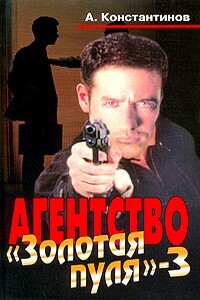
«Золотая пуля». Так называют в городе агентство, в котором работают журналисты-инвестигейторы (или, в переводе на русский — «расследователи»). Возглавляет это вымышленное агентство Андрей Обнорский — герой романов Андрея Константинова и снятого по этим романам телесериала «Бандитский Петербург». В «Золотой пуле»-3 вы встретитесь не только с Обнорским, но и с его соратниками-журналистами: Николаем Повзло, Зурабом Гвичия, Светланой Завгородней, Нонной Железняк, Георгием Зудинцевым и другими. Все они попадают порой в опасные, а порой и комичные ситуации.