The Night Detectives - [9]
Ahead were Plaster City and the startling escarpment of the Laguna Mountains. San Diego had one of the finest natural harbors in the world, but the railroads couldn’t easily get there in the nineteenth century because of that mountain range. Instead, they went to Los Angeles and that was that. We passed over one track at Plaster City and it reminded me of the railroad that was finally built to San Diego from the east. If memory served, the sugar baron John Spreckles underwrote it, and the San Diego and Arizona line was one of the most ambitious engineering accomplishments of its day. But it never made money and the land it traversed was so harsh, including a perilous crawl through Carrizo Gorge, that maintaining the railroad was prohibitive.
The wall of mountains and its forbidding canyons beyond did not intimidate Dwight Eisenhower’s Interstate Highway System. So I-8 was built in the mid-1960s and San Diego finally had its connection to the east. Every year it brought more Phoenicians to the coast in search of relief from the summer heat.
None of this would have interested Peralta.
We started the serious grind uphill and then we were climbing through terrain strewn with giant boulders, the marble game of the gods. Behind us, the Imperial Valley spread below like a dry seabed. The Interstate twisted and curved, an unwelcome intruder. The sun was on his side, glinting off his thick hair and bringing out the aristocratic profile. I knew this highway well, but the majestic land never ceased its ability to move me.
“So we’re going to San Diego,” I said. “Do we know if anything this guy told us is correct? He lied about who he was. How do we know this Grace Hunter even existed or killed herself?”
“We don’t. We’ll find out.”
Robert Caro writes about how Lyndon Johnson was a reader of men. Nobody could read Peralta, not even LBJ, and certainly not me. Only occasionally did a “word” reveal itself to a careful observer of his professional mask. As I studied him, I could see an unusual determination in the set of his thick jaw. To be sure, “determination” with Peralta was like saying “deep” about the Grand Canyon. It was always there and spectacular to behold, much less try to hinder. Now, however, the canyon of his tenacity was unusually on display. But I saw something else, too, another word. Concern.
I said, “What if we’re being set up?”
“Then it’s better to take the initiative.”
“What if we’re being set up by going to San Diego?”
“I told you, you’re not going to see Patty.”
When I lapsed into silence and he realized his effort to piss me off had failed, he spoke again.
“Whoever did this would expect us to give a full report to the police and lay low in Phoenix. That would be logical. So we’ll do what they don’t expect. All you have to do is your history thing.”
This was what he used to say when he would barge into my office in the old Court House. It became a longstanding joke. But I blew. “What history?!” It was amazing how his luxurious cab absorbed the sound of my tantrum. “The dead man in front of our office didn’t have any history! This isn’t a historical case.”
As usual, my outburst failed to move him. In as soft a voice as he could manage, “Mapstone, everybody has a history. You need to find it. ‘The only new thing in the world is the history you don’t know.’ Saint Paul said that.”
“Harry Truman said that.”
“Same difference.”
I resisted the familiar urge to reach over and try to strangle him, even if I would lose the fight and he would never even swerve out of his lane.
He said, “We have a name, D.O.B., Social Security Number and photo…”
“Right, and she’s a sweet girl who went to Chaparral High in Scottsdale, was a student at San Diego State, worked part-time at the Nordstrom perfume counter at Horton Plaza. She had a boyfriend and somehow she ended up at Larry Zisman’s condo on the night of April twenty-second.”
“See how much you know?” He lazily draped his arms over the steering wheel despite the tangled road we climbed.
I slumped in my seat. “If any of it is true.”
“David.” He never called me David. “You have a gift for history. I never thought you’d be happy as a professor. You’re a cop down in your bones. But you’re a historian, too. You look at a case the same way a historian studies the secondary sources and published material on a subject. You talk to the primary sources, read their recollections. Then you apply a historian’s skepticism and diligence, come up with new interpretations, dig out fresh facts, add context, shine the light in a different direction seeking the truth. It’s what you do.”
It shut me up. Even made me feel better about myself for the moment.
When we crested Laguna Summit, he spoke again.
“Here’s something else to consider, Mapstone. We don’t know why Felix was shot to hell. Maybe it was because of this girl, or something else in his life that made him carry that Desert Eagle that was on the car seat.”
He had been there so briefly, it surprised me he had time to notice and identify the gun on the passenger seat of the Benz. But that was Peralta.

In this "prequel" to the popular David Mapstone mysteries, author Jon Talton takes us back to 1999, when everything dot-com was making money, the Y2K bug was the greatest danger facing the world, and the good times seemed as if they would never end.It was a time before David and Lindsey were together, before Mike Peralta was sherriff, and before David had rid himself of the sexy and mysterious Gretchen.In Phoenix, it's the sweet season and Christmas and the new millennium are only weeks away. But history professor David Mapstone, just hired by the Sheriff's Office, still finds trouble, chasing a robber into an abandoned warehouse and discovering a gruesome crime from six decades ago.Mapstone begins an investigation into a Depression-era kidnapping that transfixed Arizona and the nation: the disappearance of a cattle baron's grandsons, their bodies never found.
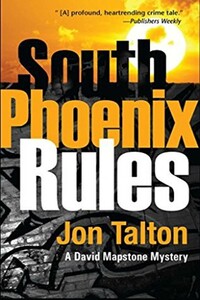
A handsome young New York professor comes to Phoenix to research his new book. But when he's brutally murdered, police connect him to one of the world's most deadly drug cartels. This shouldn't be a case for historian-turned-deputy David Mapstone – except the victim has been dating David's sister-in-law Robin and now she's a target, too. David's wife Lindsey is in Washington with an elite anti-cyber terror unit and she makes one demand of him: protect Robin.This won't be an easy job with the city police suspicious of Robin and trying to pressure her.
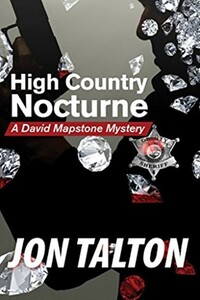
A cache of diamonds is stolen in Phoenix. The prime suspect is former Maricopa County Sheriff Mike Peralta, now a private investigator. Disappearing into Arizona's mountainous High Country, Peralta leaves his business partner and longtime friend David Mapstone with a stark choice. He can cooperate with the FBI, or strike out on his own to find Peralta and what really happened. Mapstone knows he can count on his wife Lindsey, one of the top "good hackers" in law enforcement. But what if they've both been betrayed? Mapstone is tested further when the new sheriff wants him back as a deputy, putting to use his historian's expertise to solve a very special cold case.
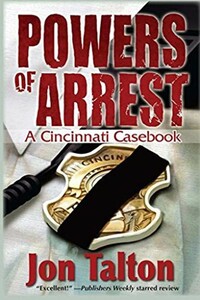
Cincinnati homicide Detective Will Borders now walks with a cane and lives alone with constant discomfort. He's lucky to be alive. He's lucky to have a job, as public information officer for the department. But when a star cop is brutally murdered, he's assigned to find her killer. The crime bears a chilling similarity to killings on the peaceful college campus nearby, where his friend Cheryl Beth Wilson is teaching nursing. The two young victims were her students. Most homicides are routine, the suspects readily apparent.
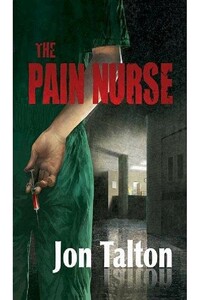
Cheryl Beth Wilson is an elite nurse at Cincinnati Memorial Hospital who finds a doctor brutally murdered in a secluded office. Wilson had been having an affair with the doctoras husband, a surgeon, and this makes her a aperson of interesta to the police, if not at outright suspect. But someone other than the cops is watching Cheryl Beth.The killing comes as former homicide detective Will Borders is just hours out of surgery. But as his stretcher is wheeled past the crime scene, he knows this is no random act of violence.
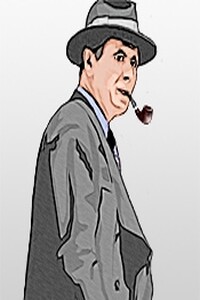
Опытный криминалист — инспектор Вернер, герой польского журнала «Пшекруй», с блеском решает сложные криминалистические задачи, то и дело встающие перед ним на его служебном поприще. Повсюду сопровождающий его сержант Фитт полон рвения, но не может соревноваться с инспектором в наблюдательности, поэтому нередко приходит к поспешным неверным выводам. Попробуйте и вы посостязаться с инспектором в умении замечать каждую мелочь и делать из общей картины логичный вывод.

Обнаружив однажды странное послание на клочке свежей газетенки, измотанный нескончаемым прозябанием Ласло и вообразить не смел, какой череде испытаний он подвергнется воспользовавшись им.

В книге рассказывается история главного героя, который сталкивается с различными проблемами и препятствиями на протяжении всего своего путешествия. По пути он встречает множество второстепенных персонажей, которые играют важные роли в истории. Благодаря опыту главного героя книга исследует такие темы, как любовь, потеря, надежда и стойкость. По мере того, как главный герой преодолевает свои трудности, он усваивает ценные уроки жизни и растет как личность.
В книге рассказывается история главного героя, который сталкивается с различными проблемами и препятствиями на протяжении всего своего путешествия. По пути он встречает множество второстепенных персонажей, которые играют важные роли в истории. Благодаря опыту главного героя книга исследует такие темы, как любовь, потеря, надежда и стойкость. По мере того, как главный герой преодолевает свои трудности, он усваивает ценные уроки жизни и растет как личность.
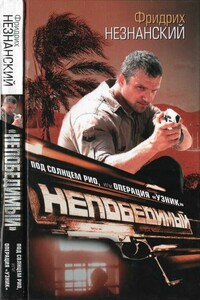
В СВР поступает информация о том, что бывший министр атомной энергетики в России Алексей Медведев, отправившийся на отдых в Бразилию, ведет переговоры со спецслужбами США о продаже секретных сведений. Руководство СВР уверено, что это ошибка, но проверка необходима и в Рио-де-Жанейро вместе с двумя агентами отправляется Егор Кремнев. Он даже не подозревает, что это несложное задание будет стоить ему свободы и только случайная встреча поможет выжить.Егор Кремнев даже представить не мог, что несложное задание в солнечном Рио-де-Жанейро по проверке министра атомной энергетики, который ведет двойную игру, обернется чудовищными неприятностями.
В книге рассказывается история главного героя, который сталкивается с различными проблемами и препятствиями на протяжении всего своего путешествия. По пути он встречает множество второстепенных персонажей, которые играют важные роли в истории. Благодаря опыту главного героя книга исследует такие темы, как любовь, потеря, надежда и стойкость. По мере того, как главный герой преодолевает свои трудности, он усваивает ценные уроки жизни и растет как личность.