The Night Detectives - [10]
“But,” he went on, “he might have been killed because he came to see us. And I don’t want the word on the street to be that you can kill our clients. It’s bad for business. And it might encourage the wrong kind of people to reach out and touch us.”
I let him alone. It was a reminder that there were three ways to do things: the right way, the wrong way, and Peralta’s way. Soon we would begin the long descent to San Diego, through the lovely little meadows of eastern San Diego County that looked as if they hadn’t changed for a hundred years, back up to Alpine at the edge of the Cleveland National Forest, then dropping and curving into El Cajon, massive Silverdome mountain dominant on our right, the cool sea air coming up to kiss away the memory of the desert, the city swallowing us up, the freeway packed with traffic, and the ocean straight ahead. San Diego: my adopted hometown. I would need to pack my emotions tight.
7
Among the benefits of being the former sheriff of one of America’s most populous counties was cooperation from other law-enforcement agencies even after you were out of office. An added perk was that Al Kimbrough was a San Diego Police commander. I first met him when Peralta had hired me back at MCSO and Kimbrough had been a detective. He could have stayed and become chief of detectives, but San Diego made him a better offer, one that didn’t include 108-degree May days. Peralta scheduled a meeting with him downtown and complained about the overcast.
“It’s the onshore flow,” I instructed. “The June Gloom.”
“It’s not June.”
I rolled down the window and looked over the bay at one of the aircraft carriers moored at North Island. “It’s cool. I’m happy.”
He handed me a copy he had made of Grace Hunter’s photo. “Why don’t you take the truck and go talk to the boyfriend? Here’s the address.”
I didn’t breathe for about five seconds and handed the address back to him.
“What, you’re showing off your photographic memory to an old man?”
“No,” I said. “I used to live there.” I sat for a few minutes in silence as a big jet going into Lindbergh Field rattled the cab. Sometimes coincidences were serendipity. Not this one. This was creepy. But there was a job to do. “Drop me off at Old Town. I’ll take the bus.”
“That’s nuts.”
“I couldn’t find a parking place, especially for your beast.”
“You can always find a parking place if you’re patient.”
“Not in O.B.”
As I gave directions to Old Town, he shook his head and shrugged. “You’re one weird guy, Mapstone.”
Fifteen minutes later, I was on a half-full 35 bus, rolling down Rosecrans Street, turning onto Midway Drive for the ride across the hump of Loma Portal and into Ocean Beach. Behind us was the bay, ahead was the ocean. I counted twenty Arizona license tags and quit counting. This time of year, San Diego was Phoenix West. Native San Diegans hated the invasion. When I lived here and rode this bus almost every day, I learned not to let on where I was from. The bus started downhill, with the sun beginning to burn off the clouds behind me, toward downtown. But ahead, it was still gray, the vast expanse of the Pacific a sheet of lead blending into the overcast. The Pacific played a trick of the eye, seeming to rise into the horizon, even though we were merely descending a long slope to the ocean.
If you stay on Interstate 8, you’d run right into O.B. But most tourists didn’t. They went north of the San Diego River to Sea World, Mission Bay and the more popular neighborhoods of Mission Beach or Pacific Beach, or they went south on I-5 to downtown. San Diego had changed substantially since I had lived here, but Ocean Beach looked much the same: the narrow streets, quaint and pricey cottages, one-story businesses lining Newport Avenue and the long municipal pier jutting into the ocean. I had lived two lives in San Diego: pre-Patty in Ocean Beach and with Patty in La Jolla.
It reminded me of the old days, getting off at Cable and Newport, and then walking past the business district down to Santa Cruz Avenue. A couple of guys carrying surfboards walked past me, going west. Seagulls passed overhead making their distinctive calls. The old apartment building was still two stories, painted white, and shaped like a U surrounding an interior swimming pool. My unit had been on the second floor. The boyfriend’s apartment was directly beside it. I felt an involuntary urge to check my mail, smiled at it, and walked up to No. 205. The windows were open, as was common here, and the drapes were drawn and partly hanging out.
The loud, angry voice coming from the apartment wasn’t surprising, either. O.B. was an eclectic place, where CPAs lived alongside bikers. Once I had been kept up all night when one of the latter had engaged in an all-night screaming fight with his old lady. Now I would put a stop to it, but I was different then.
The voice was deep and menacing, the dispute involving a woman, money, and perhaps more. The dialogue was generally, “I want Scarlett, motherfucker, and your white ass is out of excuses. Where is she? I need her ass back out making money,” on and on. “You think you can hide from me? Nobody gets away from me. I own her sweet little booty. Now where the fuck is she? Tell me now or I stomp your white ass to death and find her my own self.”

In this "prequel" to the popular David Mapstone mysteries, author Jon Talton takes us back to 1999, when everything dot-com was making money, the Y2K bug was the greatest danger facing the world, and the good times seemed as if they would never end.It was a time before David and Lindsey were together, before Mike Peralta was sherriff, and before David had rid himself of the sexy and mysterious Gretchen.In Phoenix, it's the sweet season and Christmas and the new millennium are only weeks away. But history professor David Mapstone, just hired by the Sheriff's Office, still finds trouble, chasing a robber into an abandoned warehouse and discovering a gruesome crime from six decades ago.Mapstone begins an investigation into a Depression-era kidnapping that transfixed Arizona and the nation: the disappearance of a cattle baron's grandsons, their bodies never found.

A handsome young New York professor comes to Phoenix to research his new book. But when he's brutally murdered, police connect him to one of the world's most deadly drug cartels. This shouldn't be a case for historian-turned-deputy David Mapstone – except the victim has been dating David's sister-in-law Robin and now she's a target, too. David's wife Lindsey is in Washington with an elite anti-cyber terror unit and she makes one demand of him: protect Robin.This won't be an easy job with the city police suspicious of Robin and trying to pressure her.
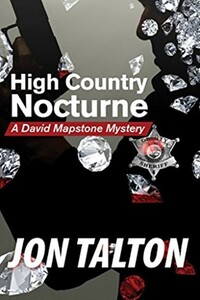
A cache of diamonds is stolen in Phoenix. The prime suspect is former Maricopa County Sheriff Mike Peralta, now a private investigator. Disappearing into Arizona's mountainous High Country, Peralta leaves his business partner and longtime friend David Mapstone with a stark choice. He can cooperate with the FBI, or strike out on his own to find Peralta and what really happened. Mapstone knows he can count on his wife Lindsey, one of the top "good hackers" in law enforcement. But what if they've both been betrayed? Mapstone is tested further when the new sheriff wants him back as a deputy, putting to use his historian's expertise to solve a very special cold case.
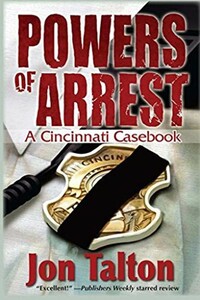
Cincinnati homicide Detective Will Borders now walks with a cane and lives alone with constant discomfort. He's lucky to be alive. He's lucky to have a job, as public information officer for the department. But when a star cop is brutally murdered, he's assigned to find her killer. The crime bears a chilling similarity to killings on the peaceful college campus nearby, where his friend Cheryl Beth Wilson is teaching nursing. The two young victims were her students. Most homicides are routine, the suspects readily apparent.

Cheryl Beth Wilson is an elite nurse at Cincinnati Memorial Hospital who finds a doctor brutally murdered in a secluded office. Wilson had been having an affair with the doctoras husband, a surgeon, and this makes her a aperson of interesta to the police, if not at outright suspect. But someone other than the cops is watching Cheryl Beth.The killing comes as former homicide detective Will Borders is just hours out of surgery. But as his stretcher is wheeled past the crime scene, he knows this is no random act of violence.

«Елена Мазина уже стояла в дверях, когда мужчина, ставший её очередным любовником, лениво, словно нехотя, спросил: – Мне тебе позвонить? – Нет, лучше я сама дам знать, если захочу тебя вновь увидеть…».

В книге рассказывается история главного героя, который сталкивается с различными проблемами и препятствиями на протяжении всего своего путешествия. По пути он встречает множество второстепенных персонажей, которые играют важные роли в истории. Благодаря опыту главного героя книга исследует такие темы, как любовь, потеря, надежда и стойкость. По мере того, как главный герой преодолевает свои трудности, он усваивает ценные уроки жизни и растет как личность.

В остросюжетном романе писателя А. Васильева (1907—1972) увлекательно рассказывается о деятельности чекистов в годы гражданской и Великой Отечественной войн. Особый интерес представляет вторая часть книги, в которой показано, как главный герой романа проникает в штаб так называемой «Русской освободительной армии» генерала-изменника Власова…
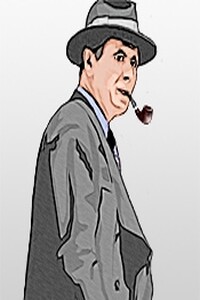
Опытный криминалист — инспектор Вернер, герой польского журнала «Пшекруй», с блеском решает сложные криминалистические задачи, то и дело встающие перед ним на его служебном поприще. Повсюду сопровождающий его сержант Фитт полон рвения, но не может соревноваться с инспектором в наблюдательности, поэтому нередко приходит к поспешным неверным выводам. Попробуйте и вы посостязаться с инспектором в умении замечать каждую мелочь и делать из общей картины логичный вывод.
В книге рассказывается история главного героя, который сталкивается с различными проблемами и препятствиями на протяжении всего своего путешествия. По пути он встречает множество второстепенных персонажей, которые играют важные роли в истории. Благодаря опыту главного героя книга исследует такие темы, как любовь, потеря, надежда и стойкость. По мере того, как главный герой преодолевает свои трудности, он усваивает ценные уроки жизни и растет как личность.
В книге рассказывается история главного героя, который сталкивается с различными проблемами и препятствиями на протяжении всего своего путешествия. По пути он встречает множество второстепенных персонажей, которые играют важные роли в истории. Благодаря опыту главного героя книга исследует такие темы, как любовь, потеря, надежда и стойкость. По мере того, как главный герой преодолевает свои трудности, он усваивает ценные уроки жизни и растет как личность.