Split Second - [12]
They had a party for Louise’s mum after the funeral, and her friends from the ships came, those that were in between trips. They sang all her repertoire. One man brought along a cardboard cut-out of her mother in a wine-coloured evening gown and long gloves, her hair in a Doris Day, pearls round her neck, something that had been used to advertise a forties night on board. Teenager Louise hated them, all these people who knew her mother well, who’d had the best of her. Coming up and insisting on talking about the larks they’d had and how Louise’s mum had been a good friend in times of trouble.
‘Why did they have to come?’ she complained to Grandad.
‘They mean well.’ He’d looked at her a while, his eyes soft. ‘She had itchy feet, always had. Hard on you.’
She felt a flash of hatred for him then too. Why did he always have to be so bloody understanding? ‘I’m fine!’ she retorted. She downed her drink too quickly, making her throat burn, and flounced off.
The police had kept Luke’s phone, but the staff at the hospital had given her his wallet and gold chain and his ear stud. All in a plastic bag, ‘Patient’s Valuables and Clothing’ written on it. The chain was grimy, mud she thought, but when she washed it, the water turned pink. She braced her arms on the edge of the sink, let her head hang down, taking a moment.
Louise knew his friends should be told what was happening, but she only had a few numbers and the thought of calling each of them was overwhelming. She decided to ring Declan and ask him to spread the word. He should be up by now. Declan had no work, no education; he signed on and sponged off his mum, who was on incapacity benefit with mental health problems. When Louise called, he answered with a suspicious ‘Hello?’ then wary recognition followed by fractured disbelief as she told him: ICU… sedation… they just don’t know… police.
‘Did you see him last night?’ Louise said.
‘No, not since Wednesday.’
‘Do you know where he was?’
‘Some Christmas do, from college. A meal, I think,’ he told her.
‘He never said.’ And I fed him bangers and mash at six. ‘He say where?’
‘A tapas place – near Deansgate.’
‘This lad, Jason Barnes,’ she asked, ‘did you know him? Did Luke?’
‘No, no, never heard of him.’
She promised to let him know about visiting, thinking it shouldn’t be like this, sixteen-year-olds having to deal with hospital visits. One minute they were invincible, full of life and cheek, and then bam! Parallel universe.
A meal in town after a tea at home. Typical. He could eat like a horse and not put on an ounce; he had that sort of metabolism. Live wire, her grandad had called him. Wick, Grandma said, which Louise didn’t understand at first. A Yorkshire word apparently; meant he was quick and lively. Grandma had a cleft palate; people who didn’t know her found it hard to follow her. Even at home she was sparing with her words. Her husband made up for that.
Luke, live wire. Walking at nine months, climbing like a little mountain goat too, and then prone to running off. Louise took him to the park every day for a kick-about and a clamber on the playground, or to the meadows where he could run himself ragged. Sometimes she thought he was born in the wrong century, that he’d have been better living somewhere outside, wild and unfettered, where physical activity was a way to make a living, not just a valve for letting off steam. They’d done what they could, getting him on to the five-a-side team, sending him to Woodcraft Folk, where he could go camping and the like without all that ‘royalist authoritarian scouts crap’, as Grandad put it. Most of the other kids were better off, middle class, big houses, went skiing in the winter and the like, but that was okay. Their house always had a weird mix of people passing through: dockers and welders rubbing shoulders with university lecturers and doctors – shared ideals, loyalty to the cause, the Party bringing them together. They kept the local branch banner at Grandad’s. Louise had helped to make it. Winter nights when she was thirteen or so, cutting out silk and embroidering round canvas letters. Listening to the conversation, which ranged far and wide but included a great deal about the struggle and feminism and housework and the best way to advance women’s liberation.
Grandma and one of the other women had done the design: a frieze of figures along the bottom, holding symbols: flowers, sheaves of wheat, paintbrushes, a kite, tools. The words unity, freedom, peace repeated around the edges of the cloth, and in the centre the name of the branch, each dot above the ‘i’ a small hammer and sickle. Along the bottom they had sewn thick, gold-coloured upholstery fringing. Carried on dark wooden curtain poles up either side, the banner was so heavy when it was done that they needed harnesses to strap round the waists of the bearers. It was beautiful.
Louise carried on sewing for a few years. Her grandma had always done it; even Louise’s mother, who couldn’t boil an egg, could turn her hand to alter a dress, tart it up with a nip and a tuck and a sprig of lace or fresh buttons. Louise made cot quilts each time she was pregnant. She didn’t bother with sewing now, not beyond a bit of mending or the odd costume for Ruby’s school plays and fancy-dress parties, though she still had the rag-bags shoved in the roof space and the old Singer taking up space in the under-stairs cupboard. Nowadays it cost more to dress-make than getting something new. Clothes were that cheap. Unless you recycled stuff. She quite liked the idea. Some people made a living doing it, creating unique clothes, but Ruby wouldn’t wear anything second-hand.
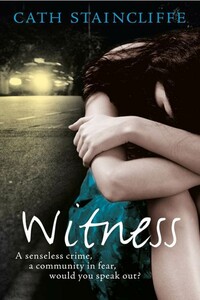
"A painfully honest exploration of an ordinary family under stress… A stunning piece of work." – Ann CleevesFour bystanders in the wrong place at the wrong time. Witnesses to the shocking shooting of a teenage boy. A moment that changes their lives forever. Fiona, a midwife, is plagued by panic attacks and unable to work. Has she the strength to testify? Mike, a delivery driver and family man, faces an impossible decision when his frightened wife forces him to choose – us or the court case. Cheryl, a single-mother, doesn't want her child to grow up in the same climate of fear.
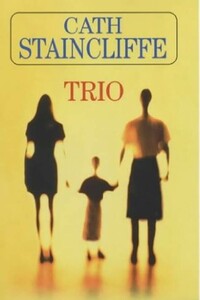
1960, Manchester. Three young Catholic women find themselves pregnant and unmarried. In these pre-Pill days, there is only one acceptable course of action: adoption. So Megan, Caroline and Joan meet up in St Ann's Home for Unmarried Mothers to await the births of their babies. Three little girls are born, and placed with their adoptive families. Trio follows the lives of these mothers and daughters over the ensuing years.
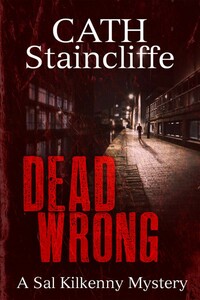
Single mother and private eye, Sal Kilkenny, has two very frightened clients on her hands. One, young mother Debbie Gosforth, is a victim; the other, Luke Wallace, is afraid he is a murderer. While Sal tries to protect Debbie from a stalker, she has to investigate the murder of Luke's best friend.
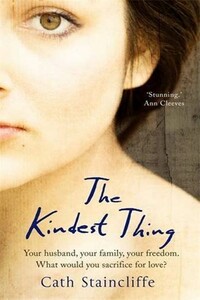
Your husband, your family, your freedom. What would you sacrifice for love? A love story, a modern nightmare and an honest and incisive portrayal of a woman who honours her husband's wish to die and finds herself in the dock for murder.When Deborah reluctantly helps her beloved husband Neil end his life and conceals the truth, she is charged with murder. As the trial unfolds and her daughter Sophie testifies against her, Deborah, still reeling with grief, fights to defend her actions. Twelve jurors hold her fate in their hands, if found guilty she will serve a life sentence.
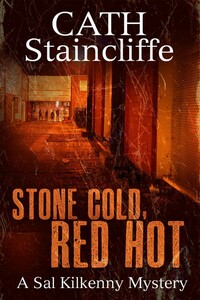
When private eye Sal Kilkenny is asked to discover the whereabouts of Jennifer Pickering, disinherited by her family twenty years ago, it seems that Jennifer does not want to be found. Despite her initial reservations, as the events of the past gradually unfold, single-mum Sal finds that she is becoming engrossed in the case. There are dark secrets waiting to be uncovered but can Sal break the conspiracy of silence that surrounds this mystery? As she spends her days tracing Jennifer, Sal's nights become shattered by an emotional and often dangerous assignment with the Neighbour Nuisance Unit on one of Manchester's toughest housing estates.
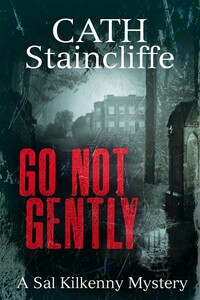
From the author of LOOKING FOR TROUBLE, a further crime novel featuring private investigator Sal Kilkenny. When a man is distraught at his wife's apparent infidelity, he enlists the help of Sal to confirm his suspicions, only to find himself a widower soon afterwards. From there Sal's other case also begins to take a disturbing and violent turn.

В книге рассказывается история главного героя, который сталкивается с различными проблемами и препятствиями на протяжении всего своего путешествия. По пути он встречает множество второстепенных персонажей, которые играют важные роли в истории. Благодаря опыту главного героя книга исследует такие темы, как любовь, потеря, надежда и стойкость. По мере того, как главный герой преодолевает свои трудности, он усваивает ценные уроки жизни и растет как личность.
В книге рассказывается история главного героя, который сталкивается с различными проблемами и препятствиями на протяжении всего своего путешествия. По пути он встречает множество второстепенных персонажей, которые играют важные роли в истории. Благодаря опыту главного героя книга исследует такие темы, как любовь, потеря, надежда и стойкость. По мере того, как главный герой преодолевает свои трудности, он усваивает ценные уроки жизни и растет как личность.
В книге рассказывается история главного героя, который сталкивается с различными проблемами и препятствиями на протяжении всего своего путешествия. По пути он встречает множество второстепенных персонажей, которые играют важные роли в истории. Благодаря опыту главного героя книга исследует такие темы, как любовь, потеря, надежда и стойкость. По мере того, как главный герой преодолевает свои трудности, он усваивает ценные уроки жизни и растет как личность.
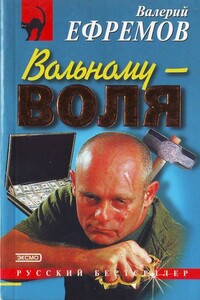
Антон Кашин всего лишь свел счеты со своим врагом — ответил кровью за кровь. Он и не подозревал, что, нажимая на спусковой крючок, приводит в действие мощные пружины неведомого механизма, способного стереть с лица земли не только его самого, но и десятки ни в чем не повинных людей… Все ополчились против него: питерская братва, лишившаяся двух миллионов долларов, заказчики, не желающие платить, милиция, которой не нужен еще один «висяк». Но отваги ему не занимать — не зря же он воевал на Балканах. Боевой опыт пригодится и в родной стране…
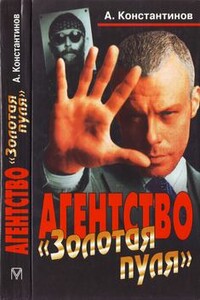
«Золотая пуля» — так коллеги-журналисты называют Агентство журналистских расследований, работающее в Петербурге. Выполняя задания Агентства, его сотрудники встречаются с политиками и бизнесменами, милиционерами и представителями криминального мира. То и дело они попадают в опасные и комичные ситуации.Первая книга цикла состоит из тринадцати новелл, рассказываемых от лица журналистов, работающих в Агентстве. У каждого из них свой взгляд на мир, и они по-разному оценивают происходящие как внутри, так и вне Агентства события.Все совпадения героев книги с реальными лицами лежат на совести авторов.
В книге рассказывается история главного героя, который сталкивается с различными проблемами и препятствиями на протяжении всего своего путешествия. По пути он встречает множество второстепенных персонажей, которые играют важные роли в истории. Благодаря опыту главного героя книга исследует такие темы, как любовь, потеря, надежда и стойкость. По мере того, как главный герой преодолевает свои трудности, он усваивает ценные уроки жизни и растет как личность.