Последние тайны СССР – Проект Марс 88 - [2]
And it's not everywhere that you can pick these mushrooms.
Looking in the black silent space that surrounded the spaceship, with bright white spots of an endless multitude of stars, it was for some reason these red mushroom caps which no one needed that Andrey recollected.
Andrey was an onboard engineer of the manned spaceship of М-88 project and at the same time – a USSR KGB officer. He was not included in the crew because the omnipotent Committee was looking for CIS or MI-6 spies even in the space or because he had to shoot down, for example, the crew captain under certain circumstances. There was even no gun or any weapon on the spaceship at all.
It was just a personal wish of General Secretary… In the course of one of rare meetings with the project Coordinator he suddenly said: servicemen, scientists, doctors – all of them were in space, we sometimes even take foreigners there! And we have never included a single KGB officer in the crew!
The Coordinator was a bit surprised, but answered: Yuri Vladimirovich, that’s an interesting thought, but it would be better if he had some other profession besides being an officer. The crew is almost complete – there is a place for an onboard engineer, and considering the peculiarities of the spaceship – we need a specialist on compact nuclear power systems. Do you have someone of this kind in the Committee?
In the Committee of that time there were specialists in practically any sphere, especially in promising trends, let alone those connected with the atom.
They found Andrey… He graduated from a minor institute in Moscow where best graduates were distributed to closed military laboratories, design offices and KGB…
In general, people were not sent to the Committee, the Committee kindly invited them to work. One could refuse with no bad consequences to follow. Why should a person be compelled if he does not want to? Compulsory labor is not always efficient.
The nuclear power facility of the spaceship was surprisingly efficient, and the main thing, it was compact. It took almost 25 years to create it. The question of reduction of nuclear facilities in size and weight appeared from the moment when the first atomic bombs appeared and was in many ways solved by the beginning of 80s. Even real nuclear briefcases appeared, but not those carried after different Heads and Presidents…
Many nuclear things, big and small, were created for military reasons, and there even was no desire to use all that stuff for the intended purposes.
People became a little cleverer, a little more polite and civilized, and understood that hitting themselves with nuclear clubs was not right or humane.
They decided to use something from this nuclear arsenal for peaceful purposes.
There was no sense in constructing large, labor-consuming and expensive nuclear power stations, considering the huge territory of the USSR and the peculiarities of its climate. There were hundreds of thousands of rivers, but the construction of hydro-electric power stations is not that cheap…
Then they remembered about compact or portable low power nuclear devices. A project was conceived to create small, reliable, and the main thing – one hundred times cheaper nuclear power stations. It was planned to build such a station in practically each of the remote regions…After all, the country occupied 1/6 of the land; but the project was suspended…
The question of portability, weight and, the main thing, the weight of fuel was the most acute in space industry. It was the trend with the highest priority for the Soviet Union. The majority of the most talented scientists worked for the space. Solar batteries were cumbersome and produced little electricity, the first compact nuclear power facilities were developed and used for the satellites – for the only purpose of providing energy to the devices…
The work on the nuclear propulsion engine for rockets was finished back in 1981. The trial runs were mainly carried out on the same launch site where military atomic shells and bombs were tested – near Semipalatinsk.
The project was successful and almost complete, but… it was closed. There were a lot of reasons for that, but the main thing was connected with the start of the rocket from earth cosmodromes: due to a great amount of radiation emitted, a new launch pad or desk would have to be built for each new launch.
And problems with protection of the rocket’s living module seemed practically unresolvable back then…
The designer of MS 88 found a little different way to solve these problems.
The nuclear propulsion engine started as far from the Earth as possible, being the second or third stage engine of the spaceship. And it did not work directly, so its radiation background was just one and a half or two times higher than natural values.
Protection of the crew from such relatively low level of radiation was also simplified and was solved in three years. It took a couple more years for final breaking-in, fine tuning and trial. So in six years after closure of the first project, the second one was successfully completed. It is true that it had a lot of principal differences, but it was the same in essence.
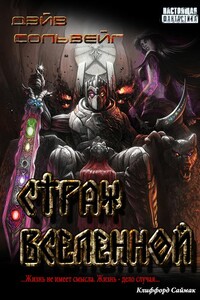
История о правителе, который является воплощением древнего демиурга, сражающегося за свой мир с полчищами искаженных из измерения падшего демиурга и его приёмной семьи. Мятежники объединяются с культом, и попытка захвата власти перерастает в полномасштабную войну с Союзом крови. При создании обложки использовалось изображение предложенное автором.
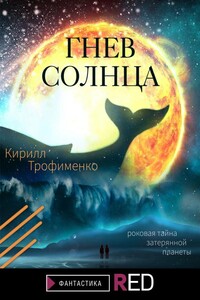
Солнце планеты Тихий Омут, затерянной в космосе, постепенно сводит ее обитателей с ума, и они добровольно уходят в океан. Несколько исследователей-одиночек отказываются эвакуироваться, намереваясь разгадать тайны небесного светила. Кто такие ЭлЩиты, обитающие в глубинах океана? Зачем сюда прибыл принц Империи и шайка космических разбойников, возглавляемых таинственным Командором? На разрешение загадок остается совсем мало времени – близится планетарная катастрофа. Развязка окажется неожиданной! Что же произойдёт с Тихим Омутом? Комментарий Редакции: Казалось бы: экзотичный и местами пугающий, но безусловно прекрасный мир научной фантастики беспощадно исхожен вдоль и поперек новаторами, исследователями и просто мечтателями.
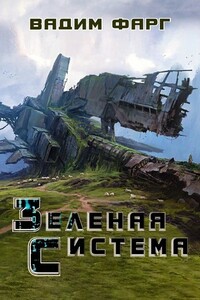
Мир будущего, где человечество прорвалось в глубины бесконечного Космоса, где люди научились уживаться друг с другом. Мир, в котором нет войн, нет бессмысленных убийств, где насилию сказали твёрдое «нет». Но и в этой утопии есть свои опасности. Всему виной инопланетяне? Они создали человека? Банально, да. А что если всё совсем не так.? Что если и то и то утверждение, как верно, так и отрицательно?
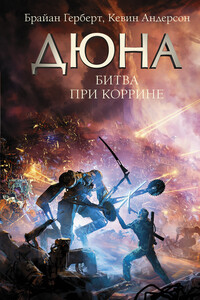
С момента событий, описанных в «Крестовом походе машин», прошло пятьдесят шесть тяжелых лет. После смерти Серены Батлер наступают самые кровавые десятилетия джихада. Планеты Синхронизированных Миров освобождаются одна за другой, и у людей появляется надежда, что конец чудовищного гнета жестоких машин уже близок. Тем временем всемирный компьютерный разум Омниус готовит новую ловушку для человечества. По Вселенной стремительно распространяется смертоносная эпидемия, способная убить все живое. Грядет ужасная Битва при Коррине, в которой у Армии джихада больше не будет права на ошибку.
Они явились из космоса. Дарили разноцветные бусы, несли знания, говорили о вере и исцеляли от недугов. А потом они начали убивать.
Инструктор – старый космический волк – и молодой курсант во время учебного полёта через надпространство попадают на аномальный пик Криксона, где неожиданно обнаруживают странный город, населённый неведомыми космическими существами. Кто они? Романтику курсанту хочется, чтобы они оказались разумными. Холодный логик инструктор утверждает, что это просто космические муравьи. Кто прав? Конфликт поколений.