Английский язык для медиков - [2]
Tissue classification: The 4 main groups of tissues are:
1) epithelial tissue forms elands, covers surfaces and lines cavities;
2) connective tissue holds all parts of the body in Place. This can be fat, cartilage, bone or blood. Blood sometimes is considered a sort of tissue, since it contains cells and performs many of the functions of tissues. However; the blood has many other unique characteristics;
3) nerve tissue conducts nerve impulses all over the body;
4) the muscle tissue is designed for power—producing contractions.
The surface of the body and of the tubes or passages leading to the exterior and the surface of the various cavities in the body are lined by cells which are closely approximated to each other; thus have a small amount of intercellular substance. This lining cellular layer is called epithelium. The nature and consistency of intercellular substance, the matrix, and the amount and arrangement of fibers furnish the basis for the subdivision of connective tissue into three main groups: connective tissue proper, cartilage and bone. In connective tissue the intercellular substance is soft; in cartilage it is firm, yet flexible and ela stic; in bone it is rigid due to the deposition of calcium salt in the matrix. In multicellular organisms certain cells developed to a high degree the properties of irritability and conductivity. These cells form the nervous tissues.
The nervous system of higher animals is characterized by the multiplicity of cellular forms and intercellular connections and by the complexity of its functioning.
Muscle tissue is composed of elongated cells which have the power of contracting or reducing their length. This property of contraction is ultimately a molecular phenomenon and is due to the presence of protein molecules. The following three types of muscle tissue occur in the body.
Smooth muscle tissue is found in sheet or tubes forming the walls of many hollow or tubular organs, for example the bladder, the intes tines of blood vessels. The cells forming this tissue are long spin dles with a central oval nucleus.
Striated muscle tissue is composed of cylindrical fibres often of great at length in which separate cells cannot be distinguished. Many small nuclei are found in the fibres lie just under the surface. Cardiac muscle resembles striated muscle in its structure, but smooth one in its action.
New words
liquid – жидкость
epithelial – эпителиальный
layer – слой
muscle – мышца
body – тело
flexible – гибкий
elastic – эластичный
nucleus – ядро
smooth – гладкий
fibre – волокно
cardiac – сердечный
4. Epidermis
The integument consists of the skin (epidermis and der—mis) and associated appendages (sweat glands, sebaceous glands, hairs, and nails). Considered the largest body organ, the integument comprises approximately 16 % of total body weight. It is a highly specialized organ that functions to protect the body from injury, desiccation, and infection. It also participates in sensory reception, excretion, thermoregulation, and maintenance of water balance.
Epidermis is the outermost layer of the integument. It is astratified squamous epithelial layer of ectodermal origin.
Layers of the epidermis from deep to superficial consist of four strata. Stratum basale (stratum germinativum) is a proliferative basal layer of columnar—like cells that contain the fibrous protein keratin. Stratum spinosum is a multilaminar layer of cuboidal—like cells that are bound together by means of numerous cytoplasmic extensions and desmosomal junctions.
Stratum granulosum consists of flat polygonal cells filled with basophilic keratohyalin granules. Viewed at the electron microscopic level, these cells also contain numerous mem brane—coating granules. Stratum corneum is the superficial stratum of dead cells and consists of several to many layers of flat, anucleated, and cornified (kera—tinized) cells. In the epidermis of the palms and soles, a thin, transitional zone of flat eosinophilic or pale—staining anucleated cells may occur as the stratum lucidum. This layer is found only in regions with a thick strata cor—neum.
Cells of the epidermis: keratinocytes are the most numerous and are responsible for the production of the family of keratin proteins that provide the barrier function of the epidermis.
Melanocytes are derivatives of neural crest ectoderm. They are found in the dermis and are also scattered among the keratinocytes in the basal layers of the epidermis. These dendritic cells produce the pigment melanin in the form melanosomes that are transferred to keratinocytes.
Langerhans cells are dendritic cells but are members of the immune system and function as antigen—presenting cells. They have also been found in other parts of the body, including the oral cavity and lymph nodes.
Merkel cells are found in the basal epidermis and appear function in concert with nerve fibers that are closely associated with them. At the electron microscopic level, their cytoplasm contains numerous membrane—bound granules that resemble those of catecholamine—produ—cing cells.

Основополагающими темами, предложенными к изучению в данном учебном пособии, являются история и сущность воспитания, его закономерности и принципы, система методов воспитания и личность воспитателя. Отдельной темой лекций является малокомплектная школа и условия эффективной работы в ней. В книге рассмотрены теория и методика воспитания в зарубежных странах, а также недостатки и достоинства теории воспитания в России.

В книге рассказывается история главного героя, который сталкивается с различными проблемами и препятствиями на протяжении всего своего путешествия. По пути он встречает множество второстепенных персонажей, которые играют важные роли в истории. Благодаря опыту главного героя книга исследует такие темы, как любовь, потеря, надежда и стойкость. По мере того, как главный герой преодолевает свои трудности, он усваивает ценные уроки жизни и растет как личность.
В книге рассказывается история главного героя, который сталкивается с различными проблемами и препятствиями на протяжении всего своего путешествия. По пути он встречает множество второстепенных персонажей, которые играют важные роли в истории. Благодаря опыту главного героя книга исследует такие темы, как любовь, потеря, надежда и стойкость. По мере того, как главный герой преодолевает свои трудности, он усваивает ценные уроки жизни и растет как личность.
Пушкин и английский язык - маленькие открытия переводчика.
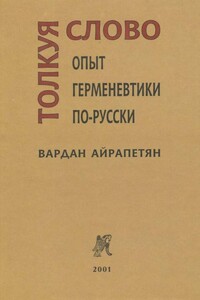
Задача этой книги — показать, что русская герменевтика, которую для автора образуют «металингвистика» Михаила Бахтина и «транс-семантика» Владимира Топорова, возможна как самостоятельная гуманитарная наука. Вся книга состоит из примечаний разных порядков к пяти ответам на вопрос, что значит слово сказал одной сказки. Сквозная тема книги — иное, инакость по данным русского языка и фольклора и продолжающей фольклор литературы. Толкуя слово, мы говорим, что оно значит, а значимо иное, особенное, исключительное; слово «думать» значит прежде всего «говорить с самим собою», а «я сам» — иной по отношению к другим для меня людям; но дурак тоже образцовый иной; сверхполное число, следующее за круглым, — число иного, остров его место, красный его цвет.
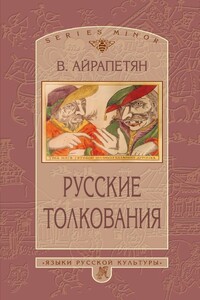
Задача этой книжки — показать на избранных примерах, что русская герменевтика возможна как самостоятельная гуманитарная наука. Сквозная тема составивших книжку статей — иное, инакость по данным русского языка и фольклора и продолжающей фольклор литературы.

Сосуществование в Вильно (Вильнюсе) на протяжении веков нескольких культур сделало этот город ярко индивидуальным, своеобразным феноменом. Это разнообразие уходит корнями в историческое прошлое, к Великому Княжеству Литовскому, столицей которого этот город являлся.Книга посвящена воплощению образа Вильно в литературах (в поэзии прежде всего) трех основных его культурных традиций: польской, еврейской, литовской XIX–XX вв. Значительная часть литературного материала представлена на русском языке впервые.
Информативные ответы на все вопросы курса «Клиническая психология» в соответствии с Государственным образовательным стандартом.Студенту без шпаргалки никуда! Удобное оформление, ответы на все экзаменационные вопросы ведущих вузов России.
В книге кратко изложены ответы на основные вопросы темы «Уголовно-процессуальное право». Издание поможет систематизировать знания, полученные на лекциях и семинарах, подготовиться к сдаче экзамена или зачета. Пособие адресовано студентам высших и средних образовательных учреждений, а также всем, интересующимся данной тематикой.
Информативные ответы на все вопросы курса «Неорганическая химия» в соответствии с Государственным образовательным стандартом.
Пособие содержит ответы на экзаменационные вопросы по учебной дисциплине «Налоговое право».Доступность изложения, актуальность информации, максимальная информативность, учитывая небольшой формат пособия, – все это делает шпаргалку незаменимым подспорьем при подготовке к сдаче зачета или экзамена.