36 Arguments for the Existence of God - [33]
When Gideon decided again to speak, he launched back into the theme of his marital difficulties as if that’s what they had been discussing this whole time.
“Jonas warned me not to marry Lizzie. ‘She is in her victorious prime, the pinnacle of her prothalamic prowess.’” His impersonation was uncanny. It wasn’t for nothing that he was reputed to be the foremost expert on Jonas Elijah Klapper. Cass had heard, when he was back at Columbia, that Gideon had already published half a dozen articles analyzing Jonas Elijah Klapper’s paradox shifts. “‘The bloom of youth has painted her vividly with the war stripes required for victory on the battlefields of sex. She stands before you, a Maori warrior, only armed with mighty cleavage. She shall go downhill on that front, have no doubt. Heed me well, young pup! That woman will run to fat before the first five years are out, and by the tenth she’ll have a lap wide enough to hold the heap of mewling babes she shall wrest from your besieged manhood.’”
Cass was shocked by what Gideon was saying. He didn’t want to rush to any interpretations, but, at least on the surface, the words sounded misogynistic.
“So I take it Professor Klapper’s never married?”
“The only woman Jonas ever talks about with real longing is Olga the cheesemonger at Zabar’s. And, of course, good old Hannah.”
“Hannah?”
“You really are a novice, aren’t you? You mean to tell me you don’t know about the sainted Hannah? Sophocles’ Antigone, Dante’s Beatrice, Quixote’s Dulcinea of El Toboso, and Luke’s Madonna all rolled up in one.”
Cass couldn’t tell whether Gideon was being ironic or not. The more they drank, the less possible it became to tell. Gideon Raven seemed to be undergoing his own paradox shifts, and all in one sitting.
Cass shrugged, so weary he had to exert himself to lift his shoulders.
“She’s the one with the crazy eyes he keeps framed on his desk.”
Cass had seen the photograph in Professor Klapper’s Columbia office.
“Ah, so that’s Hannah. I wondered who that was.”
“Of course you wondered. Who can help wondering at those haunted eyes, lit by the unmistakable lambency of lunacy? Hannah Klepfish, the extraordinary woman to whom Jonas Elijah Klapper owes it all.”
“Why’s that?”
“It’s his mama, Mr. Seltzer, that’s why. Hannah Klepfish is our very own Jonas’s mother, which makes her, in some sense, the mother of us all. And as one of the last of the thinkers who take Freud seriously enough to allow their own psychology to be dictated by him, Jonas is required to have a chronic case of mother fixation. Of course, she was no common mother. She had the gift of prophecy. While she was carrying Jonas, she was vouchsafed the divination-the mantikê in ancient Greek, the nevua in ancient Hebrew-sorry, you develop these tics when you’ve been with Jonas as long as I have-that she was destined to die in childbirth, but that she was carrying a boy child who would survive and be a great light unto the nations. As Jonas tells it, she heard a great voice declaring that it had been decreed.”
“So she died in childbirth?”
“Oh, I’m sorry, had I implied that? No, the old girl pulled through. Jonas is the youngest, but all his siblings-there are four or five of them-are girls, and Hannah had been a bit long in the tooth when she at long last gave birth to the prophesied son, just like the matriarch Sarah, a comparison of which Jonas himself is quite fond. So the divination had been two-thirds accurate. And to Hannah was born a son, and the child was unlike any other, growing in knowledge from one day to the next, from one hour to the next, so that what he did not know upon waking he could teach to others upon going to sleep.”
“Meaning he was exceptionally smart?”
“Did you have any doubt?”
“No, of course not.”
“No, of course not,” Gideon Raven repeated. “As for poor old Hannah, not even the late-life glories of such a son as hers were able to save her from the howling hounds of madness.”
“What?”
“Rumor has it she was as gaga as she looks.”
“So what you’re saying is that she was actually crazy.”
“Certifiable. Jonas, being the proverbial doting son, refused to send her away. He was forced to keep her locked up in the attic with a caretaker named Grace Poole.”
“You’re kidding, right?”
“I’m not capable of making this stuff up. They had a big estate called Thornyfield on the banks of the East River, and one night Grace got stinking drunk-unfortunately, she was often what they call ‘in her spirits’- and Hannah escaped the attic stronghold and set fire to Cornyfield, plunging to her death amidst the flames. The Daily News headline was ‘Hindenburg Mom Lights Up New York Skyline.’ You can well imagine the effect on a soul like Jonas’s. He’s never quite recovered his senses, which is why he’s apt to fly into a homicidal rage if you answer one of his bloody obvious questions in the bloody obvious way, instead of somehow retrieving the mess of oblique associations he’d had in mind. ‘No, no, no, that’s not what I was thinking of at all! I’d meant how would Matthew Arnold have responded to Sophocles’ intimations of eternal sorrow had he read Schopenhauer’s response to Hegel, as he anticipated Adorno’s necessary observation that there is no poetry after Auschwitz? That’s what I’d meant by querying the “long, withdrawing roar.”’

Сначала мы живем. Затем мы умираем. А что потом, неужели все по новой? А что, если у нас не одна попытка прожить жизнь, а десять тысяч? Десять тысяч попыток, чтобы понять, как же на самом деле жить правильно, постичь мудрость и стать совершенством. У Майло уже было 9995 шансов, и осталось всего пять, чтобы заслужить свое место в бесконечности вселенной. Но все, чего хочет Майло, – навсегда упасть в объятия Смерти (соблазнительной и длинноволосой). Или Сюзи, как он ее называет. Представляете, Смерть является причиной для жизни? И у Майло получится добиться своего, если он разгадает великую космическую головоломку.

В книге рассказывается история главного героя, который сталкивается с различными проблемами и препятствиями на протяжении всего своего путешествия. По пути он встречает множество второстепенных персонажей, которые играют важные роли в истории. Благодаря опыту главного героя книга исследует такие темы, как любовь, потеря, надежда и стойкость. По мере того, как главный герой преодолевает свои трудности, он усваивает ценные уроки жизни и растет как личность.

Настоящая книга целиком посвящена будням современной венгерской Народной армии. В романе «Особенный год» автор рассказывает о событиях одного года из жизни стрелковой роты, повествует о том, как формируются характеры солдат, как складывается коллектив. Повседневный ратный труд небольшого, но сплоченного воинского коллектива предстает перед читателем нелегким, но важным и полезным. И. Уйвари, сам опытный офицер-воспитатель, со знанием дела пишет о жизни и службе венгерских воинов, показывает суровую романтику армейских будней. Книга рассчитана на широкий круг читателей.
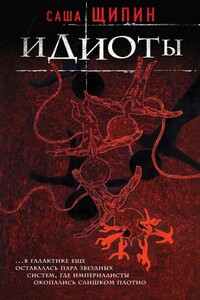
Боги катаются на лыжах, пришельцы работают в бизнес-центрах, а люди ищут потерянный рай — в офисах, похожих на пещеры с сокровищами, в космосе или просто в своих снах. В мире рассказов Саши Щипина правду сложно отделить от вымысла, но сказочные декорации часто скрывают за собой печальную реальность. Герои Щипина продолжают верить в чудо — пусть даже в собственных глазах они выглядят полными идиотами.

Роман «Деревянные волки» — произведение, которое сработано на стыке реализма и мистики. Но все же, оно настолько заземлено тонкостями реальных событий, что без особого труда можно поверить в существование невидимого волка, от имени которого происходит повествование, который «охраняет» главного героя, передвигаясь за ним во времени и пространстве. Этот особый взгляд с неопределенной точки придает обыденным события (рождение, любовь, смерть) необъяснимый колорит — и уже не удивляют рассказы о том, что после смерти мы некоторое время можем видеть себя со стороны и очень многое понимать совсем по-другому.

«Голубь с зеленым горошком» — это роман, сочетающий в себе разнообразие жанров. Любовь и приключения, история и искусство, Париж и великолепная Мадейра. Одна случайно забытая в женевском аэропорту книга, которая объединит две совершенно разные жизни……Май 2010 года. Раннее утро. Музей современного искусства, Париж. Заспанная охрана в недоумении смотрит на стену, на которой покоятся пять пустых рам. В этот момент по бульвару Сен-Жермен спокойно идет человек с картиной Пабло Пикассо под курткой. У него свой четкий план, но судьба внесет свои коррективы.